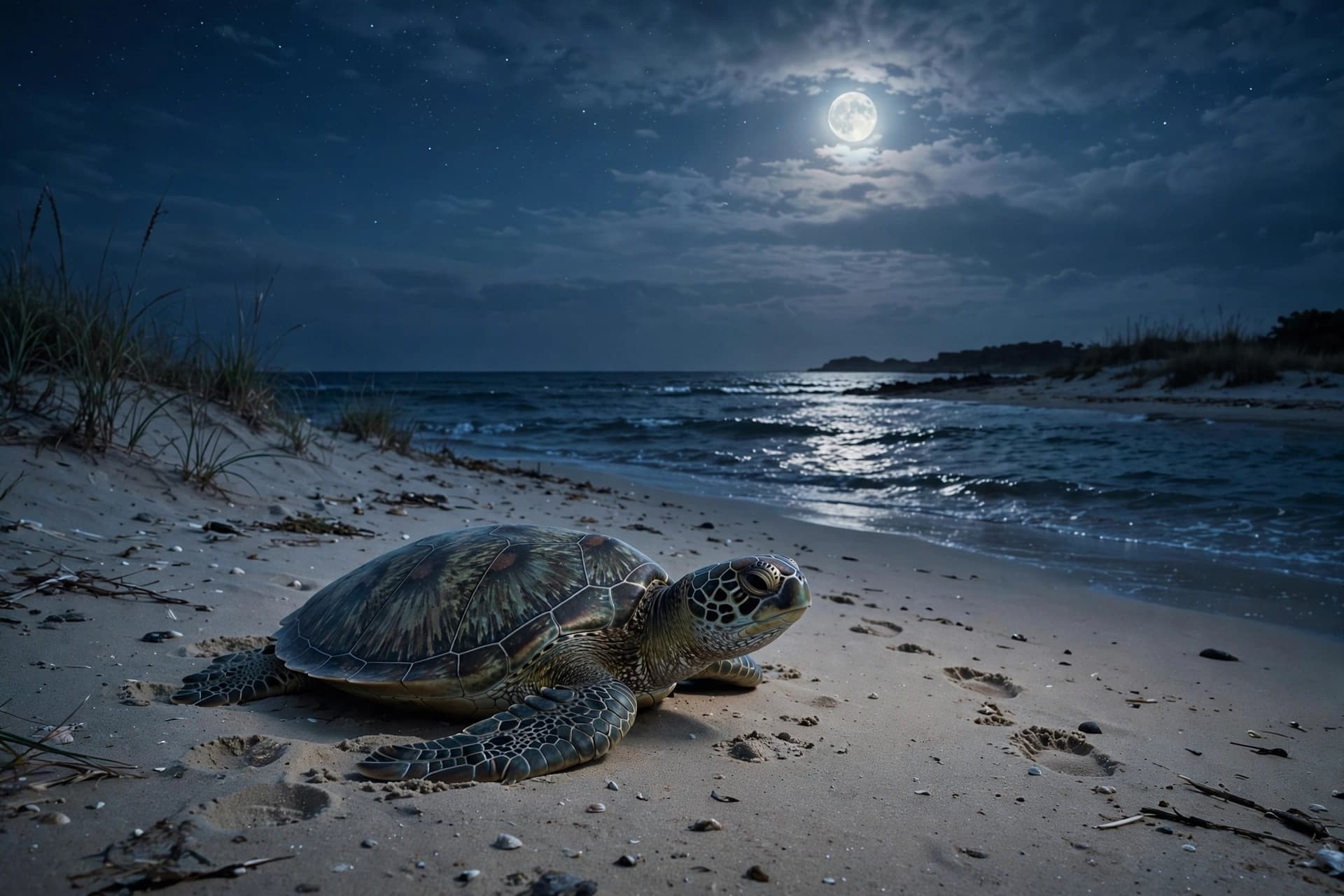
On the sandy shores of Southern California, where the Pacific Ocean meets the land in a rhythmic dance, a historic event has unfolded. For the first time in recorded history, a sea turtle has laid eggs on a West Coast beach in the United States. An olive ridley sea turtle was observed digging a nest and depositing eggs near Seal Beach in Orange County, marking a significant milestone for marine biology and conservation. It is a moment of wonder that highlights the adaptability of nature and the changing dynamics of our oceans.
The nesting occurred in mid-September, a time when water temperatures are typically warm enough to support such activity. Olive ridleys are known for their mass nesting behaviors in tropical regions, making this solitary event on the cooler West Coast particularly unusual. Experts from NOAA Fisheries confirmed the sighting, noting that while sea turtles are occasionally seen off the coast, nesting has never been documented before. Nature surprises us when we least expect it.
Climate change is believed to play a role in this unprecedented event. Rising ocean temperatures may be expanding the habitable range for tropical species, allowing them to venture further north. While this specific instance is cause for celebration, it also serves as a indicator of broader ecological shifts. Scientists are monitoring the situation closely to understand the long-term implications. Change is constant.
Local residents and beachgoers were thrilled to witness the event, with some capturing video footage of the turtle. The community rallied to protect the nest, ensuring it remained undisturbed by foot traffic or predators. This grassroots effort demonstrates the power of public engagement in conservation. Care is a collective action.
The eggs are now being monitored by wildlife experts, who hope to see hatchlings emerge in the coming weeks. Success is not guaranteed, as the cooler sand temperatures may affect incubation. However, the mere act of nesting is a victory for the species, which faces threats from pollution, fishing nets, and habitat loss worldwide. Hope is a powerful force.
This event also highlights the importance of protecting coastal habitats. Beaches are critical nesting grounds for many species, and human activity can disrupt these delicate processes. Regulations and public awareness campaigns are essential for preserving these natural sanctuaries. Protection is preservation.
For marine biologists, the discovery opens new avenues for research. Studying the behavior of olive ridleys in this new environment can provide insights into their resilience and adaptability. It challenges existing models and encourages a deeper understanding of marine ecosystems. Knowledge expands with observation.
In the end, the nesting of the sea turtle in California is a symbol of nature’s persistence. It reminds us that even in a changing world, life finds a way. As we watch and wait for the hatchlings, we are reminded of our responsibility to protect the oceans and the creatures that call them home. The sea holds many secrets.
AI Image Disclaimer: The visual aids included here are AI-generated illustrations depicting sea turtles and beach scenes, not actual photographs of the specific olive ridley turtle or the nest in Seal Beach.
Sources: NOAA Fisheries ABC7 Los Angeles KTLA
Published by Banx Network. This article is part of the Banx decentralized media programme, powered by the BXE token on the XRP Ledger.