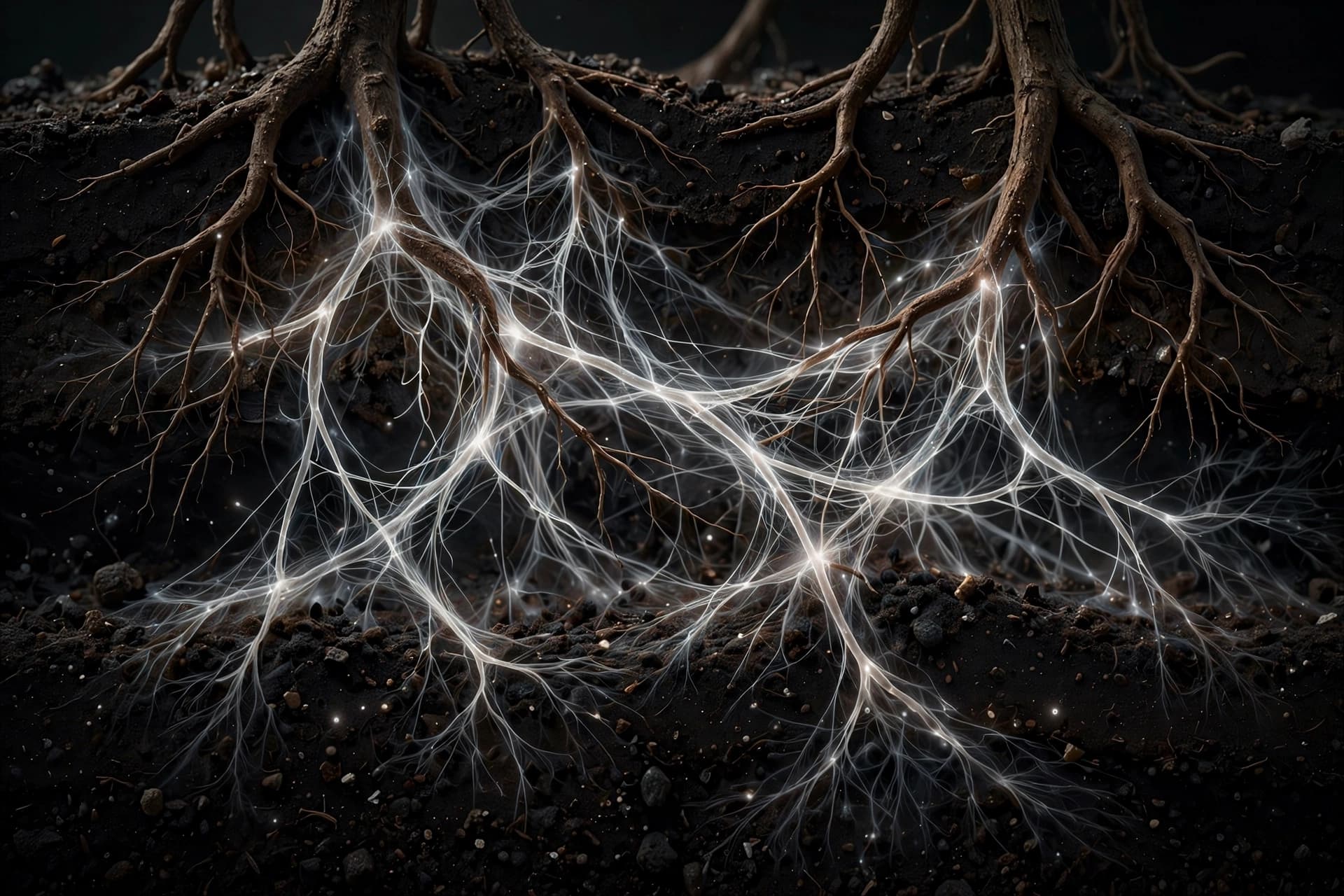
Beneath our feet, hidden from view, lies a vast and intricate web of life that connects the forest in ways we are only beginning to understand. This underground network, composed of fungal threads known as mycelium, links the roots of trees and plants, facilitating the exchange of nutrients and information. Recent estimates suggest that these threads stretch for a staggering 110 quadrillion kilometers worldwide. To put this in perspective, if laid end to end, they would reach from Earth to the Sun nearly a billion times. It is a discovery that reshapes our understanding of the natural world, revealing a hidden connectivity that sustains life on land.
The study, which synthesizes data from global soil samples and ecological models, highlights the sheer scale of this fungal infrastructure. Mycorrhizal fungi form symbiotic relationships with plant roots, helping them absorb water and minerals like phosphorus and nitrogen. In return, the plants provide the fungi with carbohydrates produced through photosynthesis. This mutualistic exchange is fundamental to the health of forests and grasslands, acting as a biological internet that supports ecosystem stability.
The magnitude of the network underscores its importance in the global carbon cycle. Fungi play a crucial role in sequestering carbon in the soil, locking it away from the atmosphere. By understanding the extent and function of these networks, scientists can better predict how ecosystems will respond to climate change. The fungal web is not just a passive structure but an active participant in regulating the planet’s climate.
For ecologists, this mapping effort provides a baseline for conservation. Knowing where these networks are most dense and diverse helps identify critical areas for protection. Disturbances such as deforestation, agriculture, and urbanization can disrupt these connections, leading to reduced plant health and biodiversity. Preserving the integrity of the soil is thus essential for maintaining the resilience of terrestrial ecosystems.
The metaphor of the "Wood Wide Web" has captured the public imagination, suggesting a level of communication and cooperation among plants that was previously unimagined. While the science is more complex than simple messaging, the idea that trees are interconnected through fungal partners fosters a sense of wonder and respect for the natural world. It challenges the notion of individual organisms, presenting instead a vision of collective survival.
Technological advancements in DNA sequencing and remote sensing have made this large-scale estimation possible. Researchers can now identify fungal species and map their distribution with greater accuracy than ever before. This progress opens new avenues for research into soil health, agricultural sustainability, and restoration ecology. It is a testament to the power of interdisciplinary science.
The findings also have practical applications for forestry and agriculture. By promoting healthy fungal communities, land managers can enhance crop yields and forest growth without relying heavily on chemical fertilizers. This approach aligns with sustainable practices that work with nature rather than against it. It offers a path toward more resilient food systems and healthier landscapes.
The estimation of 110 quadrillion kilometers of fungal threads reveals the hidden magnitude of life beneath our feet. It reminds us that the health of the surface world is deeply rooted in the unseen connections below. As we continue to explore this subterranean realm, we gain valuable insights into the intricate web that sustains our planet.
AI Image Disclaimer: The visuals in this article are AI-generated artistic interpretations of mycelial networks and forest roots, not actual microscopic images or global maps.
Sources: Nature Ecology & Evolution University of Aberdeen BBC Science
Published by Banx Network. This article is part of the Banx decentralized media programme, powered by the BXE token on the XRP Ledger.