The Moon has long been regarded as a silent witness to history, its surface a frozen tapestry of ancient impacts and quiet dust. For eons, it has changed little, preserving the scars of the early solar system in stark relief. Yet, the lunar landscape is not entirely static. Recently, a lunar orbiter captured a rare and striking event: the fresh imprint of a new crater, formed by a meteoroid impact that occurred in the blink of a cosmic eye. This discovery serves as a gentle reminder that even in the stillness of space, change is always possible, however infrequent.
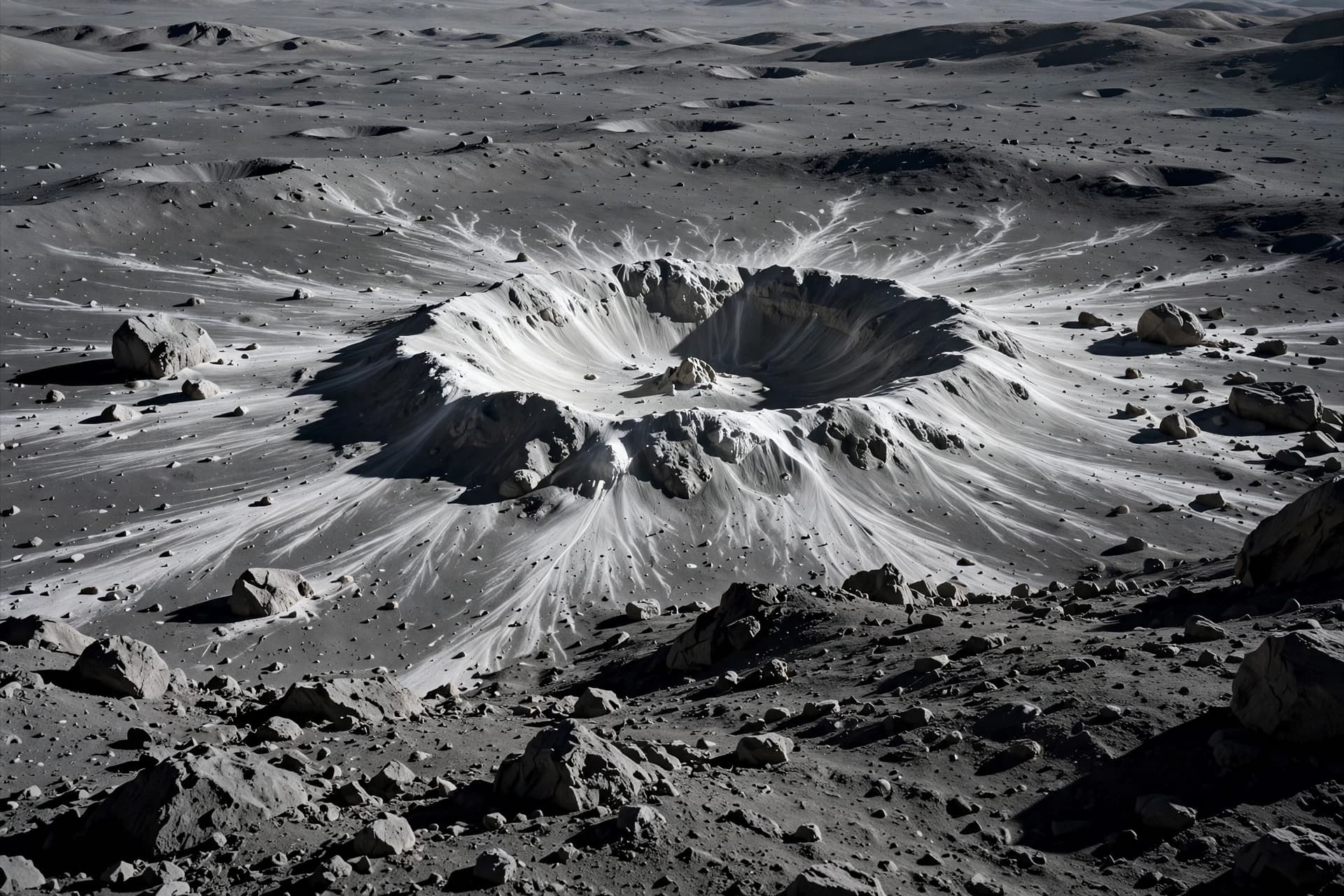
The image was taken by NASA’s Lunar Reconnaissance Orbiter (LRO), a spacecraft that has been mapping the Moon’s surface for over a decade. The new crater, approximately ten meters wide, stands out against the older, weathered terrain due to its bright, fresh ejecta blanket. This halo of displaced material reflects sunlight more strongly than the surrounding regolith, which has been darkened by billions of years of exposure to solar wind and micrometeorite bombardment. It is a signature of youth in an ancient world.
Such direct observations of impact events are exceedingly rare. While scientists estimate that dozens of small meteoroids strike the Moon every year, capturing one so soon after its formation requires precise timing and luck. The LRO team had targeted this specific region for routine imaging, unaware that they would be documenting a geological event that had likely occurred only weeks or months prior. This serendipity highlights the value of persistent, long-term monitoring of celestial bodies.
The significance of this find extends beyond mere novelty. Fresh craters provide valuable data on the current rate of impact flux in the inner solar system. By studying the size and frequency of these new features, researchers can refine models that predict the risk of similar impacts on Earth-orbiting satellites and future lunar habitats. It is a practical application of observational astronomy, turning a pretty picture into actionable safety information.
Moreover, the brightness of the ejecta offers clues about the subsurface composition. The material thrown up from below the surface has not yet undergone the same space weathering processes as the top layer. Analyzing its spectral properties allows scientists to peer beneath the lunar dust, gaining insights into the geological history of the region without needing to drill. It is a non-invasive way to explore the Moon’s interior structure.
For the public, the image of a fresh crater is a captivating sight. It breaks the illusion of the Moon as an unchanging monument, revealing it instead as a dynamic environment subject to the same forces that shape other worlds. It invites viewers to look up at the night sky with renewed curiosity, knowing that the universe is active and alive, even in its most barren corners.
As humanity prepares to return to the Moon through the Artemis program, understanding these impact risks becomes increasingly important. Identifying safe landing zones and protecting infrastructure will require a detailed knowledge of the lunar impact environment. Each new crater spotted by the LRO adds a piece to this growing puzzle, helping to ensure the safety of future explorers.
The discovery of this "once-in-a-lifetime" crater is a testament to the enduring value of robotic exploration. It reminds us that the Moon is still being shaped by the cosmos, one small impact at a time. As we continue to watch and learn, we gain a deeper appreciation for the dynamic nature of our nearest neighbor.
AI Image Disclaimer: The visual representations in this article are AI-generated illustrations depicting lunar surfaces and impact events, not actual raw images from the Lunar Reconnaissance Orbiter.
Sources: NASA Goddard Space Flight Center Live Science Space.com
Published by Banx Network. This article is part of the Banx decentralized media programme, powered by the BXE token on the XRP Ledger.