Key Highlights
- Researchers in Japan have successfully fused algal and mammalian cells, creating a hybrid called a 'planimal'.
- The algal DNA was integrated into the mammalian cell's chromosomes and maintained across over 150 generations.
- More than 95% of the algal genes remained silent, demonstrating a mechanism termed 'epigenetic gatekeeping'.
[Scientific Breakthrough in Cell Fusion]
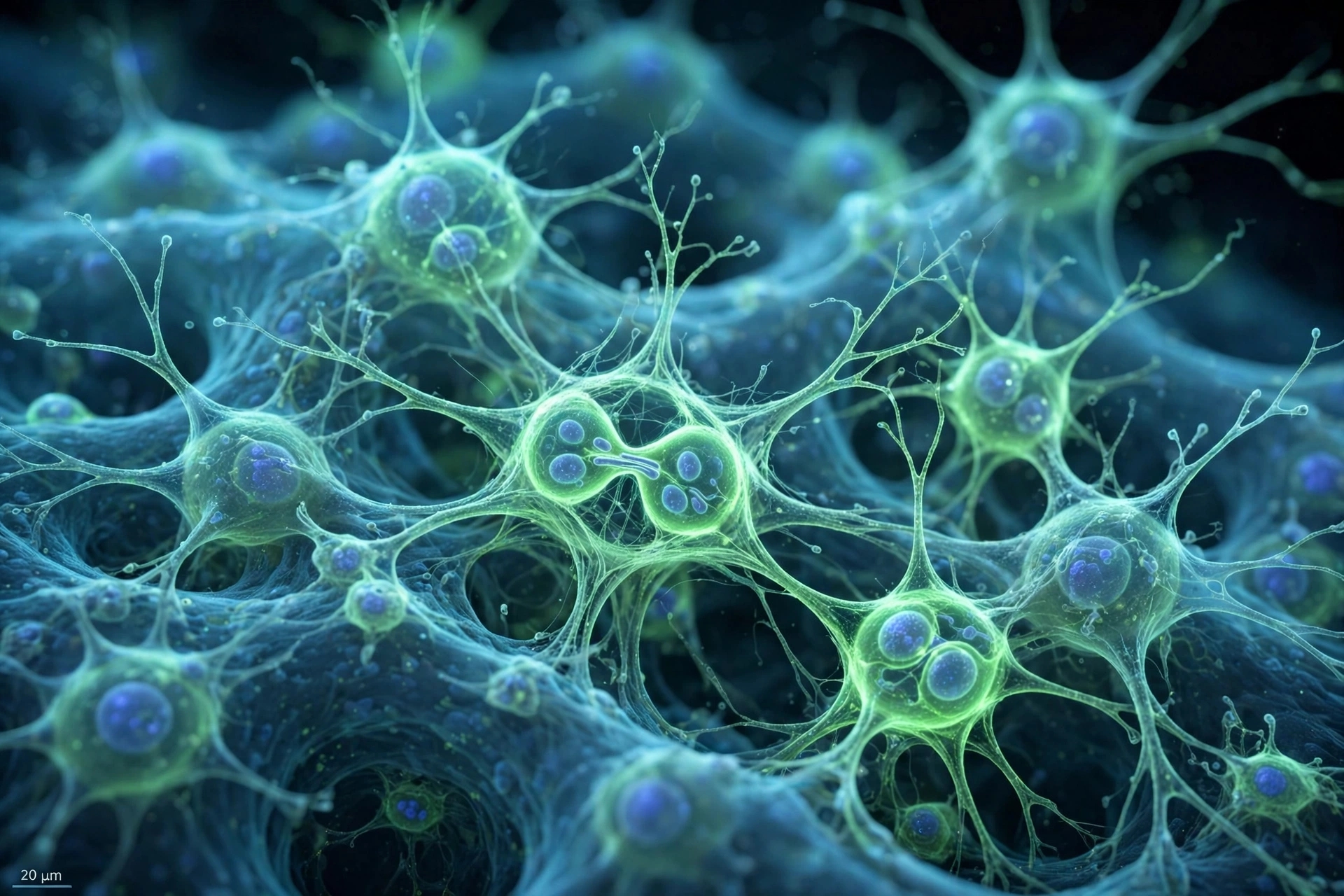
In a groundbreaking experiment, a team of researchers led by Professor Yukio Matsunaga at the University of Tokyo has blurred the long-standing boundary between plants and animals by creating a hybrid cell known as a 'planimal'. This innovative research involved fusing the DNA of a unicellular alga, Cyanidioschyzon merolae, with cultured hamster cells, resulting in a unique organism that challenges traditional biological classifications.
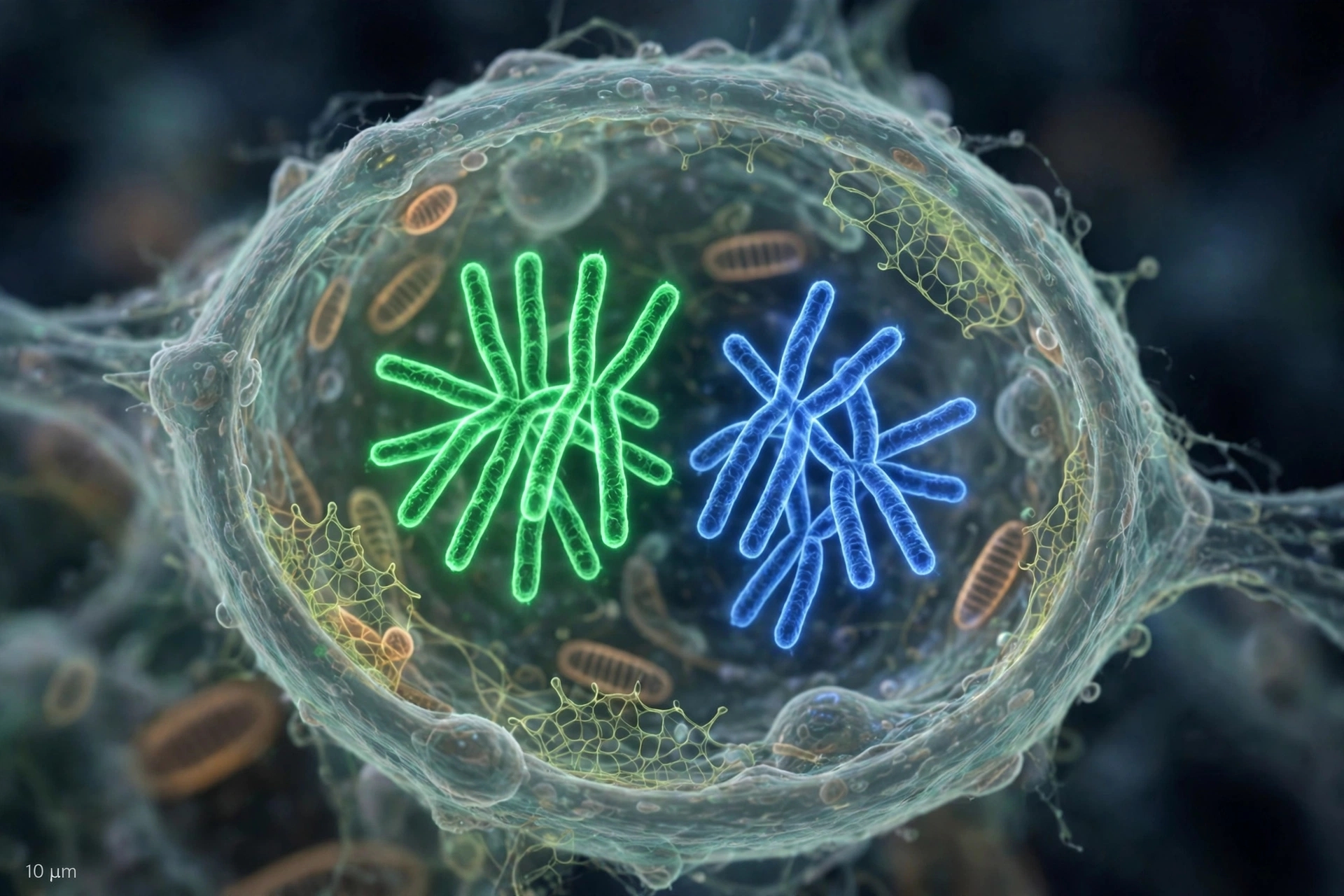
The researchers successfully transplanted the entire genome of the alga into the mammalian cells, where it did not merely coexist but became integrated into the chromosomes of the animal cells. This remarkable achievement marks the first instance of a hybrid cell retaining the complete genomes of two evolutionarily distant organisms, maintained stably across more than 150 generations of cell division. This stability is crucial for future applications in biotechnology and genetic research.
[Understanding Epigenetic Gatekeeping]
What makes this discovery particularly fascinating is the behavior of the algal DNA within its new host. The study revealed that over 95% of the algal genes were rendered silent, a phenomenon attributed to a process called methylation. This chemical tagging compresses the DNA into dense, inactive structures known as heterochromatin. Essentially, the animal cell recognized the foreign DNA and placed it under a form of 'house arrest', allowing it to exist without expressing its genes. The researchers have termed this phenomenon 'epigenetic gatekeeping', which enables the cell to manage a vast foreign genome without being overwhelmed.
[Unexpected Findings on DNA Maintenance]
In an unexpected twist, the researchers found that some of the algal DNA actually increased in copy number over generations, amplified by the host cell's replication machinery. This suggests that the gatekeeping mechanism is not merely passive storage but involves active management of the foreign genome, ensuring its stability and survival across generations. This finding opens new avenues for understanding how cells can interact with and manage foreign genetic material.
[Implications for Biotechnology]
The implications of this research extend beyond mere scientific curiosity. The researchers envision a future where specific algal genes could be selectively activated, particularly those related to photosynthesis or the production of valuable substances. This could lead to the development of animal cells with plant-like capabilities, potentially revolutionizing biotechnology by creating cells that can harness sunlight or synthesize compounds that are currently beyond the reach of animal cells.
[Philosophical Considerations]
Philosophically, the creation of the planimal serves as a reminder that the boundaries between biological kingdoms are not as rigid as once thought. These boundaries are maintained by molecular mechanisms, which can be reengineered under the right conditions. While the planimal is not a new organism and cannot photosynthesize, it demonstrates that the epigenetic systems that define a cell's identity can be influenced, suggesting a more fluid understanding of genetic identity.
The researchers caution against overstating their achievement, emphasizing that the planimal is a laboratory construct and not a fully functional organism. However, it does illustrate a significant principle: the potential for cells to accept and manage foreign genomes, thereby challenging our understanding of biological classification.
The images accompanying this article are AI-generated illustrations and do not represent actual microscopy images of the planimal cells.
Published by Banx Network. This article is part of the Banx decentralized media programme, powered by the BXE token on the XRP Ledger.