Key Highlights
- Location:Nuugaatsiaq, Greenland, abandoned since 2017.
- Study Findings:Two unstable slopes identified as tsunami threats.
- Climate Impact:Warming climate exacerbates landslide risks.
In the remote village of Nuugaatsiaq, located on the coast of Greenland, a haunting silence has prevailed since 2017. This quiet is a stark reminder of the devastating tsunami that struck after a massive landslide sent a wall of rock crashing into the sea, claiming four lives and injuring nine others. Since that tragic event, the village has remained abandoned, a ghost town overshadowed by the threat of future disasters. Recent research indicates that the conditions leading to such catastrophic events are not isolated incidents but are becoming increasingly common in the region.
A new study published in Communications Earth & Environment has identified two unstable slopes within the Uummannaq Fjord system that could potentially trigger tsunamis if they collapse. The larger slope, located in Karrat Fjord just three kilometers from the site of the 2017 landslide, spans an impressive 2.65 million square meters and contains approximately 400 million cubic meters of material. Should this slope fail, it could unleash waves across the fjord system, with run-ups exceeding ten meters, impacting areas over a hundred kilometers away.
However, it is the smaller slope in Kangerluarsuk Fjord that poses the most immediate concern for researchers. This slope, which has rapidly developed since 2015, is estimated to hold around 30 million cubic meters of material. Experts believe it is likely to fail within the next few years or decades, although the exact timing remains uncertain. If this slope collapses, it could generate a tsunami with a run-up of three to seven meters at the nearby settlement of Ukkusissat, just twenty-five kilometers away, arriving a mere six minutes after the landslide occurs.
The underlying cause of these growing hazards is closely linked to climate change. While landslides are a natural occurrence in fjord regions, the study highlights the role of permafrost degradation in destabilizing these slopes. As the climate warms, the frozen ground that once held these slopes together is weakening, increasing the likelihood of landslides and the tsunamis they can generate. The authors of the study emphasize that these phenomena represent an emerging hazard in Arctic and high-mountain areas, where global warming is expected to heighten the frequency and severity of such events.
The 2017 disaster serves as a critical backdrop for understanding the current risks. The landslide on Ummiammakku Mountain released up to 58 million cubic meters of rock into Karrat Fjord, resulting in a tsunami that struck Nuugaatsiaq with a run-up of about ten meters. In response to this disaster, Danish and Greenlandic authorities commissioned the research that has led to the identification of the two new unstable slopes. Monitoring efforts are now in place, and risk assessments are being conducted to better prepare for potential future events.
For the communities surrounding the Uummannaq Fjord, including Ukkusissat, the threat of tsunamis is a pressing reality. It is a matter of calculating distances and response times, understanding how quickly warnings can be disseminated, and how far waves can travel. The researchers stress the importance of ongoing monitoring and mitigation strategies by local authorities, while also acknowledging the inherent limitations in stabilizing these remote slopes. The geological forces at play are immense, and the best defense lies in early detection and timely evacuation.
The story of Nuugaatsiaq is not just a tale of loss but also a cautionary narrative about the future. The new study aims to ensure that the warnings about unstable slopes and the impacts of climate change are heeded. As the climate continues to warm, the potential for devastating waves looms ever closer, and the urgency for preparedness grows.
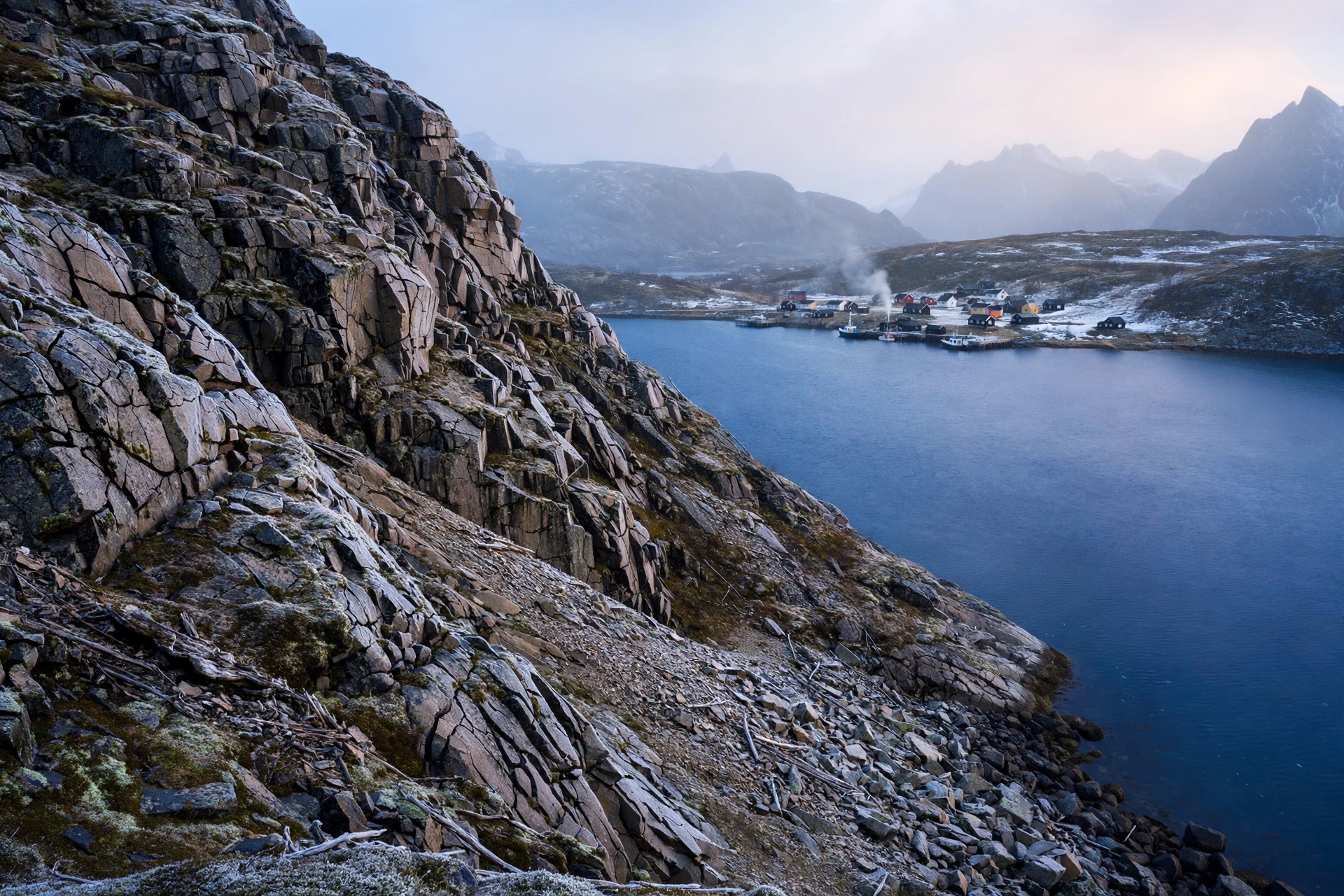
The images accompanying this article are AI-generated illustrations and are not actual photographs of the slopes or the settlements.
Published by Banx Network. This article is part of the Banx decentralized media programme, powered by the BXE token on the XRP Ledger.