In the vibrant and often chaotic tapestry of Indian democracy, a new thread has emerged, woven from satire, frustration, and youthful energy. The "Cockroach Movement," initially born as a satirical response to a judicial remark comparing unemployed youth to pests, has evolved into a tangible political force. Supporters have taken to the streets in cities across the nation, transforming digital memes into physical presence. This phenomenon invites reflection on how modern protest movements leverage humor and identity to challenge established power structures, turning an insult into a badge of honor.
Body: The movement’s origins lie in a comment made by a senior judge in May 2026, which sparked immediate outrage among young Indians facing high unemployment and academic pressures. What began as a viral social media campaign quickly coalesced into the "Cockroach Janta Party," a decentralized group that uses irony to highlight systemic failures. By embracing the label, protesters have reclaimed their narrative, refusing to be shamed for their economic circumstances. This act of reappropriation is a powerful tool in contemporary activism, allowing marginalized voices to speak on their own terms.
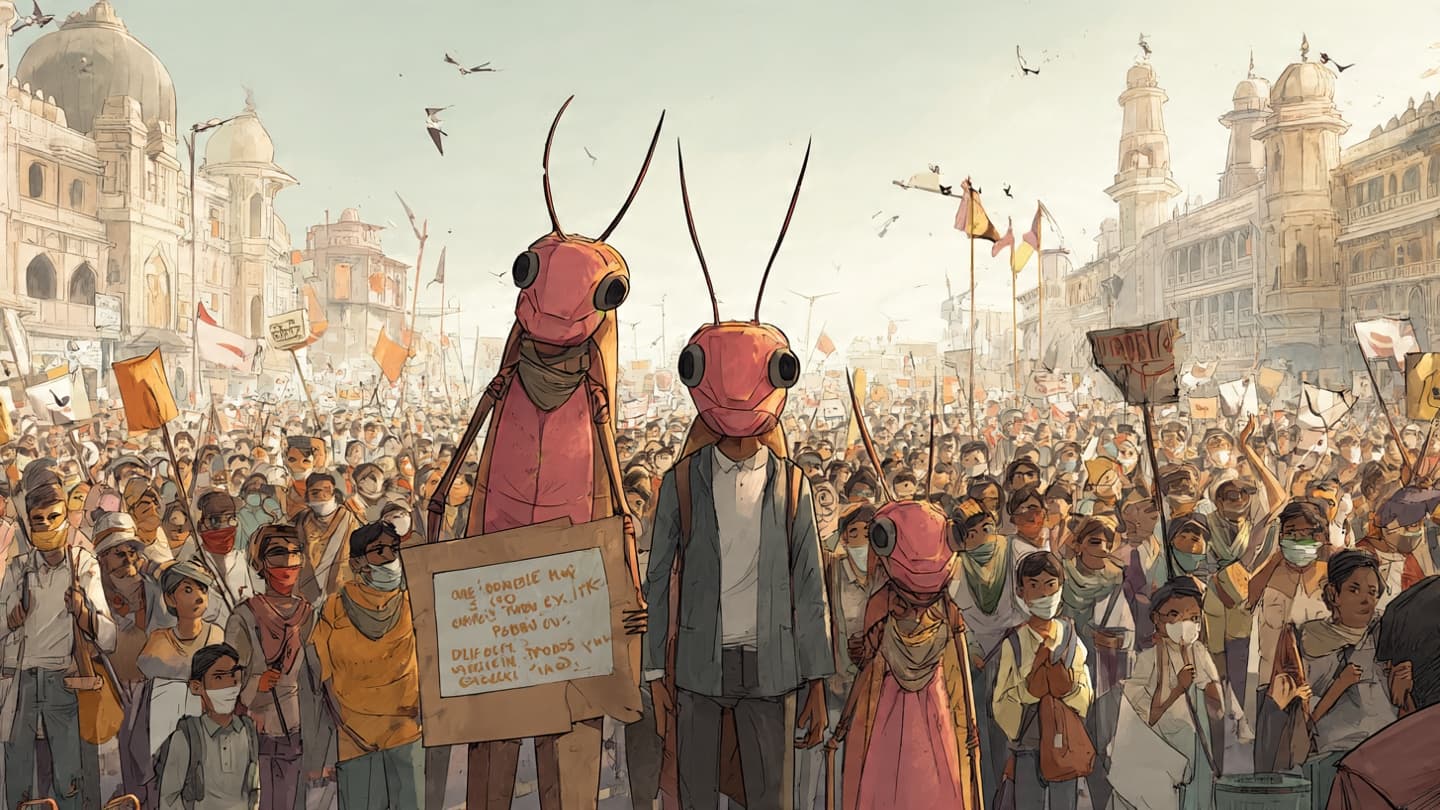
Protests have been documented in major urban centers, including New Delhi, Mumbai, and Bangalore. Images from these gatherings show thousands of young people wearing cockroach masks or carrying placards with witty slogans. The visual language of the movement is distinct, blending pop culture references with serious political demands. This aesthetic appeal has helped the movement gain traction beyond traditional activist circles, drawing in students, job seekers, and even some working professionals who feel disconnected from mainstream politics.
The core grievances driving the protests are deeply rooted in structural issues. Youth unemployment remains a critical challenge, with millions entering the workforce each year without adequate opportunities. Additionally, recent controversies over exam paper leaks have eroded trust in educational institutions and government oversight. For many participants, the protest is not just about jobs but about dignity and fairness in a system they perceive as rigged against them.
Leadership within the movement is fluid, reflecting its grassroots nature. While figures like Ankush Jain have emerged as prominent voices, the structure remains largely horizontal, relying on social media coordination rather than hierarchical command. This decentralization makes the movement resilient to traditional suppression tactics, as there is no single head to cut off. However, it also poses challenges in formulating coherent policy demands and negotiating with authorities.
The government’s response has been mixed, with some officials dismissing the protests as frivolous while others acknowledge the underlying frustrations. Police presence at rallies has been significant, though reports of violence have been limited compared to previous mass movements. The use of satire as a shield has perhaps softened the confrontation, allowing for a space where dissent can be expressed without immediate escalation. Yet, the tension between the state and the youth remains palpable.
As the movement grows, questions arise about its long-term trajectory. Can a protest born of irony sustain itself as a serious political entity? Some observers suggest it may evolve into a formal party, while others believe it will remain a pressure group, influencing elections through voter mobilization. Regardless of its future form, the Cockroach Movement has already succeeded in placing youth issues at the center of national discourse.
Closing: The images of cockroach-clad protesters marching through Indian cities are more than just a spectacle; they are a symbol of a generation demanding to be heard. By turning ridicule into resistance, the movement has carved out a unique space in India’s political landscape. Whether it leads to substantive change remains to be seen, but its impact on public consciousness is undeniable.
AI Image Disclaimer: Please note that any accompanying visuals for this article are AI-generated representations intended for illustrative purposes only.
Sources: Reuters CNN FairPlanet
Published by Banx Network. This article is part of the Banx decentralized media programme, powered by the BXE token on the XRP Ledger.