
Key Highlights
- Project Launch:The Experimental Neutrino Detector begins operations in Lake Superior.
- Unique Approach:This is the first deployment of neutrino detectors in freshwater.
- Future Implications:Research may lead to advancements in nuclear detection technologies.
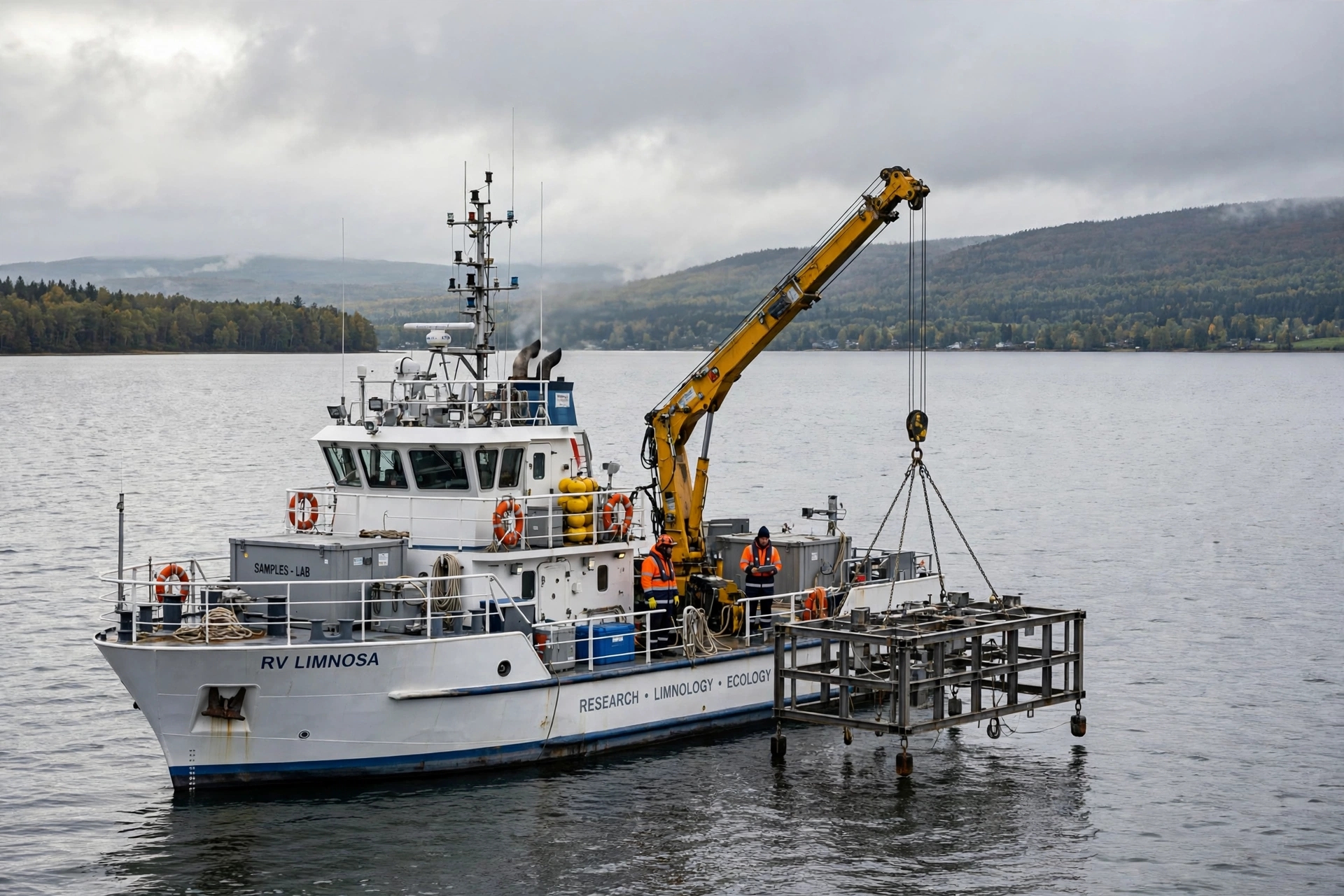
The quest to understand the universe's most abundant particle, the neutrino, has taken a significant step forward with the launch of the Experimental Neutrino Detector in Lake Superior. This project, spearheaded by the University of Minnesota Duluth in collaboration with the U.S. Department of Energy and two national laboratories, aims to capture these elusive particles, often referred to as ghost particles due to their ability to pass through matter without leaving a trace. The research vessel arrived in Duluth this week, marking the beginning of a groundbreaking scientific endeavor.
Neutrinos are produced in vast quantities during nuclear reactions, such as those occurring in the sun. For every electron or proton, there are approximately a billion neutrinos, making them incredibly abundant yet notoriously difficult to detect. The Experimental Neutrino Detector project is unique as it represents the first time that neutrino detectors have been deployed in a freshwater environment. The detectors will be positioned in the path of a powerful neutrino beam generated at Fermilab in Illinois, which travels underground toward northern Minnesota, crossing beneath Lake Superior.
The setup involves five large metal frames, each weighing around 8,000 pounds and standing three stories tall. Each frame is equipped with eighteen spherical sensors, roughly the size of beach balls. When a neutrino interacts with a water molecule, it can create a charged particle that emits a faint flash of blue light known as Cherenkov radiation. The sensors are designed to detect these flashes, distinguishing them from background noise created by cosmic rays and solar neutrinos.
Choosing Lake Superior for this experiment is strategic. Freshwater lakes lack the dissolved potassium found in ocean water, which can produce unwanted background signals, thus providing a cleaner signal-to-noise ratio for the detectors. However, the shallower depth of Lake Superior compared to deep-ocean sites means that the detectors can only operate effectively at night, when sunlight does not interfere with the faint light signals.
The project's leaders, including principal investigator Alec Habig, acknowledge that while significant discoveries are not guaranteed, the research will provide valuable insights into the technology and methodologies for future neutrino detection projects. DARPA's involvement adds an intriguing dimension, as there are suggestions that the research could have applications in tracking nuclear submarines or detecting clandestine nuclear reactors through their neutrino emissions, although DARPA has stated it has no specific applications in mind at this time.
The history of neutrino research in Minnesota is rich, with previous projects conducted at locations such as the Soudan Underground Mine and the Ash River lab. The neutrino beam that will be utilized in this project is expected to be shut off in February as Fermilab transitions to a new facility. After the experiment, the sensors will be retrieved and sent to Europe for further research in the Mediterranean, making this mission a crucial test run for future experiments.
For the local communities of Duluth and Two Harbors, the visible signs of this scientific pursuit may be minimal—a research vessel offshore and a temporary facility on the beach. However, beneath the surface of Lake Superior, the sensors will be actively searching for the faint blue flashes that could unlock some of the universe's most profound mysteries. Despite the ghost particles continuing their indifferent passage through matter, the effort to capture them represents a significant stride in the field of experimental physics.
AI Image Disclaimer: The visuals accompanying this report are generated by AI and are not photographs of the actual research vessel or equipment.
Published by Banx Network. This article is part of the Banx decentralized media programme, powered by the BXE token on the XRP Ledger.