Key Highlights
- Discovery:A new mushroom species, Galerina indica, has been identified in Florida.
- Unique Properties:This mushroom contains both psilocybin and deadly amatoxins.
- Implications:The finding raises safety concerns for mushroom foragers and challenges existing classifications.
[Scientific Discovery]
A recent discovery at the Ordway Swisher Biological Station in Florida has led to the identification of a new mushroom species that defies traditional categorizations. The species, named Galerina indica, was documented by undergraduate student Andrew Kunik. This mushroom is particularly notable because it contains both psilocybin, a compound known for its hallucinogenic properties, and amatoxins, which are highly toxic and can cause liver failure. The findings were published in the journal Current Biology, marking a significant moment in mycology and toxicology.
[The Discovery Process]
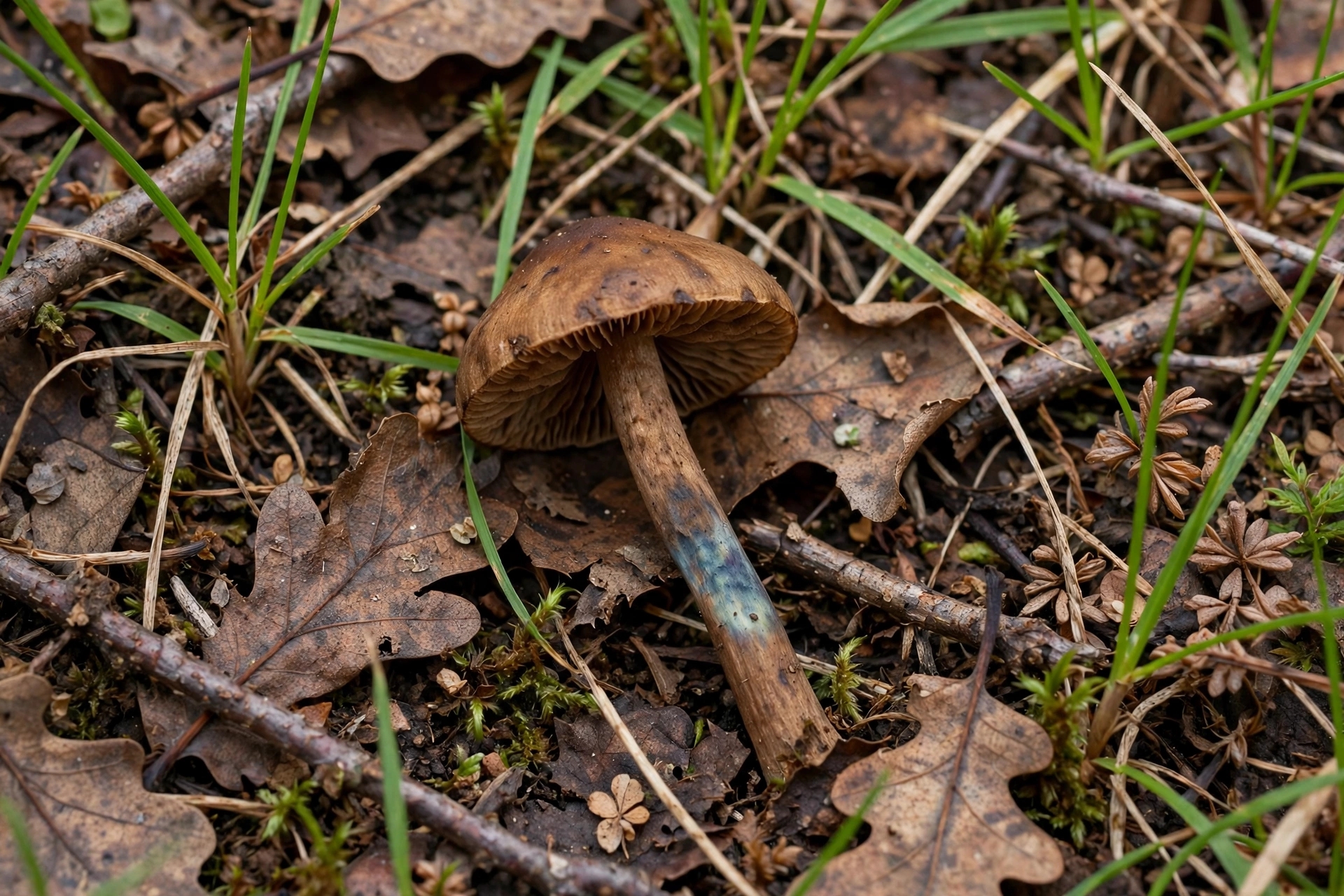
While studying various fungi, Kunik observed that this small brown mushroom exhibited a blue staining when handled, a characteristic typically associated with psilocybin-containing mushrooms. This unexpected finding led researchers, including Matthew Smith from the University of Florida's Institute of Food and Agricultural Sciences, to further investigate the chemical composition of this species. The discovery of a single mushroom containing both compounds raises intriguing questions about the evolutionary purpose of these chemicals, which do not seem to serve a clear survival function for the organism.
[Implications for Foragers]
The implications of this discovery extend beyond academic curiosity. Foraging for mushrooms is a popular activity, but it relies heavily on clear distinctions between edible, psychoactive, and poisonous species. The existence of Galerina indica complicates these classifications, making it crucial for foragers to exercise heightened caution. The researchers emphasize that this finding underscores the complexity of fungal chemistry and the need for more rigorous identification practices in the field.
[Ecological Considerations]
The dual presence of psilocybin and amatoxins in Galerina indica suggests that the chemical pathways responsible for these compounds may not be as mutually exclusive as previously thought. This challenges the notion that certain fungi can be easily categorized into safe or dangerous groups. The discovery prompts further investigation into the ecological roles of these compounds and how they might interact within the broader ecosystem.
[Revisiting Assumptions]
The mushroom itself is unremarkable in appearance, often overlooked by those unfamiliar with its significance. However, its discovery serves as a powerful reminder that our understanding of nature is often shaped by human-imposed categories. The tidy separation of hallucinogenic and toxic mushrooms was never a strict rule of nature, but rather a pattern observed through experience. Galerina indica encourages both scientists and the public to reconsider their assumptions about the natural world and its complexities.
AI Image Disclaimer: The images in this article are AI-generated and do not depict the actual mushroom species described.
Published by Banx Network. This article is part of the Banx decentralized media programme, powered by the BXE token on the XRP Ledger.