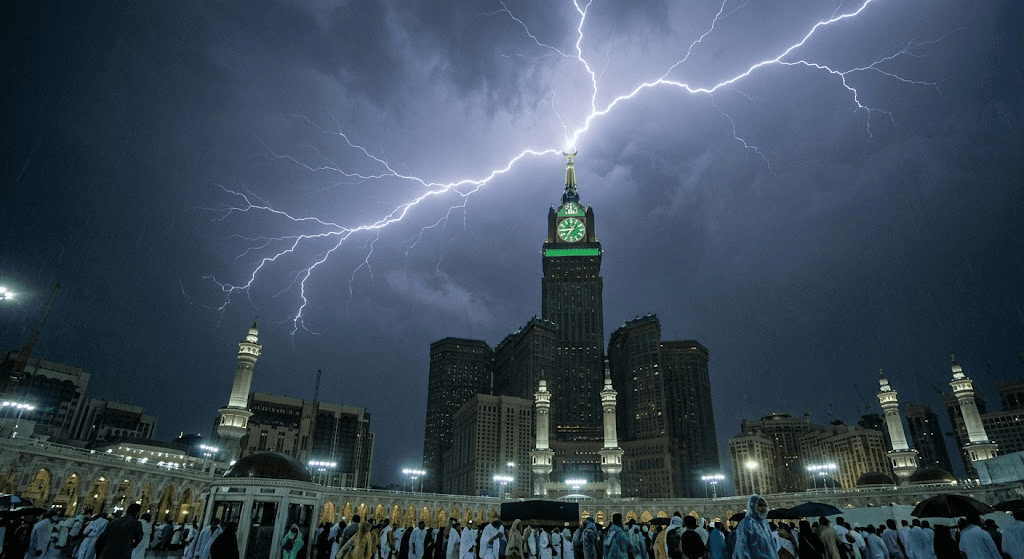
MECCA, SAUDI ARABIA — A striking electrical storm illuminated the skies over Mecca as a massive lightning bolt directly struck the peak of the iconic Makkah Clock Royal Tower during a spell of severe weather across western Saudi Arabia.
The incident occurred as intense summer thunderstorms swept through the holy city, bringing downpours, gale-force winds exceeding 80 kilometers per hour, and localized flooding. Eyewitness footage captured the moment a jagged bolt of lightning hit the crescent spires atop the 601-meter-tall skyscraper—the world’s tallest clock tower—instantaneously branching out across the night sky and illuminating the Grand Mosque below.
Despite the force of the electrical discharge, the building’s advanced lightning protection and grounding systems effectively channeled the high-voltage strike safely into the earth, preventing structural damage or disruption to the complex's power supply.
Down at ground level, emergency teams worked to assist worshippers navigating the sudden deluge. High-velocity wind gusts briefly scattered temporary safety barriers and umbrella stands around the courtyard surrounding the Kaaba. Operations crews quickly deployed drainage units to clear surface runoff from the marble plazas to ensure safe footing for pilgrims.
Saudi Arabia’s National Center of Meteorology issued ongoing weather advisories for the Makkah region, forecasting continued torrential rains, active dust storms, and reduced visibility across the surrounding high-altitude areas. Authorities advised residents and visitors to monitor official safety alerts and take precautions while navigating outdoors during peak storm activity.
The dramatic atmospheric display produced viral videos across global social media platforms, with millions marvelling at the visual spectacle of the lightning connecting with the golden crescent. Architectural experts highlighted that the tower's specialized copper grounding mesh and heavy-duty surge protection arrays were engineered specifically for such extreme meteorological conditions, given the structure's extreme height relative to the surrounding valley.
Local municipality teams worked through the night to clear debris from major thoroughfares leading to the Grand Mosque complex, ensuring transit routes remained open for incoming worshippers. Civil Defense officials reported that despite the severity of the squall line, religious rituals inside the sanctuary continued uninterrupted, with maintenance crews maintaining dry pathways along the outdoor matting and walkways.
Published by Banx Network. This article is part of the Banx decentralized media programme, powered by the BXE token on the XRP Ledger.