Key Highlights
- Project Overview:'Mapping Memories' aims to document personal stories in Greenland.
- Climate Impact:Greenland's landscape is changing rapidly due to climate change.
- Community Voices:Nearly 60 personal stories highlight the effects of melting ice.
In an era where climate change is reshaping our planet, the 'Mapping Memories' project emerges as a poignant initiative aimed at preserving the personal narratives of those living in Greenland. Spearheaded by the Sweden-based research institute Nordregio, this project seeks to capture the memories tied to specific locations across the island, as the Arctic warms at an alarming rate—four times faster than the global average. The project underscores the urgency of documenting these stories before they fade into oblivion, much like the icebergs that once dominated the landscape.
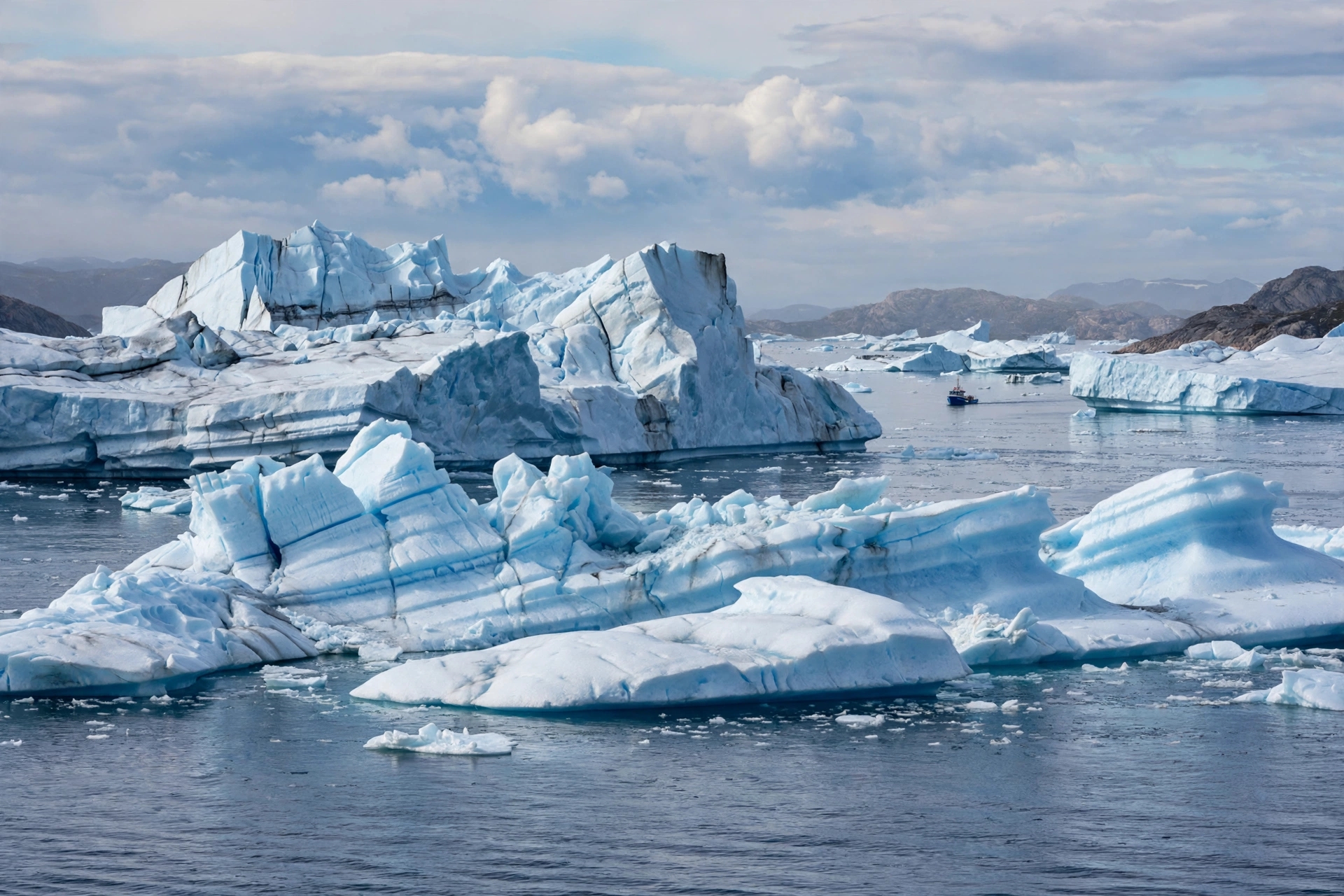
Launched in September at the Icefjord Center in Ilulissat, the exhibit showcases the intersection of human experience and environmental change. Cuno Jensen, a 42-year-old corrections officer, shared his memories of the towering icebergs that once graced Disko Bay. "Nowadays, when we look at the scenery, we can see some of the icebergs, but not that tall or big as it used to be," he lamented. His reflections highlight a broader narrative of loss, as familiar landscapes transform under the pressures of climate change.
The project has already gathered nearly 60 personal stories, each revealing the intimate connections between the people of Greenland and their environment. Fisherwoman Karen Alaufesen recalls a fishing spot that has seen a decline in halibut catches, while pensioner Kristian Petersen reflects on the abandoned coal-mining settlement of Qullissat, which was struck by a tsunami in 1972. These narratives are not mere abstractions; they are vivid accounts of lives intertwined with the land, illustrating the tangible impacts of a warming climate.
In Ilulissat, the evidence of change is stark. Thawing permafrost is causing buildings to sink, roads to crack, and pipes to burst. Karl Sandgreen, director of the Icefjord Center, pointed out the slanted staircase of the town's 19th-century history museum, a physical manifestation of the shifting ground beneath. "Everybody can see a lot of buildings are sinking," he noted, emphasizing the visible nature of this crisis. As archaeological artifacts, including hunting tools dating back 4,000 years, emerge from the thaw, they serve as reminders of a history that is rapidly being rewritten.
The Sermeq Kujalleq glacier, one of the fastest-moving glaciers globally, continues to send icebergs into the sea at an unprecedented rate. According to UNESCO, this glacier is a critical indicator of climate change, with the Geological Survey of Denmark and Greenland reporting that the Greenland ice sheet has lost more ice than it has gained for 30 consecutive years. Senior researcher Signe Hillerup Larsen has stated that there is no scenario in which the ice sheet could regain its lost mass, underscoring the urgency of the situation.
The 'Mapping Memories' project does not aim to halt these changes; rather, it serves as a vital act of documentation. As Sandgreen succinctly put it, "If we do not document the people's own stories, they will disappear when the people pass away." This initiative adds a crucial layer to the scientific data, focusing on the emotional and experiential aspects of living in a world that is irrevocably changing. By capturing these memories, the project ensures that the voices of those who have witnessed Greenland's transformation will not be lost to time.
As the icebergs shrink and the landscape continues to evolve, the 'Mapping Memories' project stands as a testament to the resilience of human memory and the importance of preserving our collective history in the face of climate change.
AI Image Disclaimer: The visuals in this report are AI-generated and do not represent the actual individuals or locations described.
Published by Banx Network. This article is part of the Banx decentralized media programme, powered by the BXE token on the XRP Ledger.