Key Highlights
- Discovery:A fossil previously classified as a crustacean is reclassified as an early insect.
- Research:The fossil, Chosha praecursor, is 324 million years old and fills a gap in insect evolution.
- Implications:The findings suggest early insects may have existed in aquatic environments much earlier than previously thought.
A remarkable discovery at the San Diego Natural History Museum has transformed our understanding of early insect evolution. For decades, a fossil specimen, cataloged as No. 28852, lay unnoticed among countless others, misidentified as an extinct crustacean. However, a doctoral student from Cambridge University, Erik Tihelka, stumbled upon this overlooked specimen and, through meticulous examination, revealed its true identity as one of the earliest known insects.
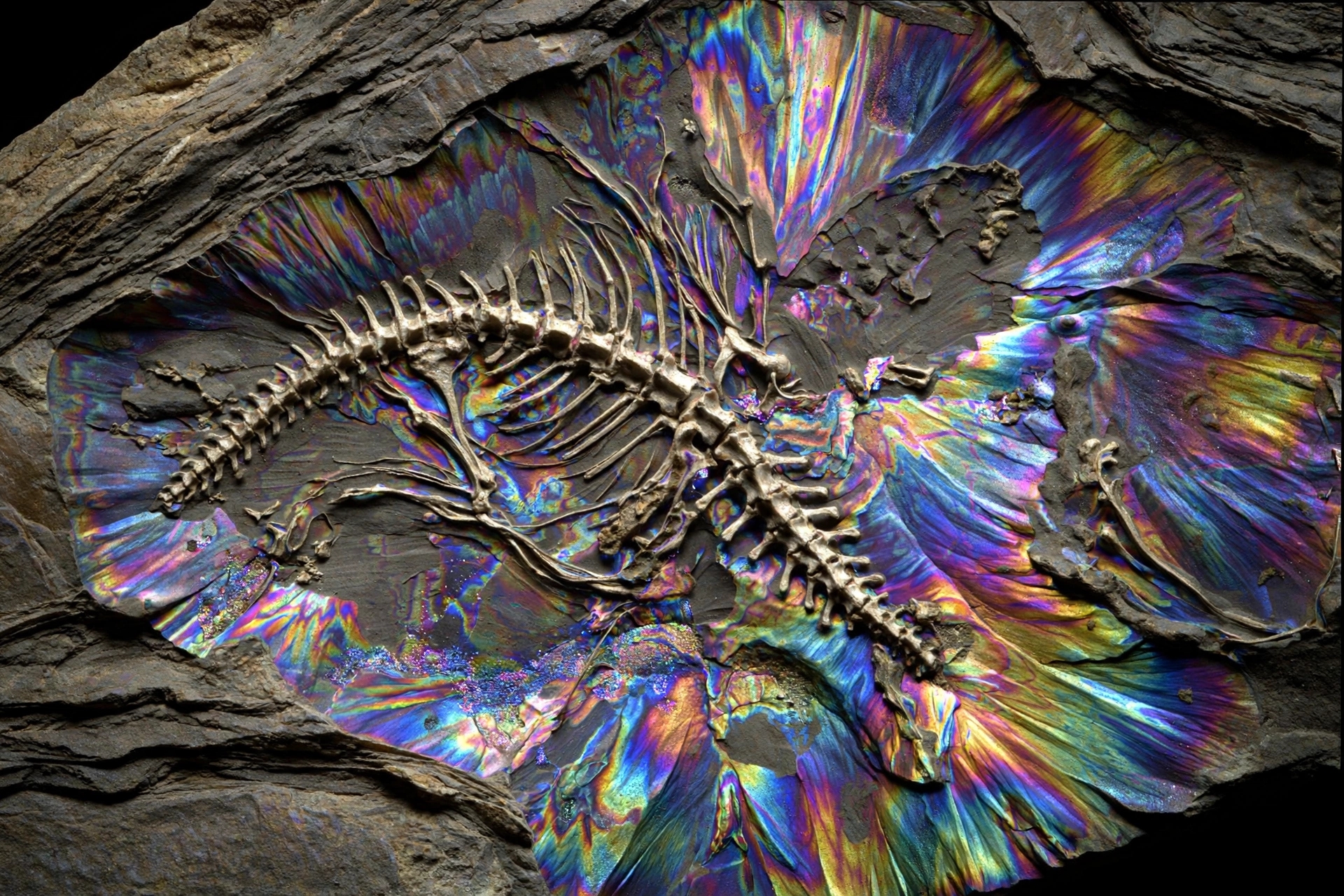
The fossil, collected in Brewster County, Texas, in 1985, was initially described in 1991. It has now been renamed Chosha praecursor, dating back 324 million years. This reclassification is significant as it places the specimen at the younger edge of the “hexapod gap,” a period spanning approximately 60 million years during which the fossil record shows a scarcity of insect evidence. Tihelka's analysis under polarized light uncovered critical features that had previously gone unnoticed, including six legs, an ovipositor for egg-laying, and a tail-like filament. Notably, the fossil also exhibited additional paddle-like legs on its abdomen, a characteristic that initially misled researchers into classifying it as a crustacean.
The implications of this discovery extend beyond Chosha praecursor itself. The reclassification has prompted paleontologists to revisit other fossils, leading to the conclusion that they too may represent early insects rather than crustaceans. This reevaluation narrows the hexapod gap and suggests that the presence of early insects, potentially in aquatic environments, predates previous assumptions based on the sparse fossil record.
Tom Deméré, the curator of paleontology at the San Diego Natural History Museum, emphasized the importance of this finding. While the fossil had been loaned to researchers in Eastern Europe and Germany after its initial description, it took a fresh perspective and advanced techniques to reveal its significance. “There is nothing that makes a curator happier than having a researcher use the collection,” Deméré remarked, highlighting the dynamic nature of scientific collections.
Today, Chosha praecursor is prominently displayed in a glass case at the museum, symbolizing a pivotal moment in our understanding of insect evolution. Its story serves as a powerful reminder that scientific collections are not merely static archives; they are active libraries that can yield new insights when examined with fresh questions and methodologies. A fossil that remained unnoticed for forty years has the potential to rewrite a chapter in the history of life on Earth.
The discovery of Chosha praecursor not only enriches our knowledge of early insect evolution but also underscores the importance of continued research and exploration within natural history collections. As scientists delve deeper into the past, they may uncover more secrets that challenge our understanding of life's history.
AI Image Disclaimer: The visuals in this article are AI-generated and do not depict the actual fossil specimen or researchers.
Published by Banx Network. This article is part of the Banx decentralized media programme, powered by the BXE token on the XRP Ledger.