Key Highlights
- Sudbury's impact structure recognized as a geological heritage site.
- The site is among the oldest and largest impact sites on Earth.
- Recognition highlights Sudbury's contributions to planetary science and mining.
Sudbury, Ontario, is a place where the ground itself tells a story of cosmic history. Nearly two billion years ago, a massive asteroid or comet struck this region, leaving behind a geological scar that has been shaped by time and ice. This unique history was recently acknowledged when the International Union of Geological Sciences designated the Sudbury impact structure as one of its Third 100 Geological Heritage Sites during a gathering in Portugal in November 2026. This recognition brings the total number of such sites worldwide to 300 since the program's inception in 2022, with Sudbury joining notable Canadian entries like the Charlevoix Astrobleme in Quebec.
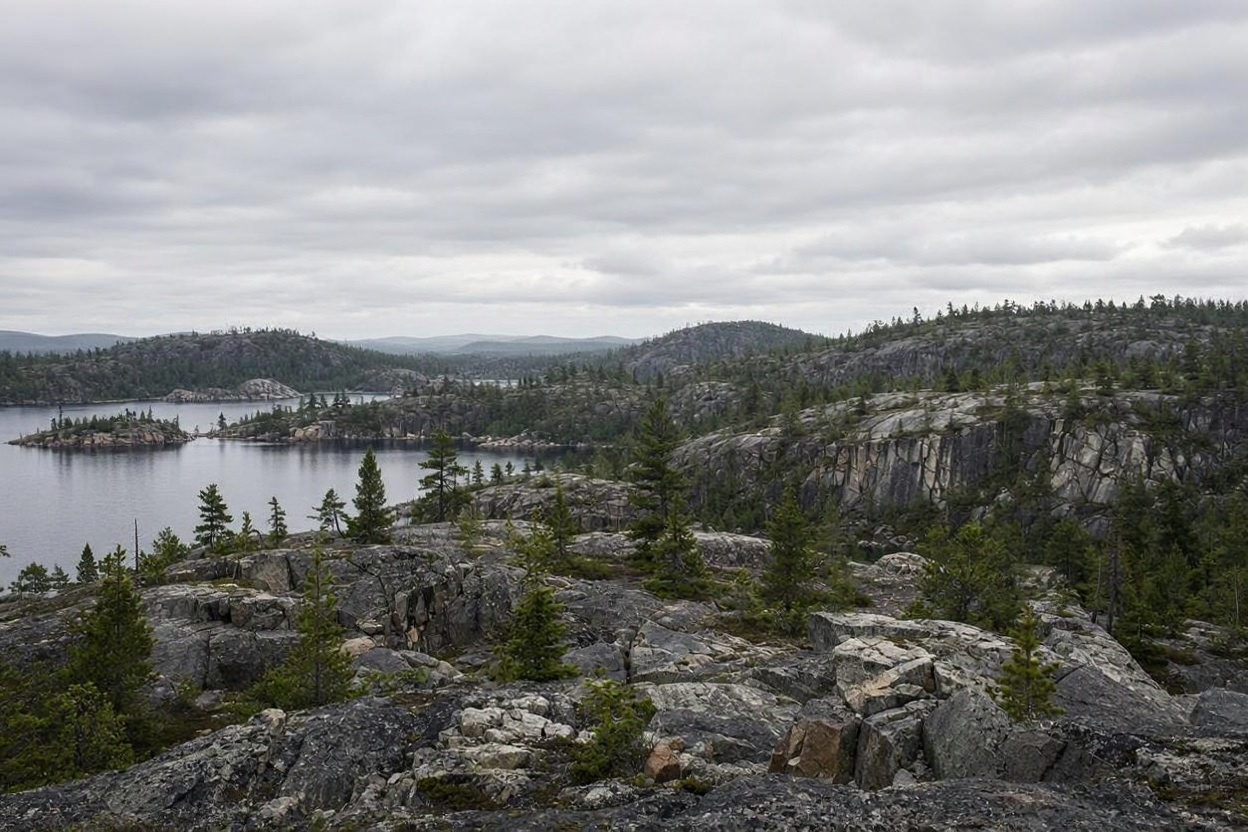
The significance of the Sudbury impact structure cannot be overstated. Formed approximately 1.85 billion years ago, it is one of the oldest and most extensively studied impact sites on Earth. Tectonic forces have preserved the crater, while Pleistocene glaciers have eroded the overlying rock, exposing layers of shocked rock and the world's largest impact melt sheet. Dr. Michael Lesher, a professor emeritus at Laurentian University, referred to Sudbury as "one of the crown jewels of planetary science" and emphasized its role as a premier natural classroom for studying impact cratering and ore deposit genesis.
Beyond its geological importance, the Sudbury structure has also been a cornerstone of Canada's mining industry. The region is home to significant deposits of nickel, copper, and platinum-group elements, which have fueled the local and national economy for over 140 years. The same impact processes that created the crater also concentrated these valuable metals, linking the ancient past to the present in a tangible way. In the early 1970s, NASA recognized Sudbury's geological features as relevant to lunar exploration, sending Apollo 16 and 17 astronauts to study the area before their missions to the Moon.
The nomination of Sudbury as a geological heritage site was championed by a team of experts, including Dr. Lesher, consulting geological engineer David Wood, retired Ontario Geological Survey geologist Ruth Debicki, and Geological Survey of Canada research scientist Michel Houlé. Dr. Tammy Eger, Laurentian University's vice-president of research, framed this recognition as a tribute to the generations of local scholars who have contributed to the understanding of this unique geological feature. "This designation highlights the extraordinary scientific value that exists right in our backyard," she stated.
For Sudbury, this designation is both an honor and a responsibility. Recognized as a natural classroom, the site invites visitors and scrutiny alike. Its value extends beyond the lessons it offers about the distant past; it also provides insights into planetary formation and the mineral wealth that shapes the lives of those who inhabit the region. As Sudbury continues to evolve, its geological heritage will remain a vital part of its identity and a source of knowledge for future generations.
Images accompanying this article were created with artificial intelligence.
Published by Banx Network. This article is part of the Banx decentralized media programme, powered by the BXE token on the XRP Ledger.