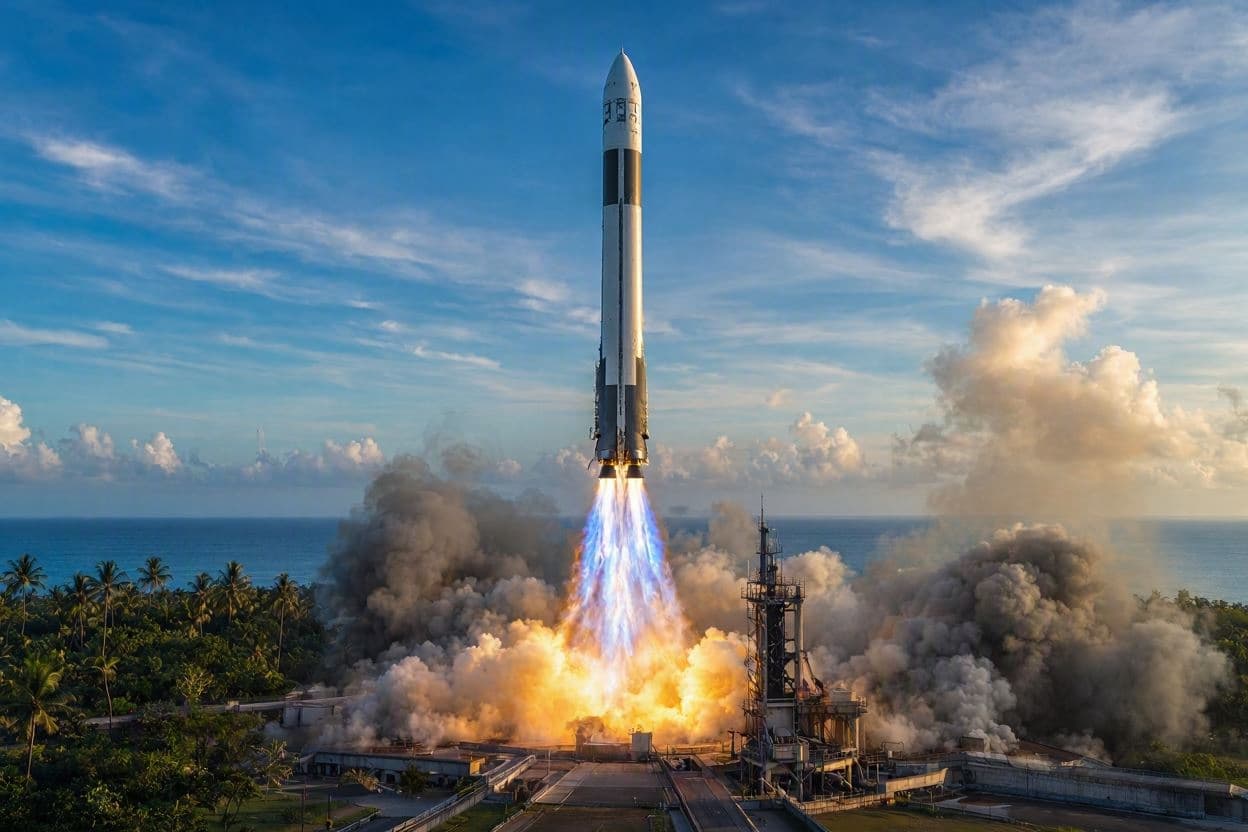
Space exploration is often associated with distant planets and deep cosmic mysteries, but some of its most practical benefits remain closer to home. The successful launch of the Ariane 6 rocket, carrying a European weather satellite, marks a significant milestone for the continent’s space ambitions. This mission underscores the critical role of orbital technology in monitoring our planet’s climate and improving daily life through accurate forecasting.
The Ariane 6, developed by the European Space Agency (ESA) and Arianespace, is designed to be a versatile and cost-effective launcher. Its debut missions have faced delays, but this successful launch demonstrates its reliability and capability. The rocket lifted off from French Guiana, piercing the sky with precision and delivering its payload into the designated orbit.
The satellite onboard is part of the MetOp-SG series, a next-generation system for meteorological observation. Equipped with advanced instruments, it will collect data on atmospheric temperature, humidity, and wind patterns. This information is vital for improving weather forecasts, tracking severe storms, and understanding long-term climate trends.
For Europe, independent access to space is a strategic priority. The Ariane 6 program ensures that the continent can launch its own satellites without relying on foreign providers. This autonomy is crucial for security, scientific research, and commercial applications. The success of this mission reinforces Europe’s position as a key player in the global space industry.
The weather data provided by the satellite will benefit millions of people. Accurate forecasts help farmers plan harvests, airlines optimize routes, and emergency services prepare for natural disasters. In an era of climate change, such data is increasingly important for adapting to extreme weather events and mitigating their impacts.
Engineers and scientists celebrate the launch as a testament to years of collaboration and innovation. The Ariane 6 represents a new chapter in European spaceflight, with plans for more frequent launches in the coming years. Each mission will expand the constellation of satellites monitoring Earth, enhancing our ability to protect and understand our environment.
Public interest in space missions often focuses on human exploration, but robotic satellites play an equally vital role. They are the silent guardians of our planet, providing the data needed to make informed decisions about health, safety, and sustainability. The Ariane 6 launch reminds us that space technology is deeply integrated into our everyday lives.
ESA has confirmed the successful deployment of the satellite, which has begun transmitting data. The agency plans to continue its launch schedule, further expanding Europe’s capabilities in Earth observation and space exploration.
AI Image Disclaimer: Please be aware that any images accompanying this article are AI-generated illustrations designed to evoke the themes of space launch, satellite technology, and environmental monitoring.
Sources: European Space Agency (ESA) BBC News Reuters SpaceNews The Guardian
Published by Banx Network. This article is part of the Banx decentralized media programme, powered by the BXE token on the XRP Ledger.