There is a particular rhythm to fire season in Southern California—a pattern of wind and warning, of red skies and evacuation orders, of the quiet hours after the flames have moved on. This week, that rhythm arrived with the Santa Ana winds, and the region is still counting what they left behind.
Three major wildfires burned across Los Angeles and Orange counties this week, driven by strong Santa Ana winds, low humidity, and unseasonably high temperatures. As of Saturday evening, fire officials reported significant progress on containment as the winds began to weaken and Red Flag Warnings expired across much of the region .
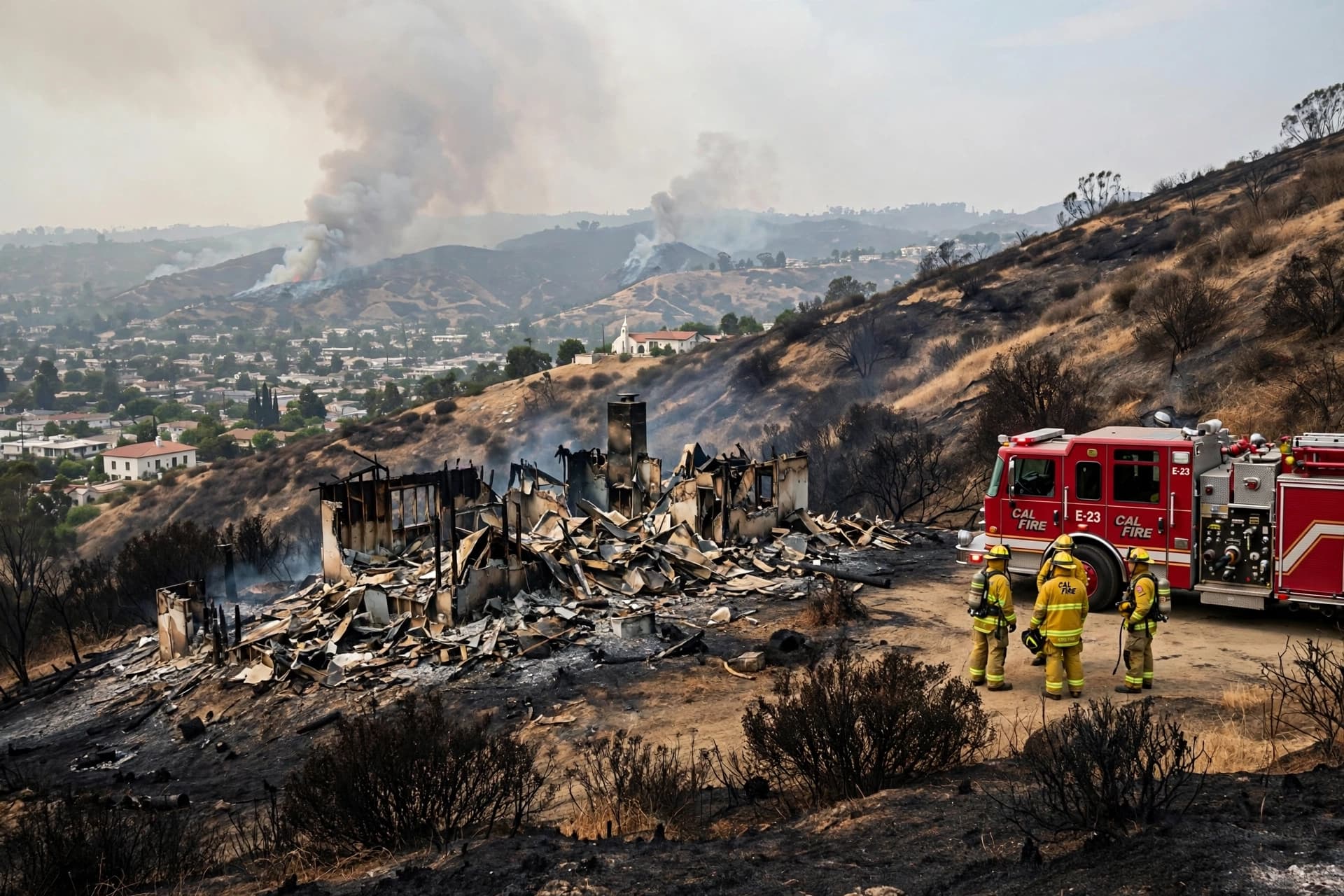
The Norte Fire, burning on the border of San Clemente and San Juan Capistrano in Orange County, has burned 570 acres and destroyed at least six homes. It was 25 percent contained as of Saturday evening. Two firefighters were injured—one suffered heat exhaustion, and another was hospitalized. Approximately 16,000 residents were affected by evacuation orders, though those orders were lifted as containment improved .
The Bryson Fire in Malibu burned 146 acres and was 61 percent contained by Saturday. No structures were lost, and only minor injuries to fire personnel were reported. Evacuation orders and warnings were lifted, and planned power outages were being canceled as utilities worked to restore service . The Peak Fire in Azusa also prompted a response, though forward progress was stopped .
The Henderson Fire at Marine Corps Base Camp Pendleton burned more than 2,000 acres and forced closures on Interstate 5, the main corridor between Los Angeles and San Diego. It was 35 percent contained as of Friday morning .
What the containment percentages do not capture is the texture of the days behind them. The Norte Fire began around 11:30 a.m. Friday and spread rapidly into residential neighborhoods, burning multimillion-dollar homes and sending residents fleeing. One resident described watching trees in her backyard catch fire before the flames moved toward her house . The Santa Ana winds that fueled the blazes gusted between 50 and 70 miles per hour in the mountains, with temperatures reaching 100 degrees Fahrenheit in some areas .
By Sunday, the weather had shifted. All Red Flag Warnings had expired, a cooling trend was expected through early next week, and onshore flow was returning to the region. Fire officials cautioned that some locally breezy conditions might linger, but the worst of the wind event appeared to have passed .
The fires are not fully contained. The burn scars remain active hazards, and the causes of the blazes are still under investigation. But the evacuation centers are closing, the roads are reopening, and the region is entering the phase that follows every fire season's worst days: the work of counting, of rebuilding, and of waiting for the next wind.
AI Image Disclaimer: The images accompanying this article were generated by artificial intelligence and are intended for illustrative purposes only.
Sources: ABC7 Los Angeles, Cal Fire, Orange County Fire Authority, Central People's Radio (citing CCTV), BSS/AFP
Published by Banx Network. This article is part of the Banx decentralized media programme, powered by the BXE token on the XRP Ledger.