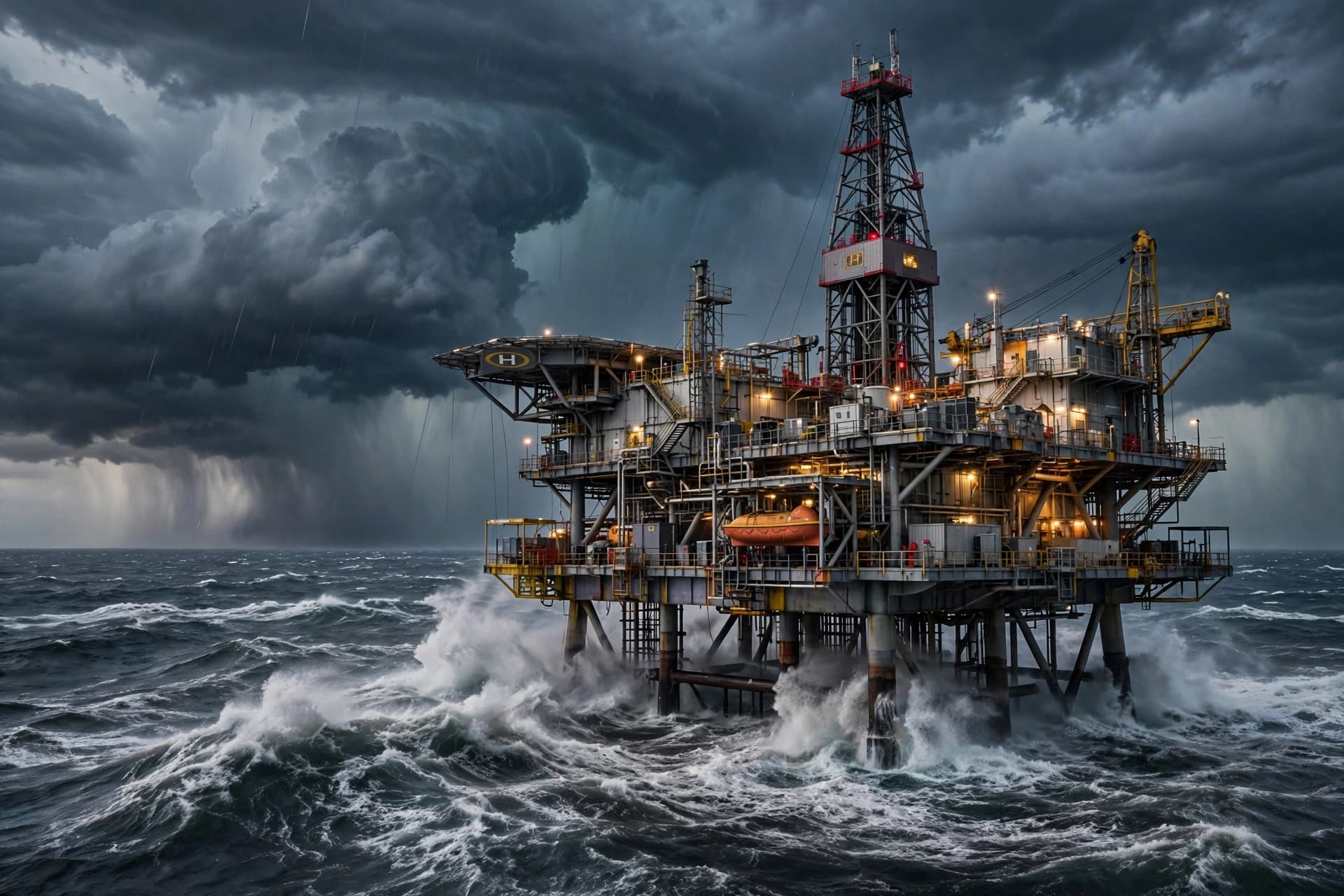
There is a particular arithmetic to a hurricane in the Gulf of Mexico—a calculation of barrels per day, of platforms evacuated, of production shut in, of the delicate balance between safety and economic necessity that oil companies must strike when a storm approaches. In the case of Hurricane Isaias, that arithmetic has now been tallied. The storm, which strengthened to a Category 3 hurricane before making landfall on the Gulf Coast, shut in approximately 1.28 million barrels per day of oil production—roughly 70 percent of the Gulf's total output—and prompted the evacuation of dozens of offshore platforms.
The storm's path took it through the heart of the Gulf's oil-producing region, forcing companies including Shell, BP, Chevron, and ExxonMobil to evacuate workers and shut down production. The Bureau of Safety and Environmental Enforcement reported that 1.28 million barrels per day of oil and 1.8 billion cubic feet per day of natural gas were taken offline. The shutdowns are a standard precaution: offshore platforms are designed to withstand hurricanes, but the workers who operate them are not, and companies are required to evacuate them when a storm threatens. The production can be restarted once the storm passes and the platforms are inspected for damage.
The impact on global oil markets was immediate but limited. Oil prices rose modestly as the storm approached, but the increase was tempered by the fact that the world is awash in crude oil, and by the ongoing war with Iran that has disrupted supply routes in the Middle East. The Gulf of Mexico accounts for about 15 percent of U.S. oil production, and the loss of 1.28 million barrels per day is significant but not catastrophic. The bigger concern is the duration of the shutdown. If platforms are damaged, production could be offline for weeks or months.
The storm also raised concerns about the region's refining capacity. The Gulf Coast is home to nearly half of the United States' refining capacity, and a direct hit on a major refinery complex could disrupt fuel supplies for weeks. As of Wednesday, no refineries had reported significant damage, but the storm's full impact will not be known until the floodwaters recede and inspections are completed.
For the workers who were evacuated, the storm is a reminder of the risks that come with extracting oil from the Gulf. They leave their families, board helicopters, and fly to shore, not knowing when they will return or what they will find when they do. The platforms they leave behind are built to survive hurricanes, but they are not invincible. The storm has passed. The production is shut in. And the Gulf, as always, is waiting for the all-clear.
AI Image Disclaimer: All images in this article are AI-generated and are intended for illustrative purposes only.
Sources: Bureau of Safety and Environmental Enforcement, Reuters, Bloomberg, Associated Press
Published by Banx Network. This article is part of the Banx decentralized media programme, powered by the BXE token on the XRP Ledger.