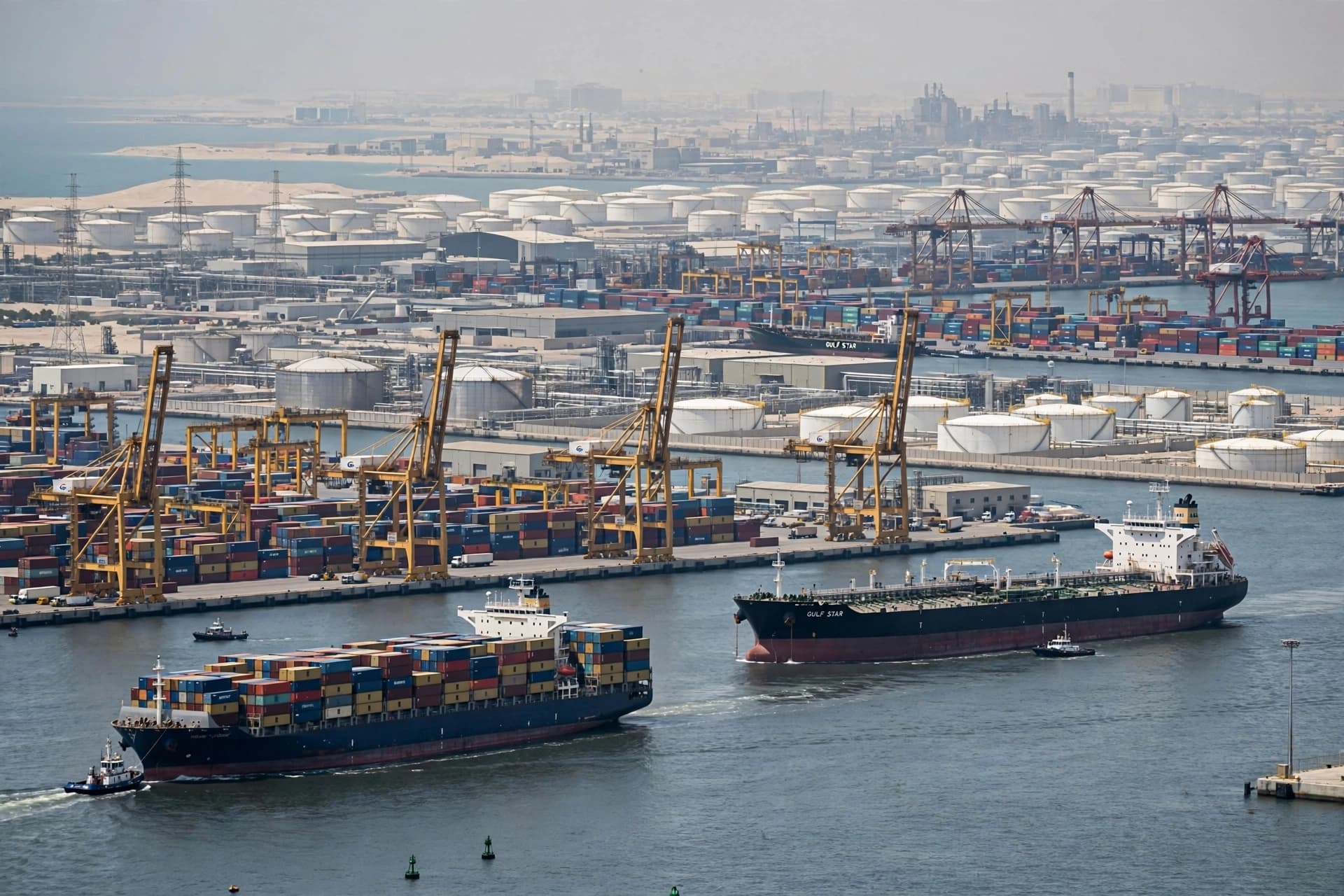
The effects of a disrupted shipping route rarely remain confined to the waterway itself. When vessels are forced to change direction, wait longer or transfer cargo through alternative routes, the additional time and expense gradually travel through the global economy. The Strait of Hormuz has become a clear example of that process.
The Associated Press reported that disruptions around the strategic waterway have affected global trade and energy markets, while Gulf producers have increasingly relied on alternative routes and maritime arrangements to keep crude moving.
The Strait is particularly important because it has traditionally carried a large share of the world's oil and liquefied natural gas trade. When shipping through the area becomes more difficult, producers and buyers have to look for alternatives. Pipelines, other ports and ship-to-ship transfers can provide partial solutions, but each comes with its own capacity and cost limitations.
Saudi Arabia and the United Arab Emirates have used alternative infrastructure to bypass some of the pressure on the Strait. Yet those routes cannot simply replace the waterway at unlimited scale. Their capacity, geographic reach and operating costs all differ from the established maritime route.
The shipping industry has therefore become an important part of the economic story. Tankers are not only vessels carrying commodities; they are also moving pieces of a global logistics system. When demand for alternative routes rises, vessel availability becomes tighter and charter costs can increase.
The result is an additional expense attached to every shipment. A cargo that once traveled along a relatively familiar route may now require longer journeys, additional transfers or different insurance arrangements. Those costs can eventually affect refinery economics, fuel prices and the cost of transporting other goods.
Reuters reported on September 29 that oil prices rose for a second consecutive session as concerns over Middle Eastern supply disruptions remained despite recovering crude exports from countries including Saudi Arabia and the United Arab Emirates. Kpler data cited by Reuters showed regional exports had increased, but much of the recovery depended on more expensive and less efficient alternatives.
The uncertainty is particularly important for companies planning several weeks or months ahead. Shipping contracts, fuel purchases and manufacturing schedules depend on assumptions about cost and availability. When those assumptions become unstable, companies may respond by holding additional inventory, changing suppliers or accepting higher transportation costs.
Airlines are also feeling the consequences of higher energy costs. Reuters reported that Lufthansa expects its additional jet-fuel expense for 2026 to exceed an earlier forecast of €1.5 billion as the Iran conflict and higher oil prices continue to affect the industry. Fuel accounts for roughly 30% to 40% of airline operating expenses, according to the report.
The wider lesson is that shipping disruptions are measured not only by the number of vessels delayed. Their impact can be seen in freight rates, fuel bills, inventory decisions and the price of goods moving across continents. A change in one maritime corridor can therefore become part of the financial calculations of companies thousands of miles away.
For now, global trade continues to adapt. Alternative routes are being used, vessels are being repositioned and businesses are adjusting their assumptions. But the longer the disruption persists, the more important the question becomes of how much additional cost the international trading system can absorb before those temporary arrangements begin to look like a new normal.
IMAGE DISCLAIMER: Images accompanying this article are illustrative and may not depict the exact vessels, shipping routes, or commercial conditions described.
SOURCES: Associated Press Reuters Kpler International Energy Agency International maritime industry sources
Published by Banx Network. This article is part of the Banx decentralized media programme, powered by the BXE token on the XRP Ledger.