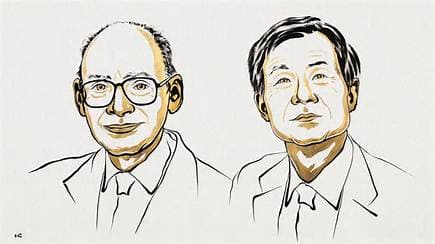
Henri B. Kagan and Kenso Soai have been awarded the 2026 Nobel Prize in Chemistry for discoveries in asymmetric organic synthesis. Their work helped explain how chemical reactions can produce more of one molecular mirror image than the other—a property known as chirality. Kagan’s 1986 discovery showed how to increase that imbalance; Soai later developed a reaction that produced only one version. The findings have helped chemists design reactions for making pharmaceuticals and other substances more selectively. The laureates will share the 12 million Swedish kronor prize.
Published by Banx Network. This article is part of the Banx decentralized media programme, powered by the BXE token on the XRP Ledger.