There is a quiet language spoken by the smallest creatures—a language of movement, of light and shadow, of swimming toward safety or away from danger. For scientists who study pollution in aquatic environments, learning to read that language has become a critical tool. A new study on amphipods—small, shrimp-like crustaceans found in oceans and rivers worldwide—offers the first comprehensive baseline data on how these creatures move under laboratory conditions, providing a foundation for more reliable ecotoxicology experiments.
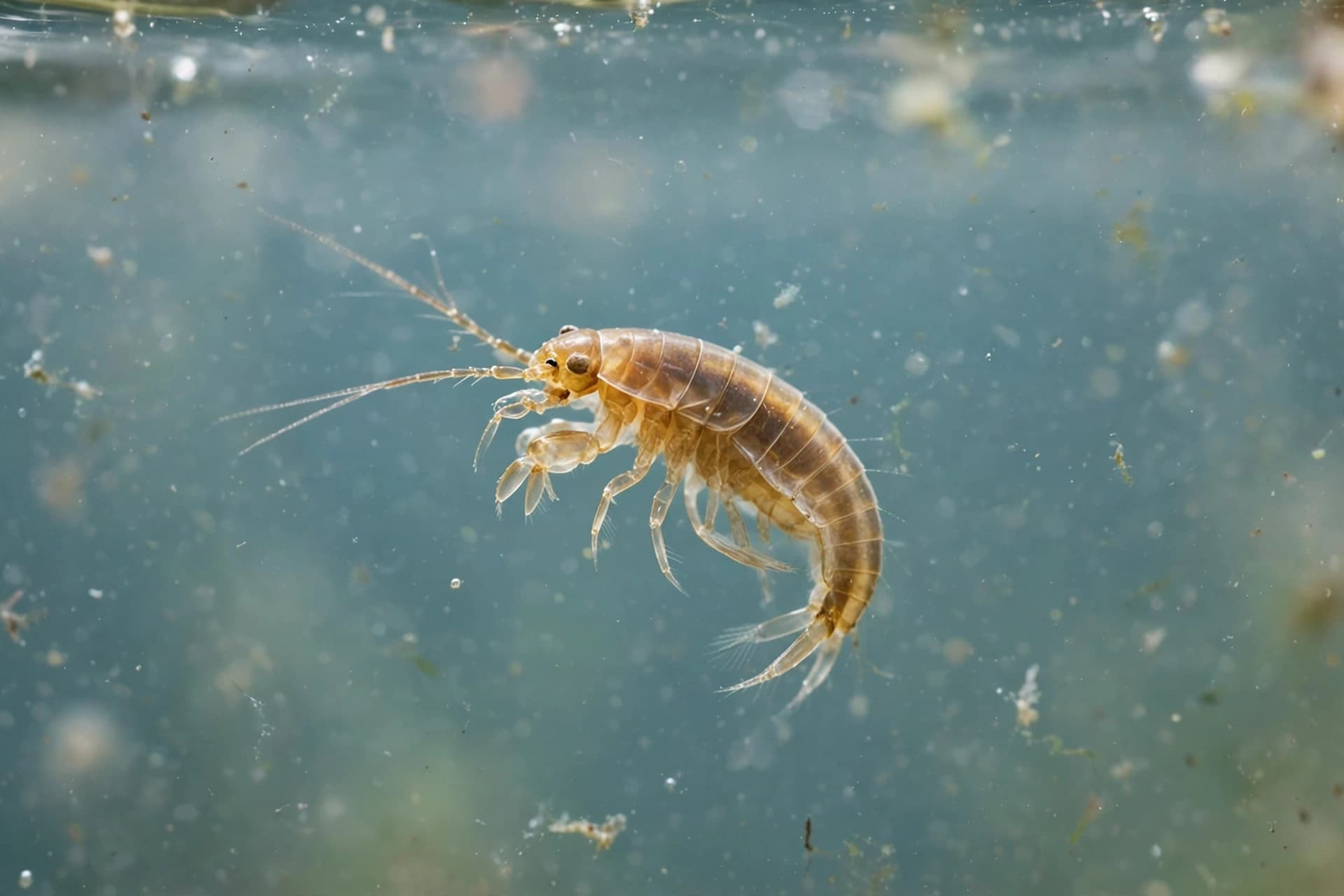
The research, published in PLOS ONE, focused on Marinogammarus marinus, a marine intertidal amphipod abundant along European coasts. The team developed an automated, high-throughput behavioral assay using the Zantiks LT system, an infrared video-tracking platform that can monitor the swimming behavior of up to 60 individual animals within 90 minutes .
Amphipods are particularly valuable for ecotoxicology because they are sensitive to environmental changes and respond to pollutants in measurable ways. Their swimming behavior—how fast they move, where they position themselves in a container, how they react to light—can serve as an early warning signal for water quality problems . But before researchers can measure how pollutants affect behavior, they need to know what "normal" looks like.
The study characterized baseline locomotion behavior across sex categories, including males, non-brooding females, and, for the first time, brooding females carrying developing offspring. The researchers quantified light-induced swimming, thigmotaxis (the tendency to stay near walls), body length effects, and variability across four consecutive days of testing .
One of the study's key findings concerns the importance of experimental design. Previous research has shown that amphipod behavior varies significantly between species and can be influenced by factors like container shape and size . The new study provides a standardized framework that accounts for these variables, improving reproducibility across different laboratories .
The researchers also examined the behavior of brooding females—a group that had not been explicitly characterized before. Because amphipods carry their developing young in a marsupium, reproductive status could influence locomotive activity, and understanding this variability is essential for designing experiments that can detect meaningful effects .
The work builds on years of research into amphipod behavior as an ecotoxicological endpoint. Studies have demonstrated that pharmaceuticals and environmental pollutants can alter amphipod locomotion, and that light-induced startle responses are conserved innate behaviors across crustaceans .
For Alex Ford, a professor at the University of Portsmouth and a co-author of the study, the goal is to make behavioral ecotoxicology more rigorous and reproducible. "Inter-species variability in sensitivity to behavioral assays highlights the importance of systematic assessment of baseline responses for all model species used in behavioral studies," the authors wrote .
In the quiet movements of these small creatures, scientists are learning to read a story about the health of aquatic ecosystems. The new baseline data ensures that when that story changes, researchers will know it—and know why.
AI Image Disclaimer: The images accompanying this article are generated by artificial intelligence and are intended for illustrative purposes only.
Sources: PLOS ONE, ScienceDirect, PubMed, University of Portsmouth, Aquatic Toxicology
Published by Banx Network. This article is part of the Banx decentralized media programme, powered by the BXE token on the XRP Ledger.