There is a moment when engineering transcends mechanics and becomes art. On April 1, 2026, that moment arrived at Kennedy Space Center as the Space Launch System (SLS) rocket ignited its engines for the Artemis II mission. New video footage released in the aftermath captures not just the technical success of the launch, but the raw, visceral power of humanity’s most capable rocket. It is a spectacle that reminds us of the immense energy required to break free from Earth’s gravity, a force both terrifying and beautiful in its magnitude.
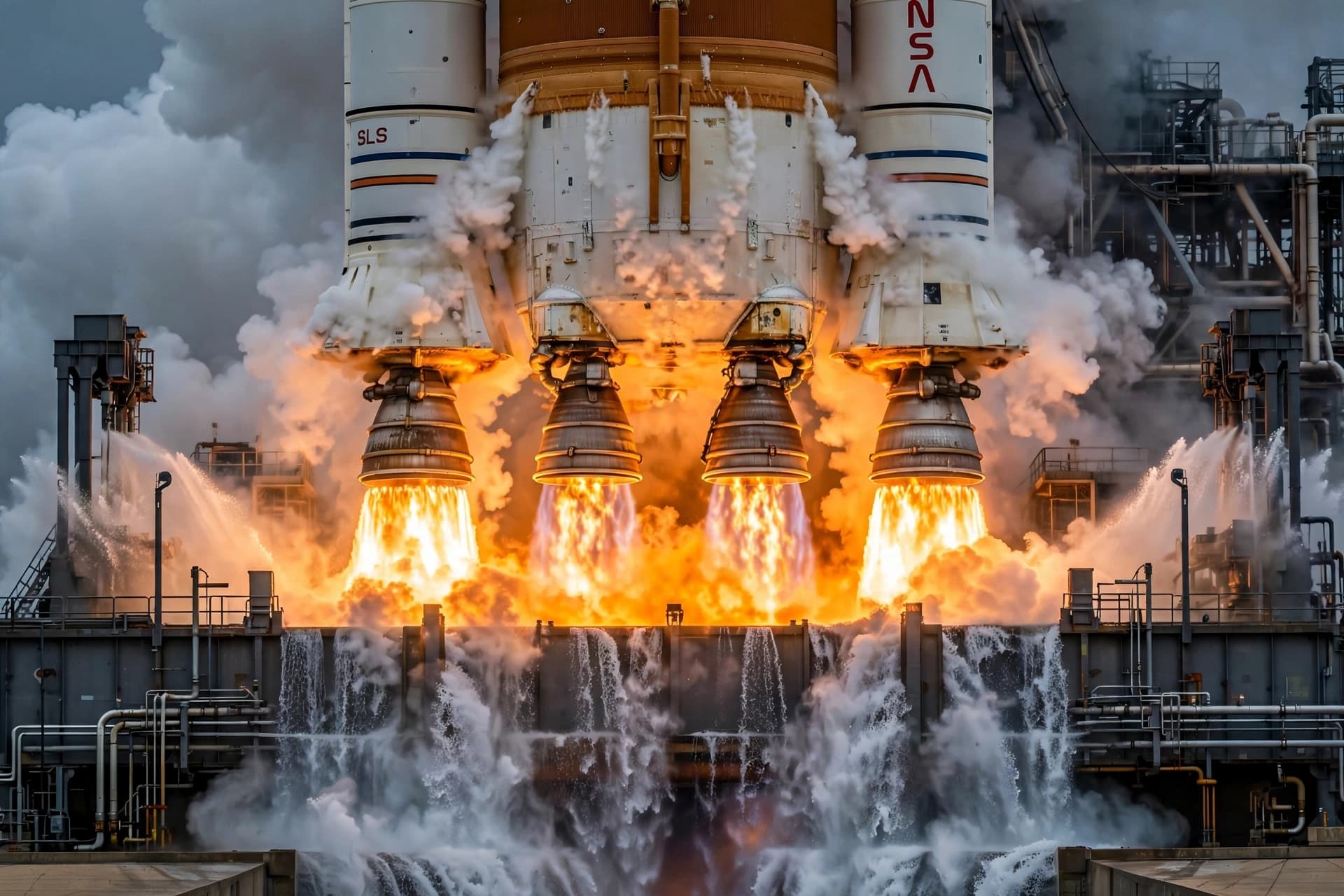
The videos offer a perspective that live broadcasts often miss, focusing on the sheer scale of the event. As the four RS-25 engines roared to life, producing over 8.8 million pounds of thrust, the ground shook with a resonance that could be felt miles away. The plume of exhaust, a brilliant mix of orange and white, billowed outward, engulfing the launch pad in a cloud of steam and fire. This visual display is not merely dramatic; it is a testament to the precision and power of the SLS, designed specifically for deep space exploration.
Artemis II marked a historic milestone as the first crewed flight of the Orion spacecraft. Carrying astronauts Reid Wiseman, Victor Glover, Christina Koch, and Jeremy Hansen, the mission sent humans around the Moon for the first time in over fifty years. The videos capture the separation of the solid rocket boosters, a critical phase where the shed weight allows the core stage to continue its ascent. Watching these massive components fall away is a reminder of the staged complexity involved in reaching orbit.
For the engineers and technicians who spent years building the SLS, these images are a validation of their labor. The rocket represents a culmination of decades of knowledge, combining heritage hardware from the Space Shuttle era with new technologies for the Moon and Mars. The smooth execution of the launch, as seen in the footage, reflects the rigorous testing and collaboration between NASA, Boeing, and other partners. It is a triumph of collective effort.
The public response to the videos has been one of awe and renewed interest in space exploration. In an era dominated by digital screens, the tangible reality of a rocket launch offers a grounding experience. It connects viewers to the physical challenges of spaceflight, making the abstract concept of lunar exploration feel immediate and real. The roar of the engines serves as a call to adventure, inspiring a new generation to look upward.
Beyond the spectacle, the success of Artemis II lays the groundwork for future missions. The data collected during this flight will inform the design of subsequent launches, including those that will land astronauts on the lunar surface. The videos serve as a historical record, documenting a pivotal step in the Artemis program. They capture the beginning of a new chapter in human presence beyond low Earth orbit.
As the footage circulates online, it continues to spark conversations about the future of space travel. The SLS stands as a symbol of national capability and international cooperation. Its power is not just in its thrust, but in its ability to unite people around a shared goal of exploration. The images remind us that while the technology is complex, the desire to explore is universal. The new videos of the Artemis II launch capture the undeniable power of the SLS rocket and the historic nature of the mission. They serve as a visual testament to human ingenuity and the enduring spirit of exploration. As we look toward future lunar landings, these images remain a powerful reminder of how far we have come and how much further we can go.
AI Image Disclaimer: The visual elements in this article are AI-generated illustrations depicting rocket launches and space infrastructure, not actual frames from the official NASA broadcast or raw footage.
Sources: NASA Space.com Florida Today
Published by Banx Network. This article is part of the Banx decentralized media programme, powered by the BXE token on the XRP Ledger.