Indonesia is preparing to develop an earthquake early warning system with support from Japan, seeking to provide communities with crucial information before strong shaking reaches them. Trial operations are planned in Jakarta and several other regions by 2030, with the longer-term objective of expanding the system nationwide.
The initiative reflects the shared geological reality of the two countries. Indonesia and Japan both sit along the Pacific Ring of Fire, an area where tectonic activity produces frequent earthquakes. For Indonesia, the challenge is made more complicated by the vulnerability of buildings and densely populated areas.
A Japan-Indonesia joint research team began work in western Java in 2025 as part of a five-year testing project. The research covers three provinces, including the Jakarta metropolitan region, and is examining how an early warning network could operate under Indonesian conditions.
One part of the project involves developing relatively low-cost earthquake observation equipment. The system is also being designed to trigger automatic responses in certain facilities, including factories and railway operations, when earthquake activity is detected.
The concept is based on the difference between the arrival of fast seismic waves and the stronger shaking that follows. Even a short warning period can potentially give people time to move away from dangerous locations, stop machinery or take other protective measures.
The Indonesian-Japanese team is also looking beyond the technology itself. Researchers are considering the complete chain of response, from the first detection of an earthquake to evacuation procedures. Guidelines are expected to take into account Indonesian buildings, community habits and local conditions.
Communication will be another important part of the system. In addition to radio and other conventional channels, the project is considering the use of mosque loudspeakers to deliver earthquake warnings to residents. The approach would make use of an existing communication network that is familiar to communities in many parts of Indonesia.
Japan's experience provides a practical reference. The country introduced its earthquake early warning system in 2007, distributing alerts through television, radio and smartphones. The Indonesian project is seeking to adapt elements of that experience rather than simply reproduce the Japanese system unchanged.
The need for such preparation is underscored by Indonesia's exposure to earthquakes. Recent seismic events have shown how quickly the ground can change daily life, particularly in areas where infrastructure and buildings are not designed to withstand strong shaking.
The planned trials therefore represent an important stage in building Indonesia's earthquake preparedness. If the technology, communication methods and response procedures prove effective, the experience could provide a foundation for a broader national system in the years ahead.
Image Disclaimer:
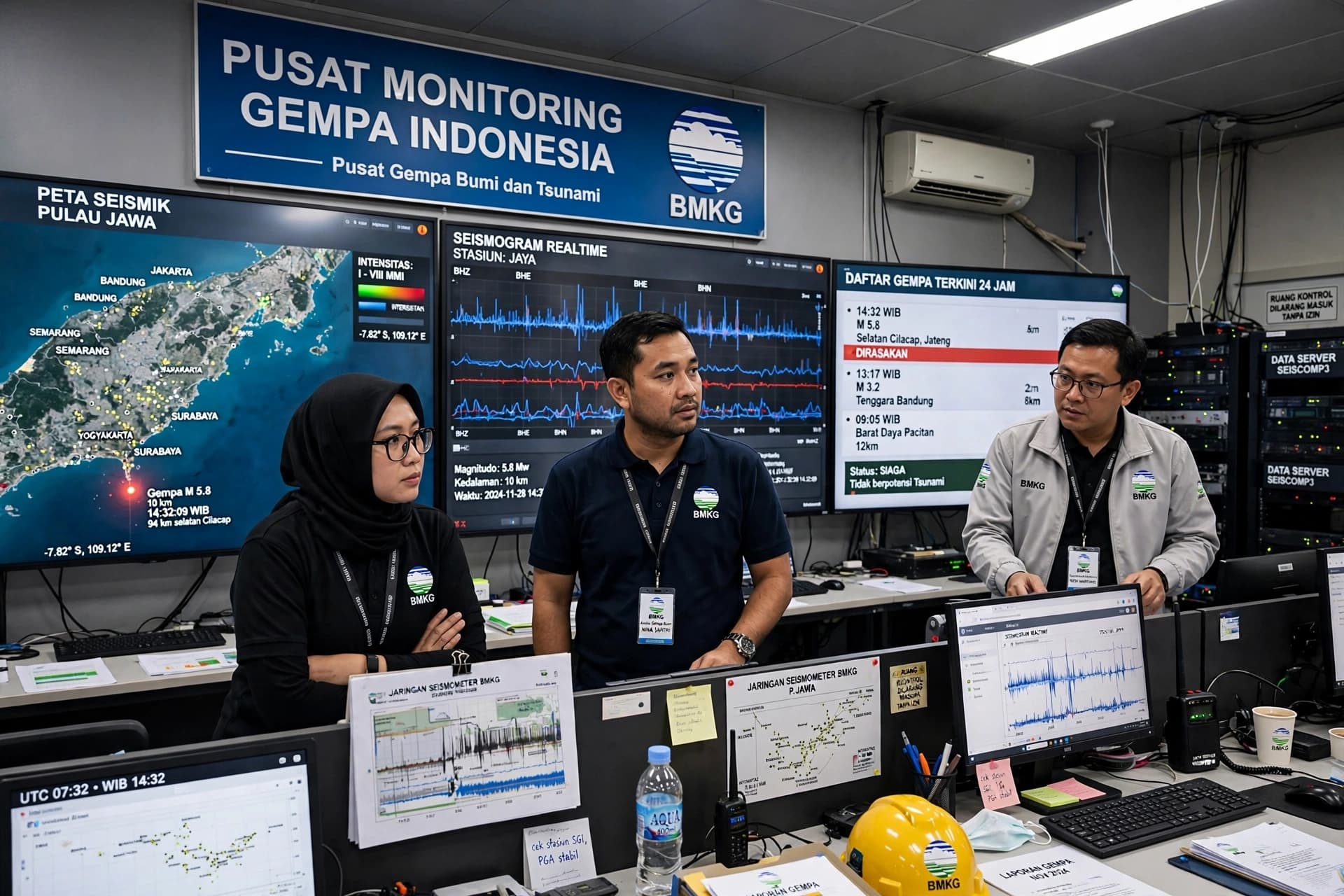
Visuals are AI-generated and serve as conceptual representations of Indonesia’s earthquake early warning research.
Sources:
The Japan Times Jiji Press
Published by Banx Network. This article is part of the Banx decentralized media programme, powered by the BXE token on the XRP Ledger.