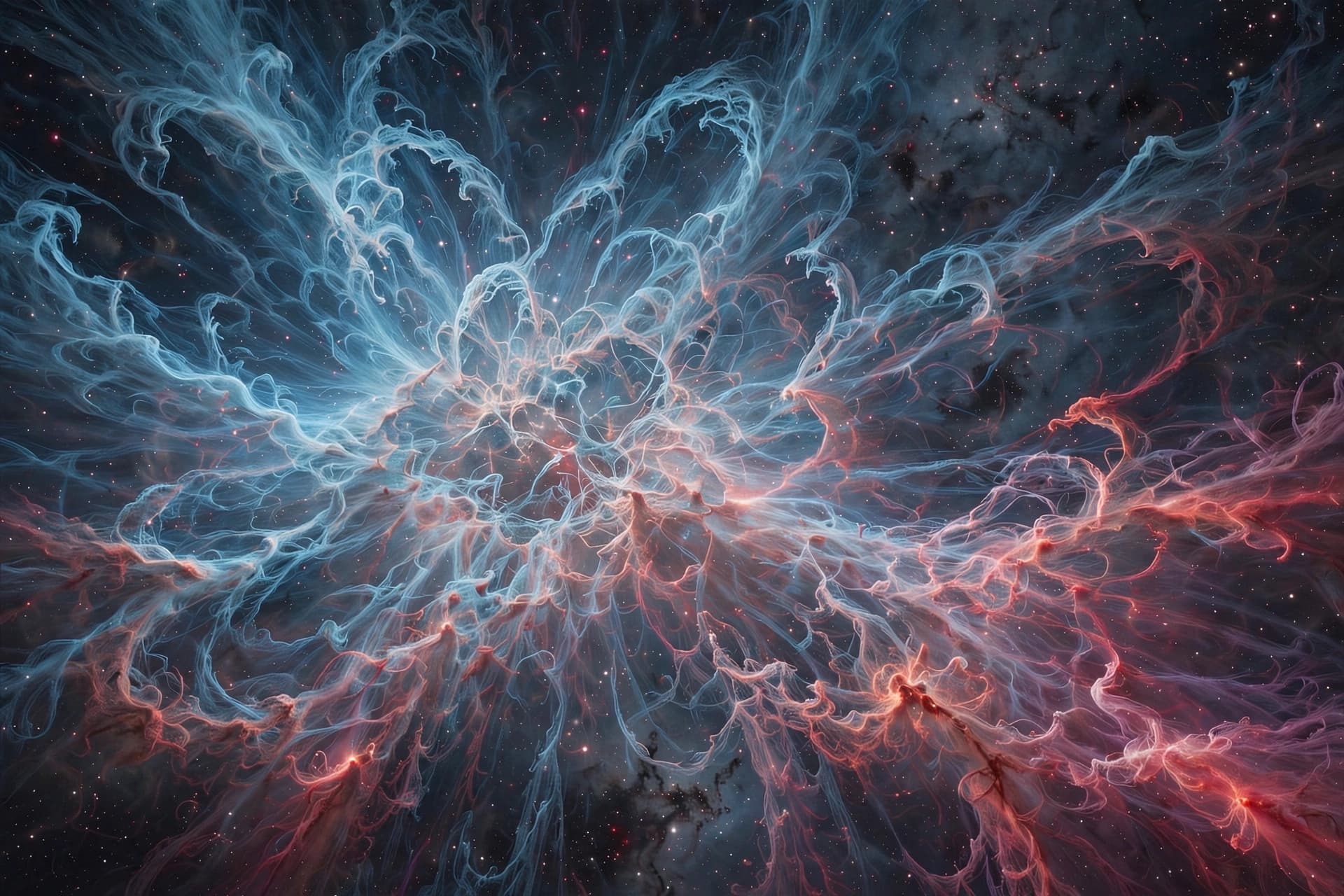
There are explosions that end everything, and there are explosions that leave something behind—a survivor at the center of the wreckage, still burning, still present. In the year 1181, astronomers in China, Japan, and the Arab world recorded a “guest star” that appeared in the constellation Cassiopeia and remained visible for 185 days. For nearly a millennium, its remnant went unidentified. Now, the Gemini North telescope has captured the most detailed view yet of that ancient explosion, and what it reveals is stranger and more beautiful than anyone expected.
The object is Pa 30, the only known supernova remnant of its kind in the Milky Way. It sits about 7,500 light-years from Earth, relatively close by astronomical standards, which is why astronomers can study it in such detail . At its center is what scientists call a “zombie star”—the surviving core of a white dwarf that did not fully destroy itself in the blast. This type of incomplete explosion is known as a Type Iax supernova, a rare class thought to occur when two white dwarfs collide .
The new observations, published in The Astrophysical Journal, reveal that the remnant’s firework-like streaks are not smooth filaments at all. They are chains of gas knots—tightly packed, remarkably uniform, and each wide enough to fit the entire planetary region of our solar system about ten times over with room to spare . “The knots are quite strikingly uniform,” said Ilaria Caiazzo of the Institute of Science and Technology Austria, who co-led the research. “We are excited to try to model them” .
The team analyzed ionized sulfur and oxygen emission lines, finding roughly ten times as many filamentary features as previous images could resolve . The surviving zombie star sits almost perfectly at the center of the nebula—an unusual configuration, since asymmetric explosions typically give the remnant a “kick” that sends it drifting away from the blast site .
Pa 30 was first identified in 2013 by a citizen scientist, Dana Patchick, who spotted it in archival infrared data . Its link to the 1181 supernova was confirmed through historical records and chemical analysis. The explosion is one of just five supernovae recorded before the telescope era whose remnants have been identified .
Researchers suspect that similar remnants may still be lurking undiscovered in our galaxy. “There might well be similar remnants still lurking in the dark in our own galaxy,” said co-lead researcher Tim Cunningham . For now, the zombie star and its pearl-strung debris offer a rare window into a kind of stellar death that leaves something behind—a survivor, surrounded by the elegance of its own destruction.
AI Image Disclaimer: The images accompanying this article are generated by artificial intelligence and are intended for illustrative purposes only.
Sources: Institute of Science and Technology Austria (ISTA), The Astrophysical Journal, Yahoo News, Nanowerk, bdnews24.com
Published by Banx Network. This article is part of the Banx decentralized media programme, powered by the BXE token on the XRP Ledger.