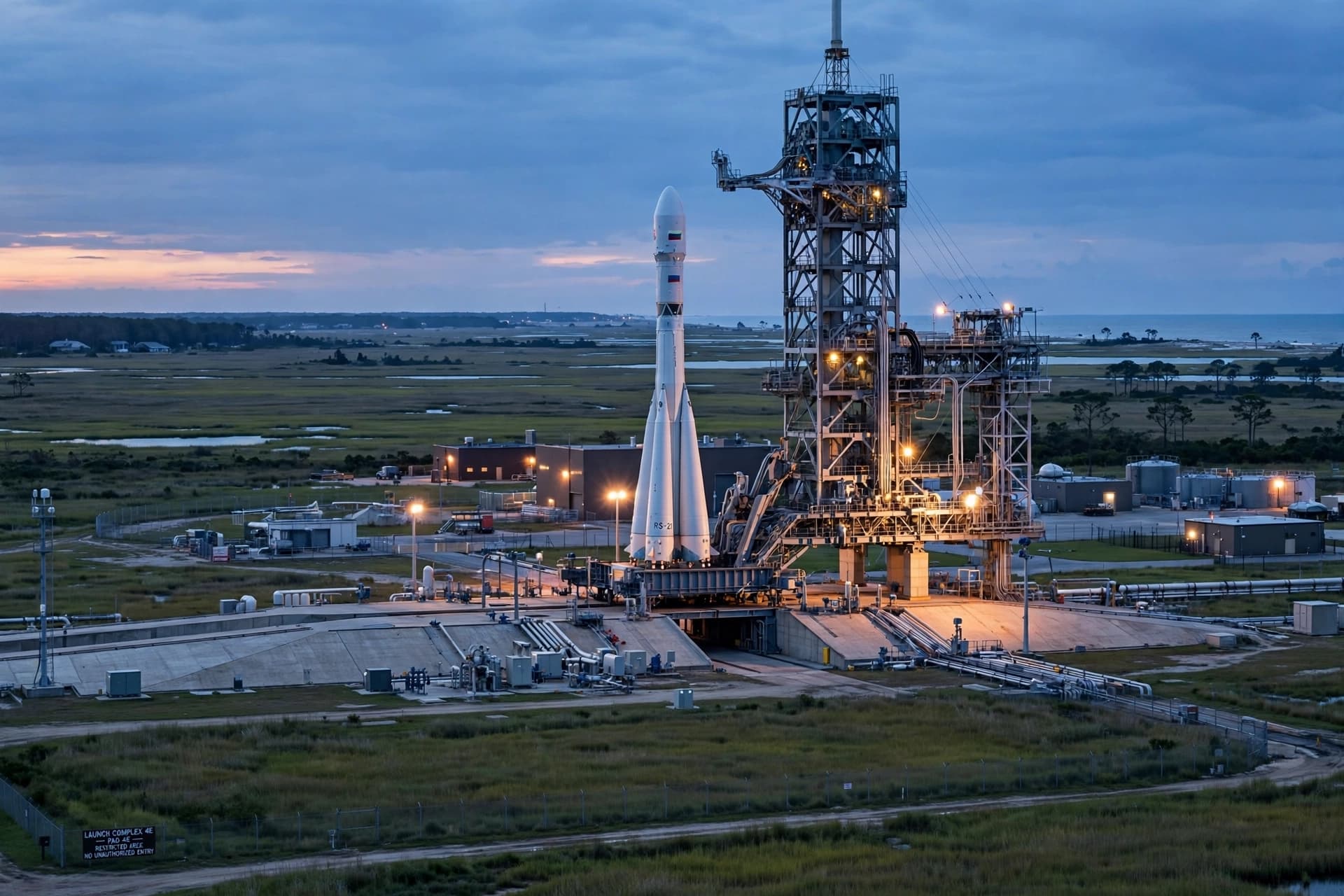
There is a quiet arithmetic to ambition—a calculation of what must be carried, and by whom, before a footprint can be planted somewhere no one has lived before. For NASA, that arithmetic has led to a new strategy: buying rockets not one by one, but in bulk, a hedge against a future where the ships that have carried America to space may no longer be available.
NASA is close to announcing a bulk purchase of rocket launches to fuel its $30 billion drive to build a permanent base on the moon, according to Bloomberg. The agency is evaluating the acquisition of four or five different rocket models in a single batch, a strategy designed to secure launch capacity amid a growing shortage of vehicles across the industry .
The urgency stems from the construction timeline. The first phase of the lunar base, already underway, will send landers and rovers to explore locations and resources through 2028. But from 2029 onward, the need escalates sharply: NASA plans to deliver up to 60 metric tons of equipment to the lunar surface for power systems, habitats, and other infrastructure necessary for a permanent human presence .
The complication is SpaceX. The Falcon 9, the world’s most prolific rocket, has been the backbone of American launch capability. But SpaceX has begun refusing satellite operators seeking dedicated Falcon 9 launches after 2028, and the company has not publicly stated when the Falcon program will end. NASA is aware of the approaching problem. “SpaceX has been transparent about their plans, which gives us the option to look for alternatives—and that’s what we’ve been doing,” said Carlos García-Galán, NASA’s moon base program manager .
The alternatives are not yet ready. Blue Origin’s New Glenn has been grounded since May after a launch pad explosion. United Launch Alliance’s Vulcan has not flown since February due to booster issues. Both are committed to dozens of missions for Amazon’s satellite constellation and U.S. national security launches. “There’s nobody right now in a position to be an adequate replacement for Falcon 9, period,” said Caleb Henry of Quiry Space .
By buying in bulk now, NASA hopes to avoid a bottleneck that could delay its most ambitious lunar plans. Whether the market can deliver what the agency needs—and when—remains the question that will determine how soon humans return to stay.
AI Image Disclaimer: The images accompanying this article are generated by artificial intelligence and are intended for illustrative purposes only.
Sources: Bloomberg, Gazette.Ru, Exame, Benzinga, Bloomberg Línea, OKAZ
Published by Banx Network. This article is part of the Banx decentralized media programme, powered by the BXE token on the XRP Ledger.