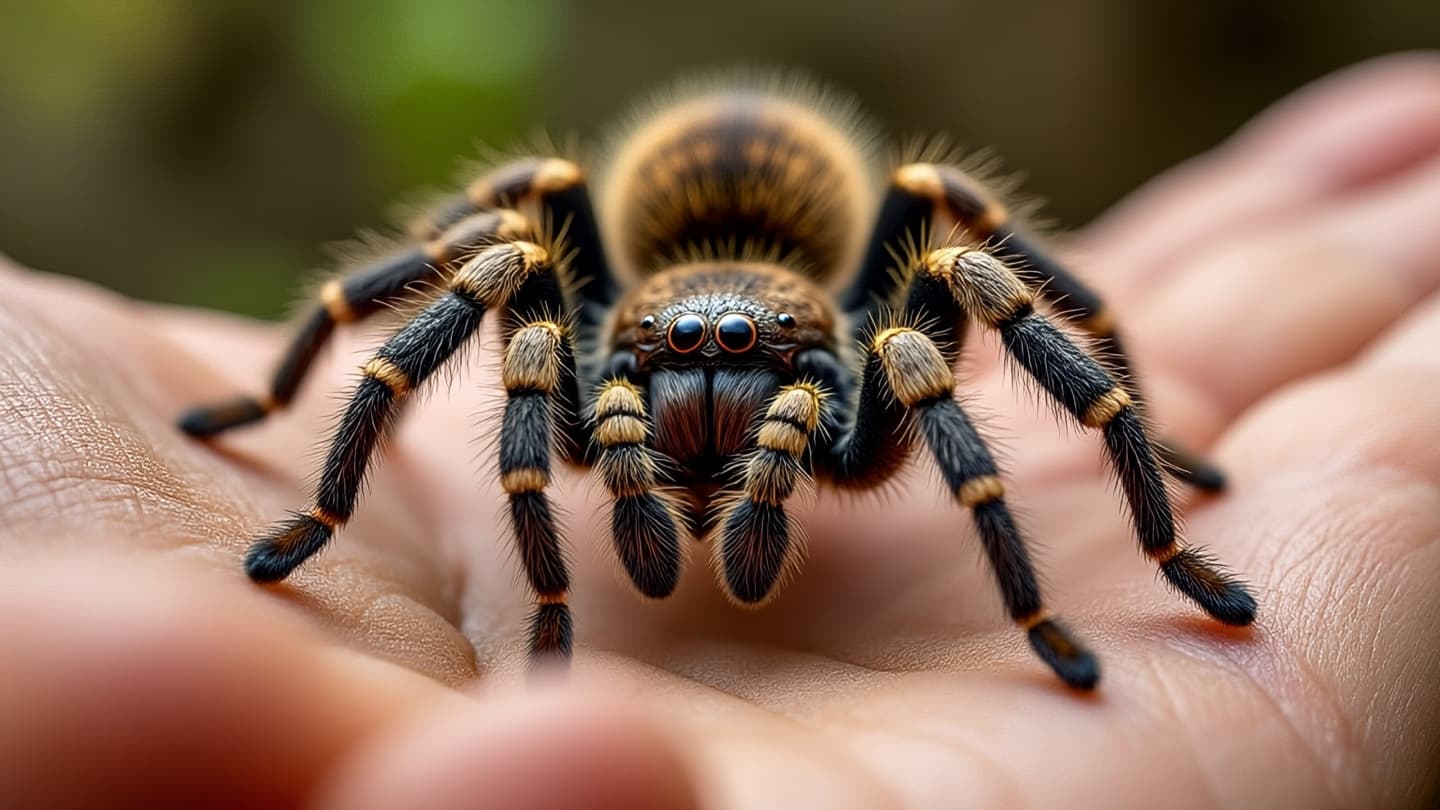
There is a peculiar paradox in the human relationship with spiders. We are often repelled by their many legs and silent movements, yet we are simultaneously captivated by their intricate webs and quiet dignity. Enter Harry, a tarantula who has become an unlikely ambassador for his eight-legged kin. With a demeanor that defies the creepy-crawly stereotype, Harry invites us to look past our primal fears and see the gentle giant beneath the hair. His story is not just about a spider; it is about the power of perspective and the unexpected connections we can form with the natural world.
Harry is not your average garden variety arachnid. As a tarantula, he possesses a presence that commands attention, yet those who have met him describe his temperament as surprisingly calm. Unlike the skittish creatures of folklore, Harry moves with a deliberate grace, seemingly aware of the curiosity he inspires. For many, encountering Harry is a transformative experience, shifting their view of spiders from monsters to misunderstood marvels of evolution.
The fascination with Harry taps into a broader trend of re-evaluating our relationship with wildlife. In an era where biodiversity is under threat, finding empathy for even the most maligned species is crucial. Tarantulas, often feared for their size and appearance, play vital roles in ecosystems as predators of insects. By humanizing Harry, we begin to appreciate the ecological balance he helps maintain, rather than viewing him solely through the lens of fear.
Educators and conservationists have long used charismatic animals to bridge the gap between humans and nature. While pandas and dolphins have traditionally held this role, Harry represents a new wave of ambassadors—those who challenge our comfort zones. His popularity suggests that people are willing to engage with the unfamiliar if presented with kindness and context. It is a testament to the power of storytelling in changing hearts and minds.
For those who still feel a shiver at the sight of a spider, Harry’s story offers a gentle invitation to learn more. Understanding the biology and behavior of tarantulas can demystify them, revealing creatures that are more shy than aggressive. They are survivors of ancient lineages, having adapted to diverse environments over millions of years. This resilience is something to admire, not dread.
Social media has played a significant role in Harry’s rise to fame. Videos and photos showcasing his calm interactions with humans have gone viral, reaching audiences who might never have considered getting close to a spider. These digital encounters provide a safe space for curiosity to grow, allowing people to ask questions and share their own experiences without judgment.
The narrative around Harry also highlights the importance of responsible pet ownership and conservation. Many tarantulas are kept as pets, and their care requires knowledge and respect. By promoting positive images of these animals, advocates hope to encourage ethical treatment and discourage the exploitation of wild populations. Harry becomes a symbol of coexistence, showing that we can share our world with creatures very different from ourselves.
You may still hesitate when you see a spider in the corner, but perhaps now you will pause before reacting. Harry reminds us that fear often stems from the unknown, and that understanding can turn revulsion into respect. In the end, loving Harry is less about the spider himself and more about opening our minds to the wonders of the natural world.
AI Image Disclaimer: The visuals accompanying this article are AI-generated illustrations designed to represent the themes of arachnid appreciation and human-nature connection.
Sources: National Geographic, Live Science, The Dodo, Smithsonian Magazine
Published by Banx Network. This article is part of the Banx decentralized media programme, powered by the BXE token on the XRP Ledger.