There is a quiet democracy in astronomy, where the gaze of a professional observatory and the lens of an amateur enthusiast can converge on the same truth. In 2024, a former miner in Australia turned his telescope toward Saturn, capturing a subtle irregularity in its atmosphere. What began as a curious observation from a backyard has evolved into a significant scientific contribution, culminating in the co-authorship of a paper describing a rare ten-sided atmospheric wave. This journey underscores the vital role citizen scientists play in expanding our understanding of the cosmos.
The discovery highlights the power of persistent observation. Amateur astronomers often have the time and dedication to monitor planets over extended periods, catching transient phenomena that might be missed by scheduled professional surveys. The ripple spotted on Saturn was not immediately understood, but its documentation provided a crucial data point. When combined with other observations and advanced modeling, it revealed a complex polygonal wave structure in the planet’s upper atmosphere.
Polygonal waves on Saturn are not entirely new; the famous hexagon at the north pole has been studied for decades. However, a ten-sided wave is a rarity, offering new clues about the fluid dynamics and wind patterns that shape the gas giant’s atmosphere. The stability and formation of such structures depend on delicate balances of rotation, temperature, and jet streams. Understanding this decagon helps scientists refine their models of atmospheric behavior on gas giants.
The collaboration between the amateur observer and professional researchers is a testament to the evolving nature of scientific inquiry. Data from backyard telescopes, when verified and contextualized, can complement satellite and ground-based professional data. This partnership bridges the gap between hobby and profession, showing that passion and precision can lead to meaningful contributions regardless of institutional affiliation.
For the former miner, this achievement is a personal triumph but also a symbolic one. It represents the accessibility of science and the idea that curiosity is not bound by credentials. His story inspires others to look up, to question, and to share their findings. It reminds us that significant discoveries can come from unexpected places, driven by simple wonder and careful attention.
The scientific community has welcomed this finding with interest. It adds a new piece to the puzzle of Saturn’s meteorology, challenging existing theories and prompting further investigation. Researchers are now looking for similar structures in historical data and planning future observations to track the evolution of this ten-sided wave. It is a reminder that our solar system is still full of surprises, waiting to be noticed by those who take the time to look.
This event also reflects the broader trend of citizen science gaining recognition. Projects that involve public participation in data collection and analysis are becoming increasingly common. They democratize knowledge and engage the public in the scientific process. The success of this discovery encourages more such collaborations, fostering a culture where everyone can contribute to the advancement of human understanding.
As we celebrate this discovery, we acknowledge the value of every pair of eyes turned toward the sky. The ten-sided wave on Saturn is a beautiful reminder of the complexity of our universe and the diverse ways we can come to know it. It is a story of connection, between an individual and a planet, and between amateur passion and professional rigor, proving that science is a shared endeavor.
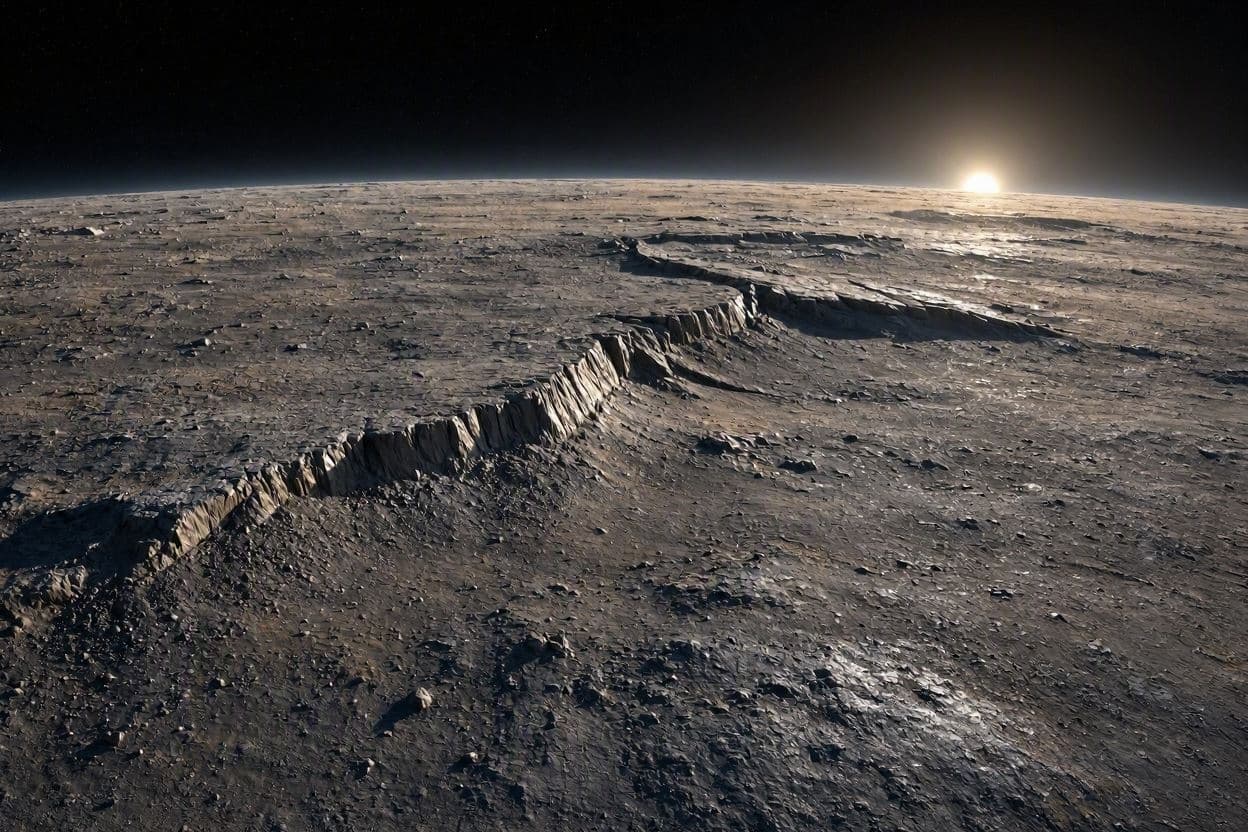
AI Image Disclaimer: Images included in this piece are AI-generated artistic renditions created for illustrative purposes and are not actual astronomical photographs.
Sources: The Astronomical Journal Citizen Science Association Sky & Telescope Australian Astronomical Society
Published by Banx Network. This article is part of the Banx decentralized media programme, powered by the BXE token on the XRP Ledger.