
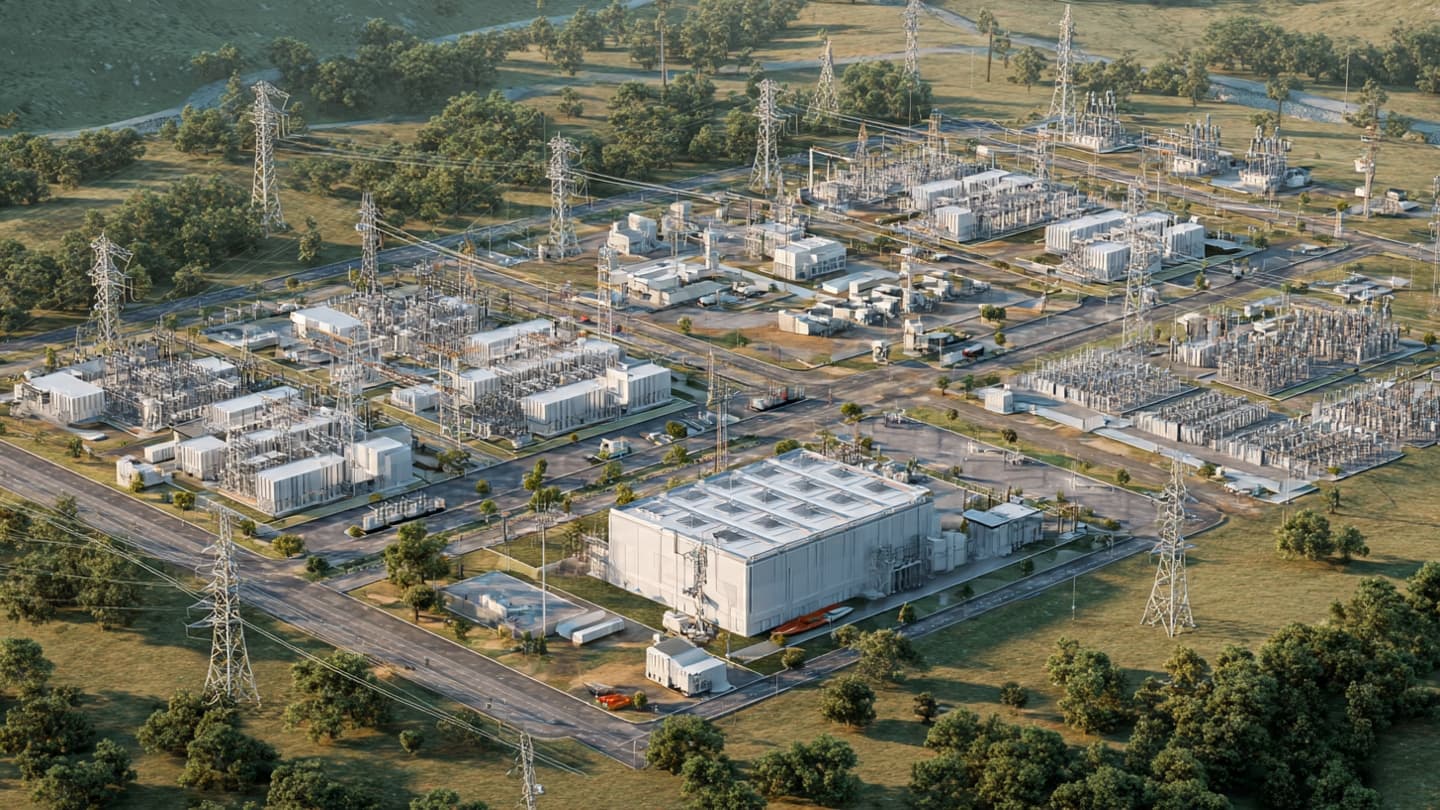
The artificial-intelligence boom is often described through screens: a chatbot answering questions, software generating images or an algorithm processing information in seconds. Yet behind that digital surface is a much heavier world of concrete, cables, electricity and machines.
Across the United States, investment in AI infrastructure is accelerating as companies build data centers and secure the computing capacity required to operate increasingly powerful systems. The expansion is reshaping parts of the technology and infrastructure sectors.
The scale of the investment can be seen in the financing now being assembled around AI computing. Reuters reported that Nvidia is working with major financial institutions on a financing initiative that could support more than $500 billion of AI infrastructure development.
The effort reflects a broader shift in the technology economy. AI companies and cloud providers require enormous amounts of computing capacity, while data-center operators need long-term access to electricity, land, cooling systems and high-speed communications networks.
The infrastructure race is therefore increasingly becoming an energy story. A large data center can consume electricity at a scale comparable to a substantial industrial facility, making access to reliable power an important factor in determining where new projects are built.
This has encouraged technology companies and investors to look beyond traditional technology hubs. Locations with available land, electricity connections and supportive infrastructure are becoming increasingly attractive for new data-center developments.
Financing is also changing. Traditional corporate investment is being joined by private-credit structures and other forms of institutional capital designed specifically around the enormous cost of building AI infrastructure.
Nvidia's involvement is particularly significant because the company supplies many of the processors required for advanced AI systems. Its technology sits near the center of the computing expansion, while financial institutions are increasingly helping fund the physical facilities needed to use those chips at scale.
Other technology companies are pursuing similar paths. Reuters has reported large financing arrangements involving AI companies, data-center operators and private investment firms, reflecting the growing connection between software development and infrastructure finance.
The economic effects can extend into construction and energy. Data-center projects require electrical equipment, transformers, cooling technology, construction services and network infrastructure. Communities hosting such facilities may therefore experience new industrial activity alongside the arrival of high-performance computing.
At the same time, the expansion creates questions about efficiency. Investors and companies must consider how quickly AI demand will grow, how efficiently new processors can operate and whether the enormous capital required can generate sufficient economic returns.
The infrastructure being built today is intended to serve a technology landscape that is changing rapidly. Computing requirements can increase quickly as AI models become larger and more capable, making flexibility another important consideration for developers.
For America, the AI infrastructure race is becoming a new chapter in the country's long relationship between technology and physical investment. Silicon Valley may have helped define the software era, but the next phase increasingly depends on power plants, data centers, transmission networks and billions of dollars in construction.
The machines inside these facilities may perform calculations invisible to most people. Around them, however, a much more tangible industrial transformation is underway—one that is turning artificial intelligence from a software story into an infrastructure story as well.
Image Disclaimer
These visuals are AI-generated conceptual representations of American AI infrastructure and do not depict actual corporate facilities.
Sources
Reuters Nvidia Financial Times Bloomberg U.S. Department of Energy
Published by Banx Network. This article is part of the Banx decentralized media programme, powered by the BXE token on the XRP Ledger.



