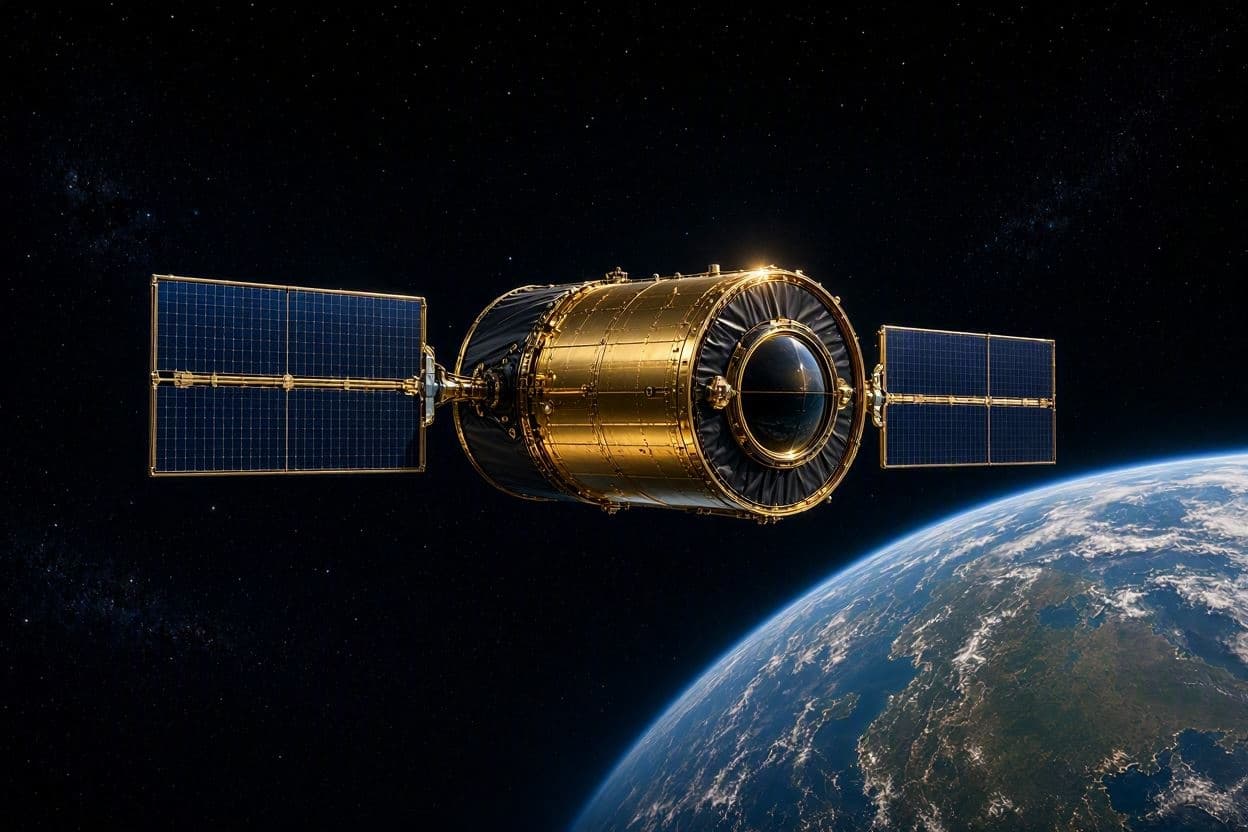
In the grand theater of space exploration, patience is often the most vital instrument. We launch our ambitions into the void, trusting in engineering and physics to carry them to their destinations. The Nancy Grace Roman Space Telescope, currently en route to its orbital post, has already delivered a surprise gift to scientists: a confirmation of doubled operational lifespan. This news arrives before the telescope has even begun its primary mission, offering a promise of longevity and extended discovery that resonates with hope and anticipation.
The extension of the telescope’s lifespan is attributed to the precision of its launch and trajectory corrections. Fuel savings from a highly accurate deployment mean that less propellant is needed for station-keeping and orientation adjustments. In the vacuum of space, fuel is life; it determines how long a spacecraft can maintain its position and point its instruments. By conserving this precious resource, the Roman Telescope has effectively bought itself more time to observe the cosmos, potentially doubling its original mission duration.
This development is particularly significant given the telescope’s ambitious scientific goals. Designed to investigate dark energy, exoplanets, and infrared astronomy, the Roman Telescope requires long periods of stable observation to gather meaningful data. Dark energy, the mysterious force accelerating the universe’s expansion, reveals its secrets slowly. A longer mission allows for more comprehensive surveys of the sky, increasing the statistical power of findings and reducing uncertainties in cosmological models.
Moreover, the extended lifespan enhances the telescope’s ability to discover and characterize exoplanets. Using microlensing techniques, Roman will search for planets far from their host stars, including rogue planets wandering alone in the galaxy. These observations are time-intensive, requiring continuous monitoring of specific star fields. More time means a higher probability of detecting rare events and building a more complete catalog of planetary systems beyond our own.
The success of the launch and early operations also reflects the robustness of modern space engineering. Every component, from the solar panels to the attitude control systems, is performing within optimal parameters. This reliability reduces the risk of premature failure and ensures that the telescope can withstand the harsh conditions of space for years to come. It is a testament to the dedication of the engineers and scientists who designed and built this sophisticated instrument.
For the scientific community, this news is a cause for celebration. It allows for more ambitious planning and longer-term projects. Researchers can propose deeper, more complex observations knowing that the telescope will be available for a longer period. It fosters a sense of security and excitement, encouraging innovation in data analysis and theoretical modeling. The extended mission window opens doors to discoveries that might have been deemed too risky or time-consuming under a shorter timeline.
Beyond the technical and scientific implications, there is a human element to this achievement. The telescope is named after Nancy Grace Roman, a pioneering astronomer who championed space-based astronomy. Her legacy is one of perseverance and vision. The telescope’s extended life honors her contribution by ensuring that her dream of a powerful space observatory continues to yield fruit for longer than expected. It is a fitting tribute to a woman who looked ahead and paved the way for future generations.
The confirmation of the Nancy Grace Roman Space Telescope’s doubled lifespan is a promising start to its mission. It highlights the efficiency of current space missions and the potential for extended scientific return. As the telescope approaches its destination, the astronomical community awaits its first light with renewed optimism, ready to explore the mysteries of the universe with a tool that has already exceeded expectations.
AI Image Disclaimer: Please be aware that images included in this article are AI-generated visualizations created for illustrative purposes and do not depict actual events on the ISS.
Sources: NASA Goddard Space Flight Center SpaceNews The Planetary Society Scientific American
Published by Banx Network. This article is part of the Banx decentralized media programme, powered by the BXE token on the XRP Ledger.