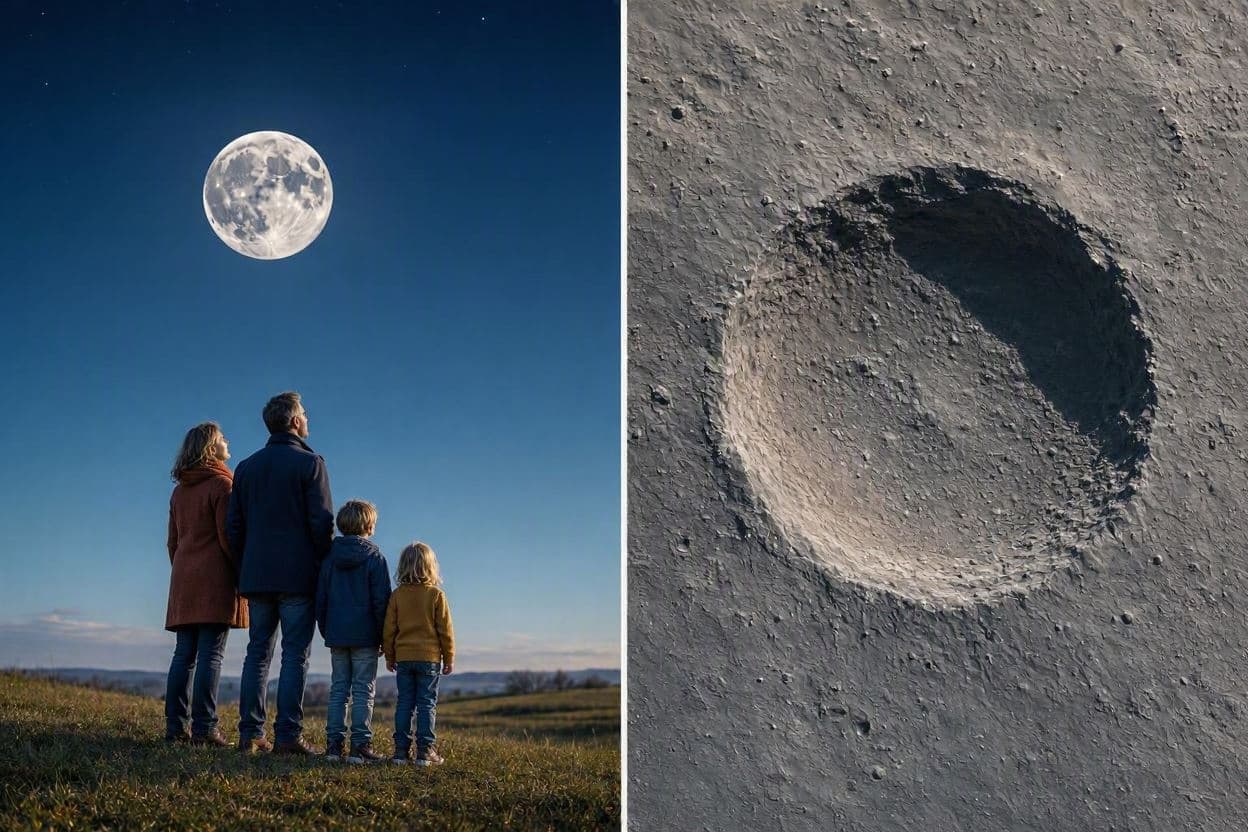
The moon has long been our silent companion, a pale sentinel watching over the Earth with a face marked by eons of cosmic violence. We often perceive it as static, a frozen monument to the past. Yet, recent observations remind us that our celestial neighbor is still very much alive to the whims of the universe. A newly discovered crater, vast and imposing, serves as a stark reminder that space is not empty, but a dynamic arena where chance encounters shape the landscape in an instant. This discovery invites us to reflect on the fragility and resilience of planetary bodies.
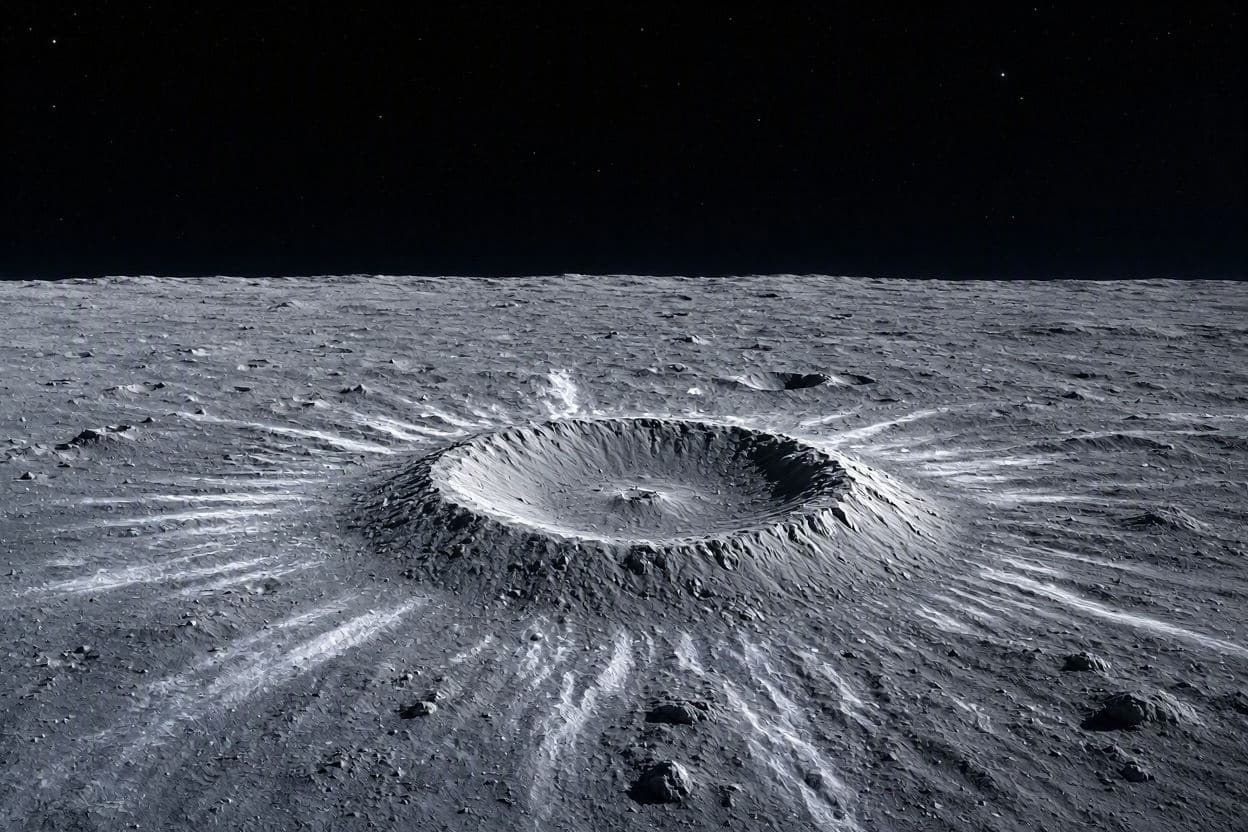
The crater in question dwarfs many known geological features, boasting a diameter larger than the ancient Roman Colosseum. Its sheer scale suggests an impactor of significant mass, striking with enough force to reshape the local terrain dramatically. Such events are rare in the current epoch of the solar system, leading scientists to describe this impact as a "once-in-a-lifetime" occurrence. The probability of witnessing such a fresh and large-scale formation in our modern era of observation is exceedingly low, making this find a scientific treasure.
Analysis of the crater’s morphology reveals sharp, well-defined rims and bright ejecta blankets, indicating its relative youth. Unlike older craters that have been softened by micrometeorite gardening and solar wind exposure, this feature stands out with pristine clarity. These characteristics allow researchers to study the mechanics of hypervelocity impacts with unprecedented detail. It provides a natural laboratory for understanding how energy is transferred from a moving object to a planetary surface, offering insights relevant to both lunar geology and planetary defense.
The discovery was made possible through advanced imaging technologies and continuous monitoring of the lunar surface. Modern telescopes and orbital satellites capture high-resolution data that can detect subtle changes in the lunar regolith. This vigilance is crucial, as the moon lacks an atmosphere to burn up incoming debris. Every impact, no matter how small, leaves a mark. This particular event, however, rises above the background noise of constant micrometeorite showers, demanding attention for its exceptional size and freshness.
This finding also underscores the importance of international collaboration in space science. Data from various missions and ground-based observatories are often combined to confirm and analyze such events. The shared effort allows for a more comprehensive understanding of the impact’s timing, angle, and potential source. It highlights how global scientific communities work together to piece together the puzzle of our solar system’s history and present dynamics, fostering a sense of shared stewardship over our knowledge of space.
Furthermore, the existence of such a large, recent crater challenges some assumptions about the current impact rate in the inner solar system. While the heavy bombardment period ended billions of years ago, the tail end of that distribution still holds surprises. Studying this crater helps refine models of near-Earth object populations and their behavior. It serves as a calibration point for predicting future risks and understanding the frequency of significant cosmic events that could affect Earth or other planetary bodies.
As we gaze at the moon tonight, it may look unchanged to the naked eye. But beneath that familiar visage lies a new scar, a testament to the ongoing dialogue between Earth’s satellite and the cosmos. This discovery does not diminish the moon’s beauty; rather, it adds a layer of depth to our appreciation. It reminds us that we are part of a living, breathing solar system, where change is the only constant, even in the quietest corners of the night sky.
The identification of this massive new lunar crater marks a significant addition to our geological records. It offers valuable data for scientists studying impact dynamics and lunar evolution. As research continues, this feature will likely become a key reference point for understanding recent cosmic activity in our neighborhood, reinforcing the need for continued observation and study of our celestial partners.
AI Image Disclaimer: Please note that any accompanying visuals are AI-generated interpretations designed to illustrate the scientific concepts discussed.
Sources: Nature Astronomy NASA Lunar Reconnaissance Orbiter Team Scientific American Space.com
Published by Banx Network. This article is part of the Banx decentralized media programme, powered by the BXE token on the XRP Ledger.