In the vast, swirling river of stars known as the Milky Way, the center has long been imagined as a deep, invisible whirlpool — a supermassive black hole drawing everything inward, much like water spiraling down a drain. For decades, this image has anchored both scientific thought and cosmic poetry. It has been a quiet but powerful lodestar in our understanding of galaxies: mysterious, immense, and ultimately inscrutable.
Yet, as scientists peer deeper and with greater nuance into this galactic heart, some are now asking a gentle, philosophical question: What if the heart of our galaxy is not a black hole in the traditional sense at all? Could it instead be something else — an enormous congregation of dark matter, diffuse yet gravitationally potent, shaping the dance of stars without ever collapsing into an abyss?
This idea does not come from idle speculation, but from careful work by astronomers who are trying to reconcile two kinds of observations. On the one hand, stars near the Milky Way’s center orbit at tremendous speeds — behavior consistent with a strong gravitational pull. Historically, such motion has pointed scientists toward Sagittarius A*, the compact mass roughly four million times the mass of our Sun that radio telescope arrays have mapped out.
But recent models suggest that a dense “core” of exotic dark matter — the invisible substance that makes up most of the universe’s mass — could create similar effects without forming a classic black hole. In this view, dark matter gathers into a compact nucleus that influences stars and gas in familiar ways, while also extending outward to shape the broader rotation of the galaxy. The idea has a certain appeal: it threads together the intimate and the extensive, much like a river that carries both momentum and mystery across its breadth.
This alternative does not dismiss the rich body of evidence supporting Sagittarius A* as a black hole. The Nobel Prize–winning work tracking star motions deep in the galactic center, and the composite imaging achieved by collaborations like the Event Horizon Telescope, have been foundational in strengthening the supermassive black hole hypothesis.
At the same time, the scientific mind remains open to challenge. Science is a conversation across generations — with telescopes, theory, and sometimes the occasional paradigm shift all participating. As researchers refine their measurements and test predictions, they allow space for new questions: Could spacetime be shaped by something quieter than a singularity? Could the cosmos surprise us again with a familiar phenomenon reimagined?
In this unfolding story, the center of our galaxy remains as compelling and inscrutable as ever. Whether it holds a classical black hole, a clump of dark matter, or some yet more exotic structure, it beckons us to keep listening — and keep wondering.
In the end, the heart of the Milky Way may tell us not just about galactic mechanics, but about the ever-evolving nature of scientific understanding. And as telescopes sharpen and theories expand, we are reminded that in astronomy, as in life, certainties are often horizons to be explored rather than destinations to be reached.
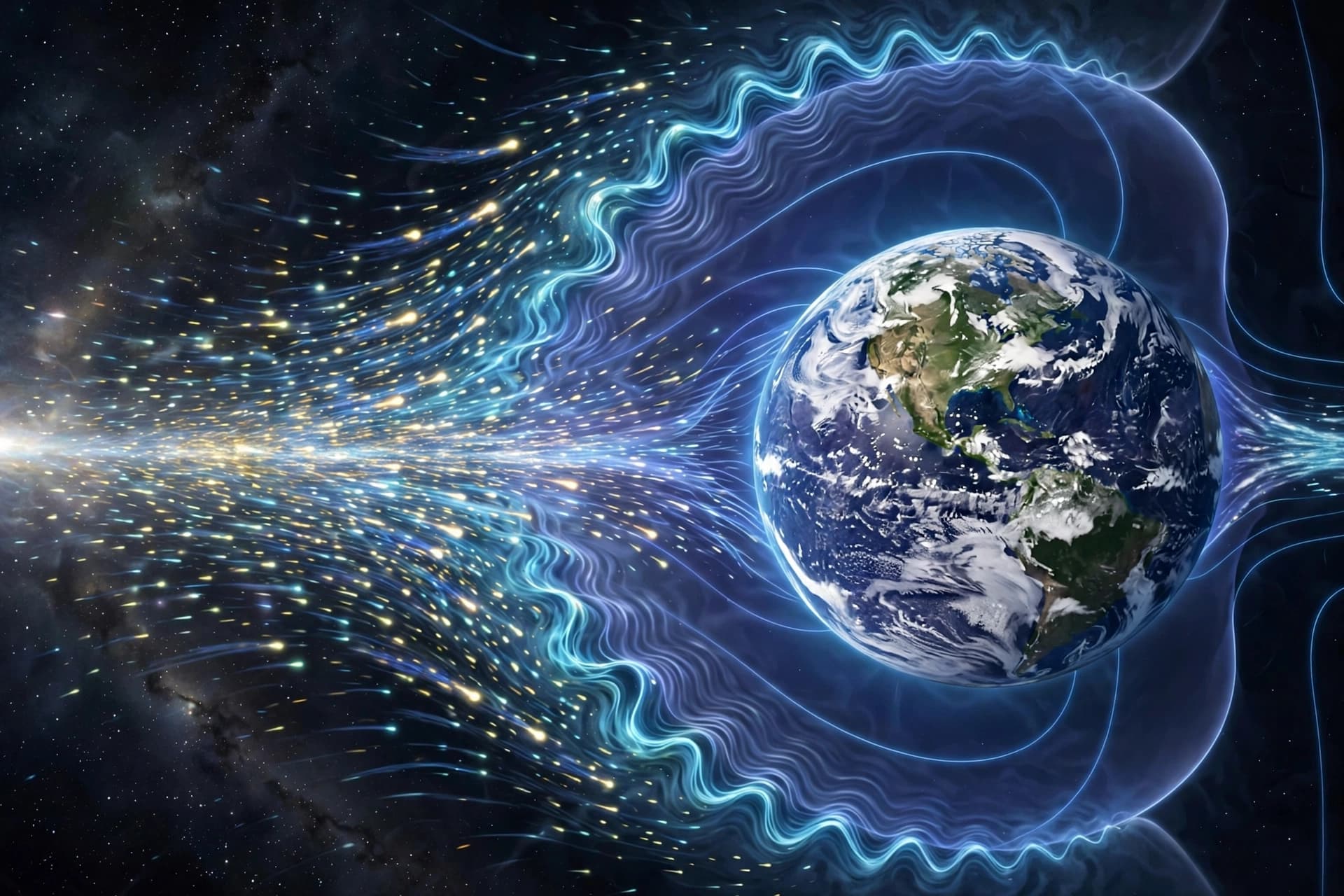
AI Image Disclaimer “Visuals are created with AI tools and are not real photographs.”
Sources Royal Astronomical Society – proposes dark matter core instead of black hole. Futurezone reporting on dark matter alternatives at galactic center. Event Horizon Telescope imaging and modeling support black hole. Strong astrophysical evidence for Sagittarius A* as black hole from stellar orbits (historically accepted). Webb and other telescopic observations provide detailed behaviour around central object.
Published by Banx Network. This article is part of the Banx decentralized media programme, powered by the BXE token on the XRP Ledger.