Water usually disappears into the background of an energy system. Turbines, generators and transmission lines attract attention, while the large volumes of water required by some power plants remain largely unseen.
That relationship is changing in Poland. From January 1, 2027, power plants and combined heat-and-power facilities will be allowed to use reclaimed municipal sewage water in their cooling systems. The measure is intended to reduce the sector’s reliance on freshwater.
The change follows a summer in which heat and limited rainfall pushed water levels in several Polish rivers to unusually low levels. Some power plants reduced operations because insufficient water was available for cooling, demonstrating how closely electricity generation can depend on local water conditions.
Poland’s power grid operator invoked emergency measures three times during the summer to help maintain electricity supply. State energy company Enea also reduced operations at two coal-fired facilities along the Vistula because of low water levels, temporarily taking around 1.1 gigawatts of capacity offline.
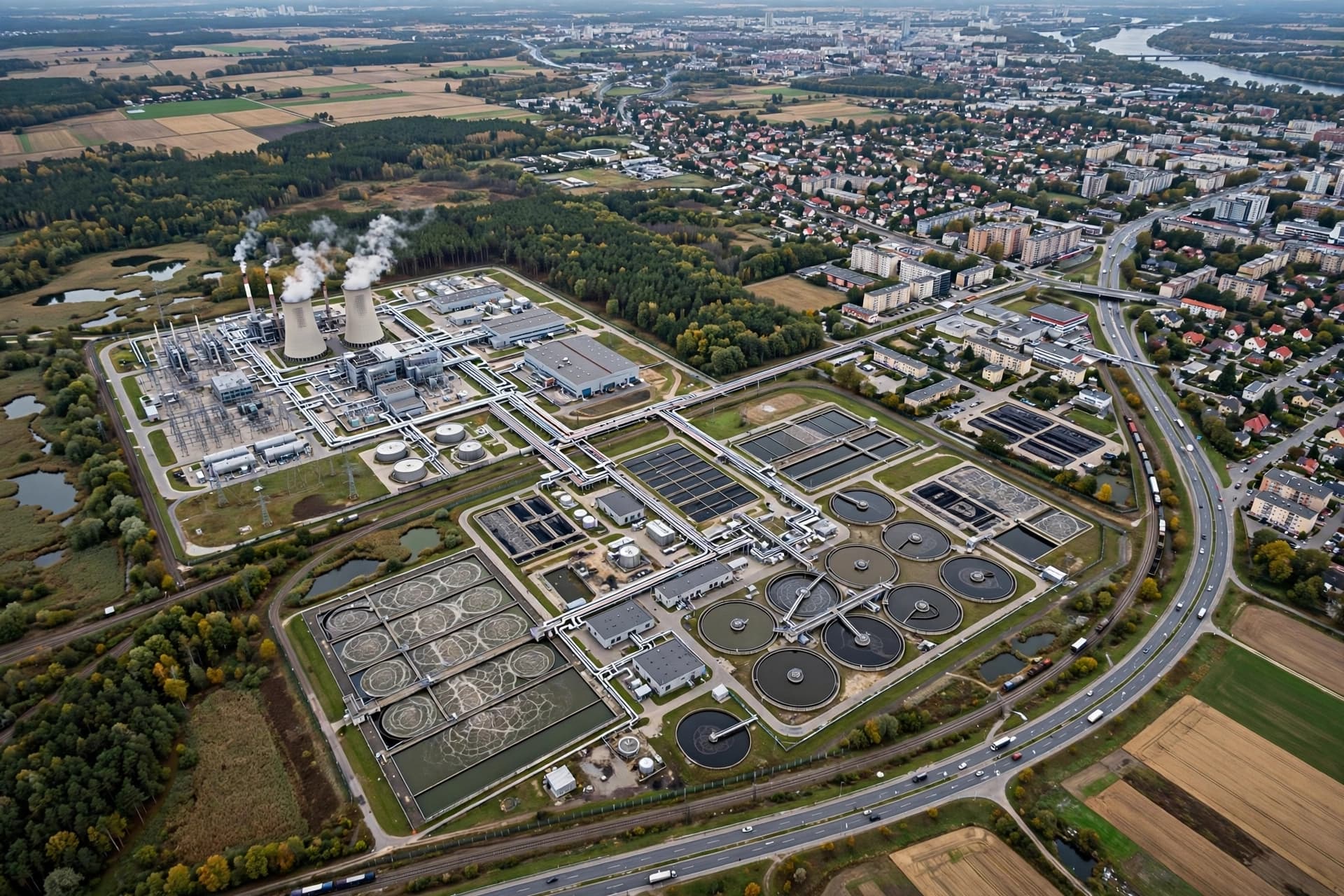
The new rules establish a legal framework for water recovered from municipal sewage to be used in cooling circuits. Instead of drawing exclusively on freshwater sources, power plants will have another potential source for one of their most water-intensive processes.
Orlen Termika is preparing one of the more substantial applications of the approach. The company plans to invest more than PLN1 billion over four years to connect sewage treatment plants with three of its power and heating plants around Warsaw.
The potential water savings differ between facilities. Orlen Termika says the Żeran plant could reduce its previous water use by as much as 80%, while the Siekierki facility could achieve savings of up to 20%.
The plan goes beyond cooling. Orlen Termika also intends to install heat pumps capable of recovering heat from sewage before the water is used in power-plant cooling systems. Municipal wastewater typically enters treatment facilities at temperatures that can make it a useful source of recoverable heat.
The idea reflects a broader shift toward using resources more than once. Water leaving a treatment facility has traditionally been viewed primarily as something that must be cleaned before discharge. Under the new approach, some of that treated water can become part of another infrastructure cycle.
There are still practical questions surrounding implementation, including treatment standards, infrastructure connections, operating costs and how widely utilities will adopt the system. The law creates the possibility, but individual projects will determine how effective the approach becomes in practice.
Poland’s experience also illustrates how water availability can become an energy issue. When rivers fall and temperatures rise, the challenge is not simply environmental; it can reach directly into the machinery that keeps electricity and heat systems operating.
Beginning in 2027, reclaimed municipal wastewater will therefore take on a new role in Poland’s energy infrastructure. What once flowed away after treatment could become part of the cooling process for power generation, offering utilities another source of water as they adapt to increasingly demanding conditions.
Published by Banx Network. This article is part of the Banx decentralized media programme, powered by the BXE token on the XRP Ledger.