
Key Highlights
- New research reveals injuries in ancient Egyptian cat mummies.
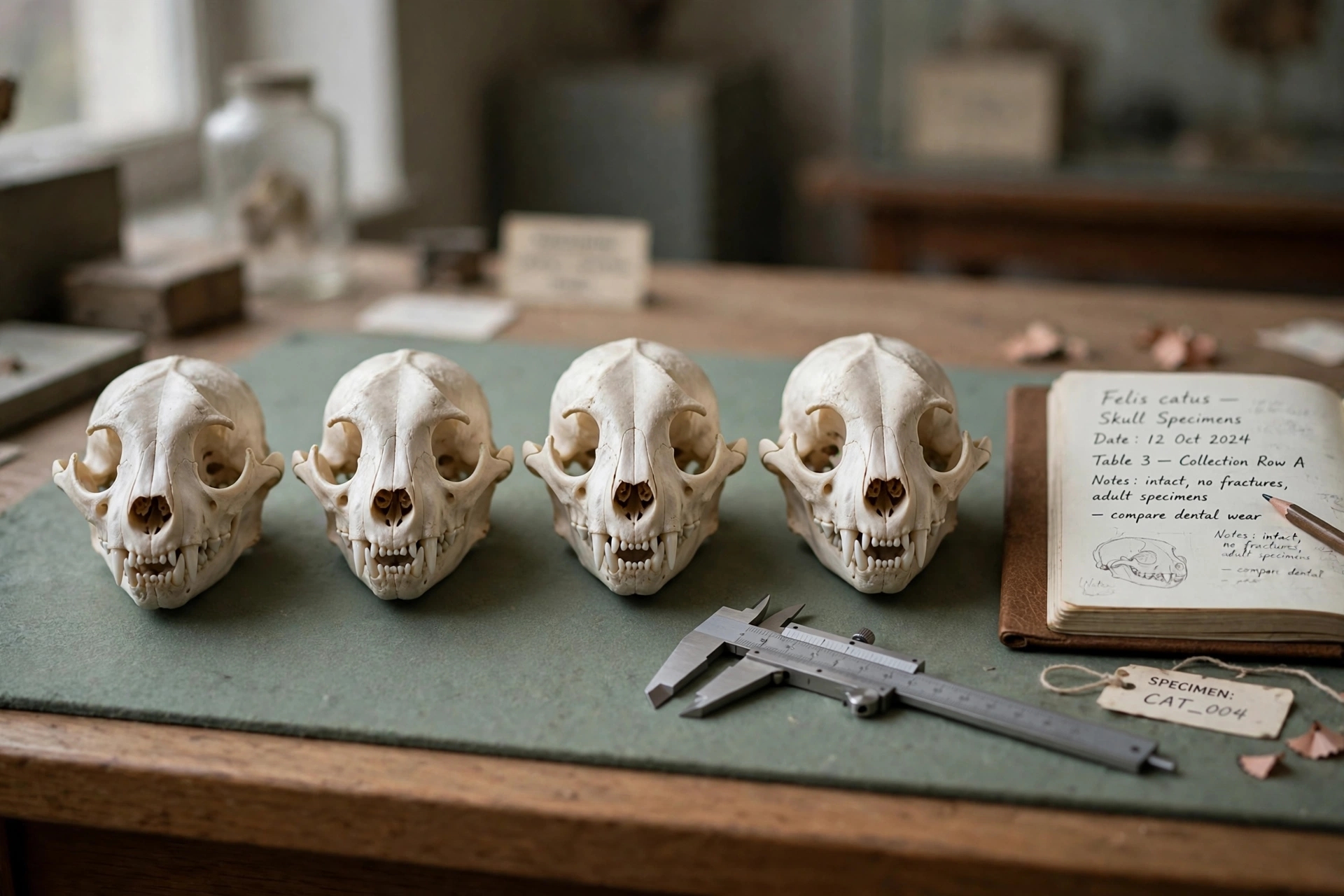
- Study examines 131 cat skulls from Beni Hassan, dating back to 380-40 BCE.
- Findings challenge the perception of cats as pampered sacred animals.
[Study Overview] A recent study has shed light on the harsh realities faced by cats in ancient Egypt, contradicting the long-held belief that these animals were solely revered as sacred beings. Researchers from the Royal Belgian Institute of Natural Sciences conducted a detailed examination of 131 cat skulls from the Beni Hassan funerary site, revealing a troubling prevalence of injuries and diseases among the mummified remains. This research, published in the Journal of Archaeological Science, highlights the complexities of animal treatment in ancient societies.
[Research Findings] The skulls, which were brought to the Natural History Museum in Vienna in the 19th century, showed that more than half of the cats had signs of gum disease, missing teeth, and healed fractures. Some skulls bore puncture marks and deformations indicative of severe infections. Notably, certain lesions suggested that some cats had suffered fatal injuries from sharp objects or blunt force trauma. Bea De Cupere, a zooarchaeologist involved in the study, expressed surprise at the high incidence of injuries among animals intended for mummification, stating, "This is not what one would expect for animals destined to become votive mummies."
[Context of Mummification] The findings suggest that the conditions under which these cats were kept may have contributed to their suffering. The researchers propose that the high density of animals in the mummification deposits led to stress and aggression, resulting in injuries. Additionally, the spread of disease was likely exacerbated by overcrowding. The study also noted a mix of species among the mummified cats, with most being domestic cats and at least seven identified as jungle cats, which were captured specifically for this purpose.
[Historical Implications] The history of the collection itself raises questions about the treatment of ancient artifacts in the modern era. During the late 19th and early 20th centuries, large quantities of mummified cats were unearthed and often repurposed for various uses, including fertilizer and ship ballast. A notable incident involved a shipment of approximately 200,000 animal mummies arriving in Liverpool in 1890, highlighting the disregard for these historical remains. Fortunately, a biologist named William A. Herdman managed to secure some skulls for scientific study, preserving them from destruction.
[Ethical Considerations] While the study provides valuable insights, it stops short of making definitive claims about the intent behind the injuries observed. The researchers acknowledge that the fatal wounds could have resulted from euthanasia practices or rough handling of wild-caught cats. The evidence points to a more pragmatic approach to animal treatment than the reverence typically associated with ancient Egyptian beliefs. The juxtaposition of the idealized representations of cats in hieroglyphs and tomb paintings against the stark realities revealed by the skulls invites a deeper reflection on the complexities of ancient Egyptian society.
[Conclusion] The study of these ancient cat mummies serves as a reminder that historical narratives are often more complicated than they appear. The idealized images of sacred cats must be reconciled with the evidence of their suffering, prompting a reevaluation of how we understand the relationship between humans and animals in ancient cultures. As researchers continue to explore these themes, the findings underscore the importance of preserving both the beauty and the truth of our shared history.
AI Image Disclaimer: The images in this article are AI-generated and do not depict the actual skull specimens or research facilities.
Published by Banx Network. This article is part of the Banx decentralized media programme, powered by the BXE token on the XRP Ledger.