Key Highlights
- Breakthrough Technology:Yale researchers develop an artificial leaf that produces methanol efficiently.
- Energy Conversion:The device converts sunlight, water, and carbon dioxide into liquid fuel.
- Research Collaboration:The project is part of a federally funded initiative involving multiple universities.
Artificial photosynthesis is a groundbreaking field that seeks to mimic the natural process by which plants convert sunlight into energy. This innovative approach not only has the potential to create sustainable fuel sources but also aims to address the pressing challenges of climate change and energy storage. By harnessing sunlight, water, and carbon dioxide, scientists are exploring ways to produce energy-rich organic compounds that can replace fossil fuels.
The process of artificial photosynthesis encompasses various technologies, each designed to utilize light energy for chemical reactions. One prominent method is photocatalysis, where light activates semiconductor materials, generating electrical charges that facilitate chemical transformations. Another method, photoelectrochemical water splitting, involves specialized electrodes that convert solar energy directly into chemical energy, producing hydrogen from water.
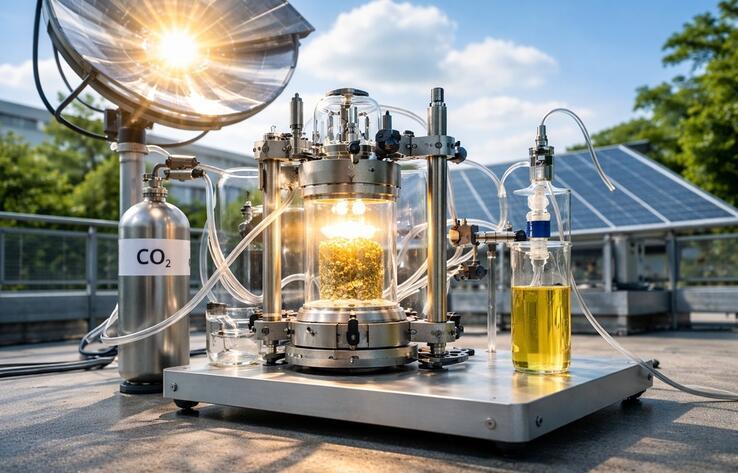
Recent advancements in this field have been significant. In June 2026, a team from Yale University unveiled a revolutionary artificial leaf capable of producing methanol—a key liquid fuel—using sunlight, water, and carbon dioxide. This device represents a major leap forward, achieving a conversion efficiency that is 32 times greater than previous attempts at creating alcohol-based products through artificial photosynthesis.
The Yale artificial leaf integrates multiple processes necessary for converting solar energy into a usable liquid fuel. It employs a specialized photoelectrode made of silicon micropillars coated with fullerene carbon, which enhances the generation and separation of electrical charges. This design not only maximizes the surface area for catalytic reactions but also improves the overall efficiency of the process.
The catalyst used in this innovative device consists of cobalt phthalocyanine molecules anchored to carbon nanotubes. This combination allows for effective electron delivery to the catalytic sites, facilitating the chemical reactions required to produce methanol. The research was conducted under the auspices of the Center for Hybrid Approaches in Solar Energy to Liquid Fuels (CHASE), a collaborative initiative involving several leading universities in the United States.
The implications of this research extend beyond just the production of methanol. By developing efficient methods for converting sunlight into chemical fuels, scientists are paving the way for a future where renewable energy sources can directly replace conventional fossil fuels in various industries. This could be particularly transformative for sectors that face challenges in transitioning to electric power or battery storage.
As the race to develop artificial photosynthesis technologies continues, the potential for creating sustainable energy solutions grows. With ongoing research and collaboration among scientists worldwide, the dream of harnessing the sun's energy to produce clean, liquid fuels may soon become a reality, significantly impacting global energy consumption and environmental sustainability.
Published by Banx Network. This article is part of the Banx decentralized media programme, powered by the BXE token on the XRP Ledger.