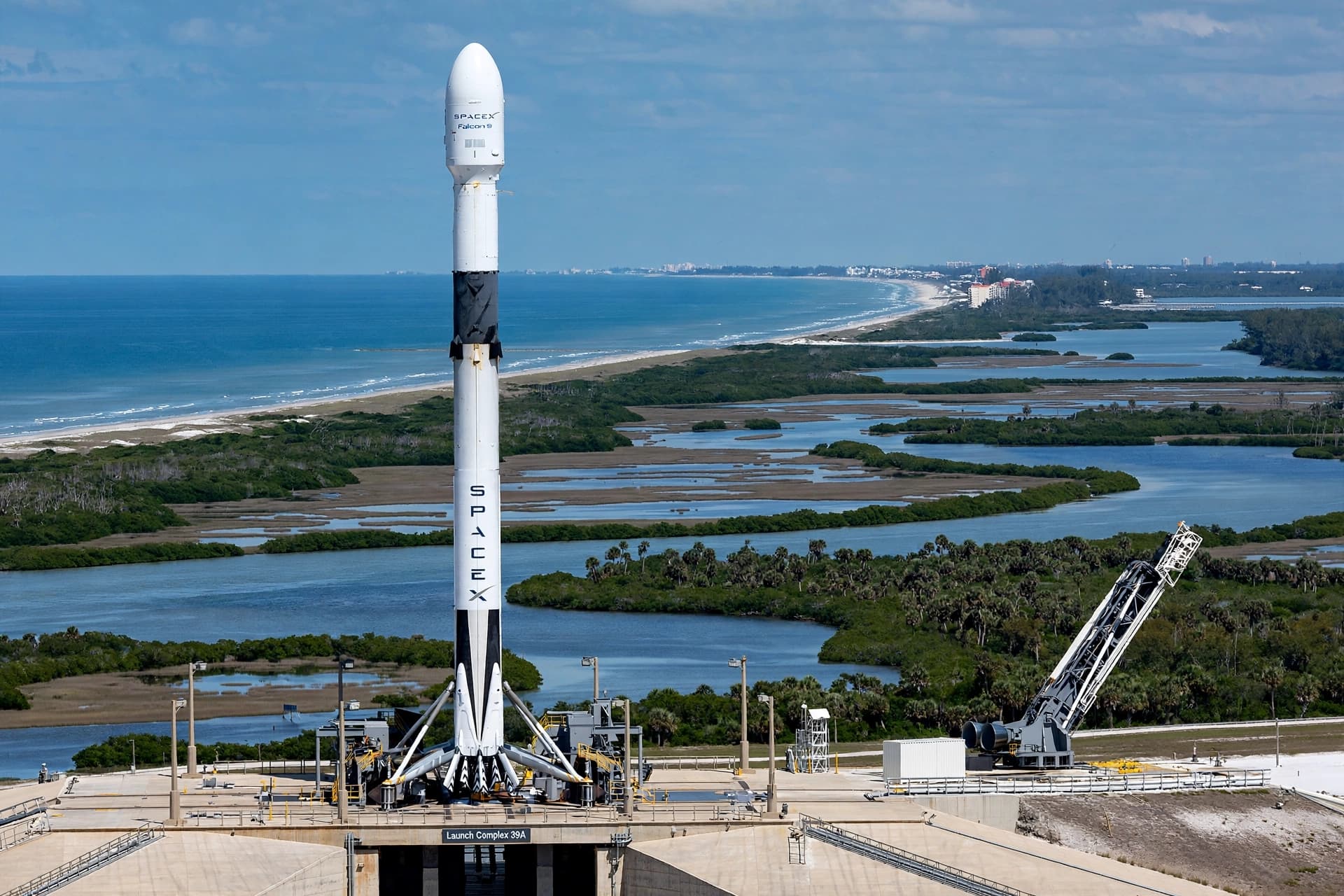
There is something quietly remarkable about a country watching one of its own leave the planet. Not as a passenger, but as a participant—a scientist, a pilot, a representative of a nation's curiosity. On Thursday, Canadian astronaut Joshua Kutryk is scheduled to launch aboard NASA's SpaceX Crew-13 mission, marking another chapter in what has already been a remarkable year for Canada in space.
Kutryk, a 44-year-old native of Fort Saskatchewan, Alberta, will serve as a mission specialist alongside NASA astronauts Jessica Watkins and Luke Delaney, and Roscosmos cosmonaut Sergey Teteryatnikov. This will be his first spaceflight. Before joining the Canadian Space Agency in 2017, he served as a CF-18 fighter pilot and later as an experimental test pilot, accumulating degrees in mechanical engineering, space studies, flight test engineering, and defense studies along the way.
The mission is scheduled to lift off no earlier than 11:10 a.m. EDT on October 1 from Space Launch Complex 40 at Cape Canaveral Space Force Station in Florida. The crew will spend approximately six months aboard the International Space Station, supporting hundreds of scientific investigations spanning biomanufacturing, regenerative medicine, physical sciences, and technology development.
For Canada, the launch continues a year already marked by significant milestones. Earlier in 2026, astronaut Jeremy Hansen traveled toward the Moon as part of the Artemis II mission—a journey that carried symbolic weight for a nation whose space program has often punched above its weight. Mathieu Caron of the Canadian Space Agency described it as an exciting and impressive year for Canadian space exploration, noting that both missions contribute to understanding space and supporting research that improves lives on Earth.
Former astronaut Bob Thirsk, who was the first Canadian to undertake a long-duration stay aboard the space station, spoke of the experience with a quiet reverence. Looking out the window and seeing sunlight glinting off the Atlantic Ocean, he said, sent a chill down his spine. It is a reminder that beyond the science and the engineering, there remains something profoundly human about leaving Earth and looking back at it.
The Crew-13 mission represents the thirteenth crew rotation flown by SpaceX for NASA and the fourteenth SpaceX mission carrying NASA astronauts to the station. The Dragon spacecraft is expected to dock at the station's Harmony module approximately seven hours and fifty minutes after launch—the fastest trip by a U.S. spacecraft in station history.
Kutryk's journey is not merely a personal achievement. It is a continuation of a Canadian tradition that stretches back to the earliest days of human spaceflight, a reminder that exploration is not the province of any single nation but a shared endeavor. As the Falcon 9 rises from the Florida coast, it will carry not only four astronauts but also the quiet pride of a country watching from afar.
AI Image Disclaimer: The visual materials in this article were produced by artificial intelligence and are used solely for illustrative purposes.
Sources: The Canadian Press, NASA, Canadian Space Agency, ISS National Lab, RRI
Published by Banx Network. This article is part of the Banx decentralized media programme, powered by the BXE token on the XRP Ledger.