Key Highlights
- Voyager 1 will reach one light-day from Earth on November 18.
- The spacecraft is currently over 16 billion miles away.
- NASA plans events to celebrate this historic milestone.
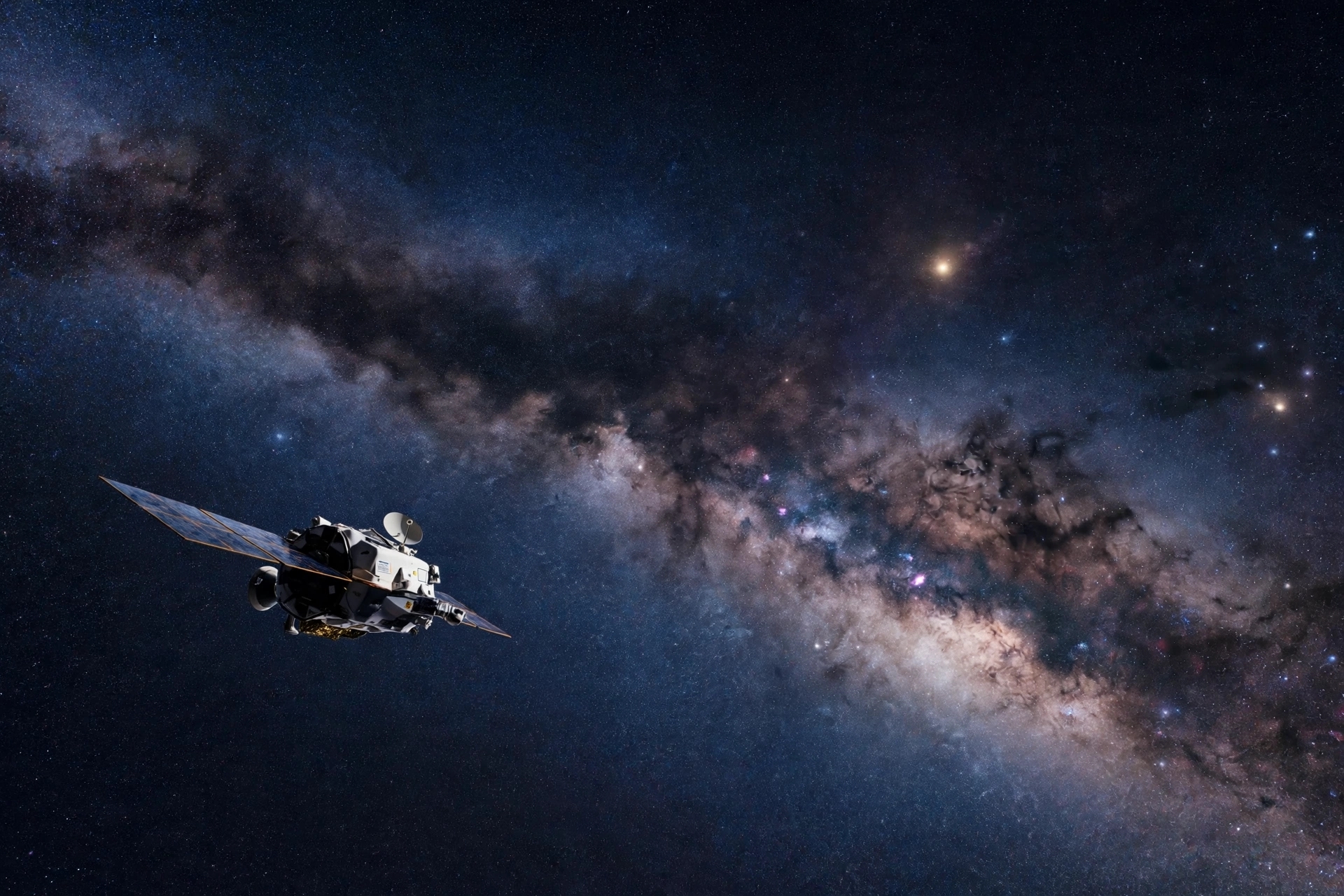
Voyager 1, the pioneering spacecraft launched by NASA in 1977, is set to achieve a remarkable milestone on November 18, 2023, when it reaches a distance of one light-day from Earth. This distance, approximately 16.09 billion miles, signifies that a radio signal traveling at the speed of light will take a full 24 hours to reach the spacecraft, and another 24 hours for any response to return. This event not only marks a significant achievement in space exploration but also serves as a poignant reminder of the vastness of the universe and the limits of human communication with distant machines.
At 5:16 a.m. Eastern time on that Wednesday, Voyager 1 will officially cross this threshold, making it the first human-made object to do so. Since its launch, Voyager 1 has traveled farther than any other spacecraft, venturing into interstellar space in 2012. It has been operating in a region devoid of the solar wind, where it encounters the cold plasma of interstellar space. Despite the challenges of distance and diminishing power, the spacecraft continues to send back valuable scientific data, albeit with a delay that now requires a two-day round trip for commands.
NASA has organized two events to commemorate this historic occasion. On November 17, individuals around the globe are invited to participate in "Shine Bright for Voyager's Light-Day," where they will point a light toward the sky after sunset, symbolizing their connection to the spacecraft. This event will be accompanied by a website that flashes Voyager's call sign, "VGR," in Morse code. Following this, on November 19, mission team members and NASA leadership will gather at the Jet Propulsion Laboratory for a discussion about the spacecraft's status and the ongoing challenges of maintaining its operation across such vast distances.
The significance of the one-light-day milestone extends beyond mere numbers. Voyager 1 is currently heading toward a faint star known as Gliese 445, located over seventeen light-years away. At its current speed of nearly 38,000 miles per hour, it will take approximately 40,000 years for the probe to come within 1.7 light-years of that star. Even after its instruments cease functioning, Voyager 1 will continue to drift through the galaxy, serving as a testament to human ingenuity and exploration.
While the one-light-day mark is an arbitrary line defined by the speed of light and Earth's rotation, it provides a tangible way to comprehend the immense distances involved in space travel. The photons emitted from Earth today will not reach Voyager 1 until tomorrow, illustrating the profound nature of our universe and our attempts to measure it. As the mission team carefully manages the spacecraft's dwindling power, the public's participation in the light-shining event serves as a meaningful gesture of appreciation for this extraordinary journey.
As Voyager 1 continues its mission, it remains the farthest human-made object in existence, still transmitting faint signals from the edge of the sun's influence. This milestone is not just a celebration of distance but a recognition of the enduring spirit of exploration that drives humanity to reach for the stars.
Published by Banx Network. This article is part of the Banx decentralized media programme, powered by the BXE token on the XRP Ledger.