Trade, at its best, is a conversation between nations—an exchange not only of goods but of expectations, of trust carefully negotiated and reluctantly extended. When that conversation grows strained, the resulting agreements carry within them both the relief of averted conflict and the quiet acknowledgment that trust remains incomplete.
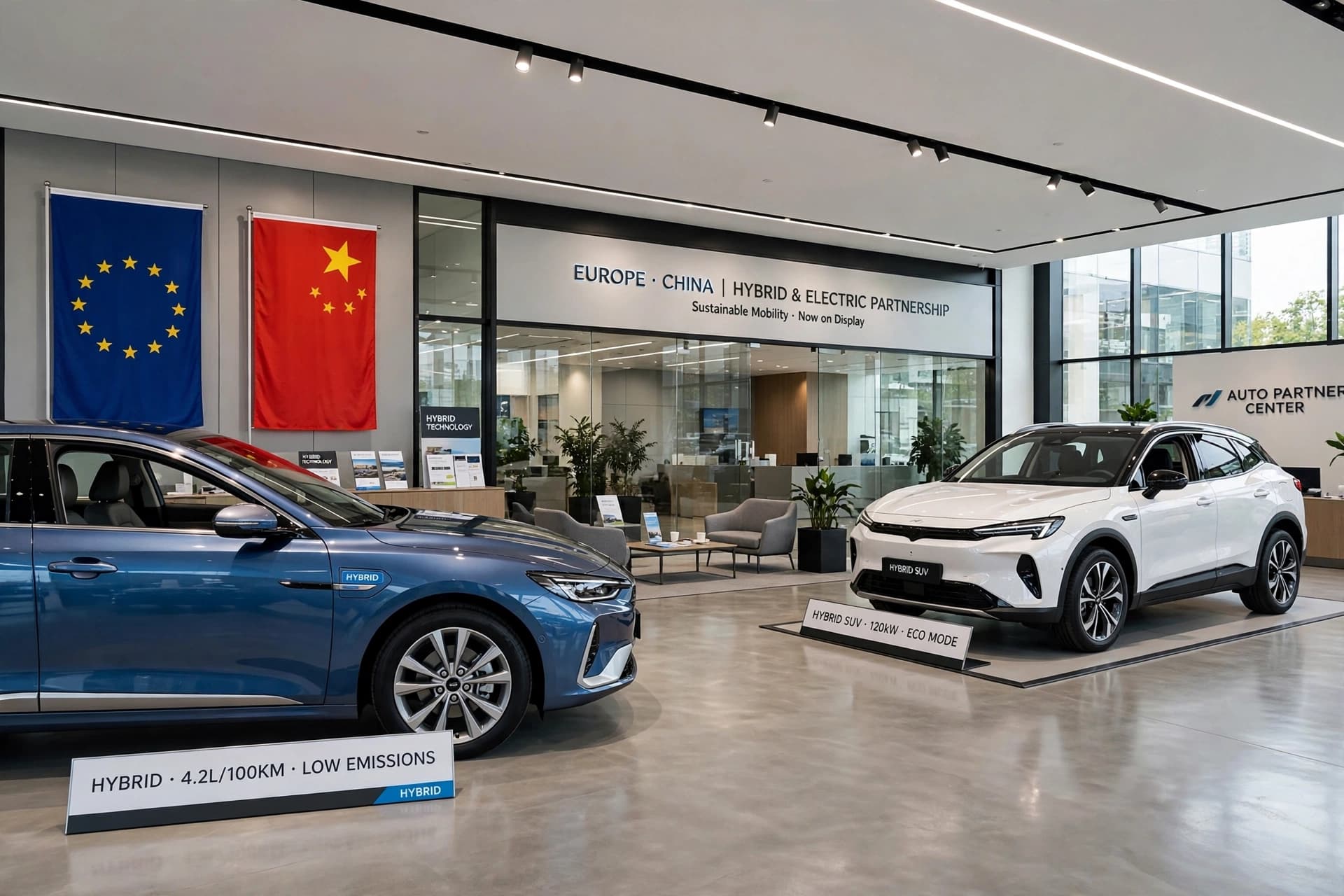
The European Union and China reached an agreement Friday to curb Chinese exports of hybrid and plug-in hybrid vehicles to Europe, a move that EU Trade Commissioner Maroš Šefčovič said could cut those exports by more than half over the next four years . The deal, struck after two days of negotiations in Beijing, represents a significant step toward rebalancing a trade relationship that has grown increasingly lopsided .
The imbalance has been substantial. The EU imports €1 billion more in Chinese goods each day than China imports from Europe . Chinese hybrid vehicles have flooded European showrooms in recent months, filling the gap left after the EU imposed additional duties on Chinese electric vehicles in 2024 following an investigation into unfair subsidies . By August, Chinese-made vehicles accounted for one-quarter of hybrid sales in Europe .
Under the agreement, China has committed to moderating its exports of hybrids and plug-in hybrids to the EU, opening the prospect of cutting shipments by more than half . Šefčovič described the understanding as "a crucial first step, but only a first step" in rebalancing the trade relationship . The deal also includes Chinese commitments to lower tariffs on European products including car parts, olive oil, and footwear, saving an estimated €225 million .
Access to rare earths and permanent magnets—materials essential for electric vehicles, electronics, and defense equipment—formed another critical component of the discussions. China agreed to ease export licensing for these materials through a "green channel" mechanism . Analysts have suggested this element of the deal may prove more consequential than the vehicle export limits, given China's dominance in rare earth processing .
The agreement, however, is not without its ambiguities. No binding quota was announced, and the understanding rests on China's willingness to follow through . The European Commission president, Ursula von der Leyen, is expected to assess the outcome and discuss next steps with EU leaders at an upcoming summit . Šefčovič noted that dialogue must produce results, adding that where dialogue cannot deliver, the EU will use its tools to ensure rebalancing .
The German automotive industry association, VDA, welcomed the agreement as a positive signal while noting that a final assessment would depend on the details . European business representatives in China have described the broader challenge: a playing field that has been uneven not only within China but in third markets where Chinese firms leverage scale and technological capabilities built under protected conditions .
For now, the agreement offers a pause in what had been an escalating trade dispute. Whether it becomes a foundation for deeper cooperation or merely a temporary accommodation depends on what both sides do next.
AI Image Disclaimer: The images associated with this report were generated by AI for editorial illustration and are not documentary photographs.
Sources: Deutschlandfunk, The Irish Times, TVP World, Yonhap News Agency
Published by Banx Network. This article is part of the Banx decentralized media programme, powered by the BXE token on the XRP Ledger.