In the quiet hills of western Uganda, where tradition runs deeper than the roots of ancient trees, a broadcaster laid down his microphone and picked up a crown. The Tooro Kingdom, still mourning the loss of its “boy king,” turned to an unexpected figure to carry the weight of heritage into a new chapter. It is a story that reminds us how the old and the new can sometimes share the same room, even the same person.
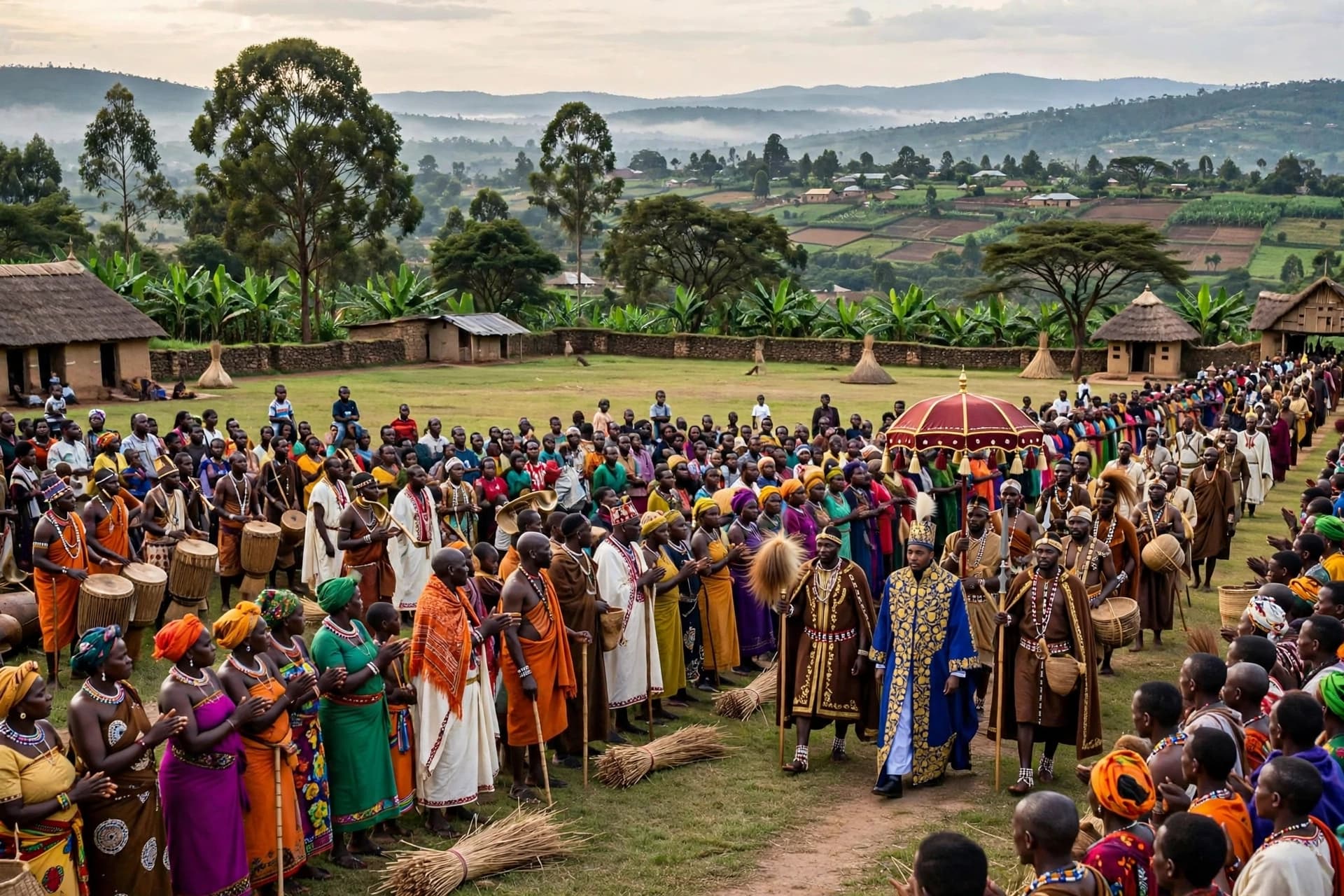
Edward Rukidi Nyabongo, a longtime broadcaster and editor with Uganda Broadcasting Corporation, was crowned king of the Tooro Kingdom on Tuesday, taking the regnal name Edward Rukidi Nyabongo . The ceremony in Fort Portal, a remote town near the Congo border, drew thousands in person and countless more watching on televised broadcasts, a testament to the enduring pull of a monarchy that holds no formal political power but commands deep cultural reverence .
The path to the throne was neither simple nor uncontested. King Oyo Nyimba Kabamba Iguru Rukidi IV, crowned at age three and once known as the world’s youngest king, died of cancer in August at thirty-four, leaving no publicly known heir . The ruling clan, known as the Babiito, selected Nyabongo from a pool of eligible princes, bypassing an alleged son born out of wedlock whose identity the queen mother said would be revealed in time .
That decision drew quiet objection from the queen mother, Best Kemigisa, who charged that King Oyo’s written will had not been followed . Local media reported brief disagreements over custody of the late king’s remains at his September funeral . Yet the selection committee’s choice of an adult, established broadcaster appeared deliberate, a preference for stability over another long regency should a child heir have been named .
Nyabongo himself has spoken of heritage not as privilege but as obligation. “My family never let me treat royal descent as an entitlement,” he told the New Vision newspaper before his coronation. “It was presented to me as a duty to prepare for” . That quiet framing of duty over destiny may serve him well in a role where authority is moral rather than legal.
Uganda’s traditional kingdoms were banned in the 1960s by a president who sought national unity, then restored in 1993 . Their leaders hold no formal sovereignty and are barred from partisan politics, yet they remain guardians of culture and identity for millions. At the coronation, President Yoweri Museveni urged traditional leaders to promote local languages, a nod to the cultural work these monarchs are expected to do .
For the people of Tooro, the crowning is not a political event but a cultural homecoming. Oyo, after all, had been a child of the nation’s imagination, a boy in colorful robes who once tossed coffee beans into his father’s tomb as part of a coming-of-age ritual, watched by a kingdom and remembered by the world . Now a broadcaster sits where that boy once stood, tasked with holding a community’s story together.
The crown carries no army, no tax power, no seat at the table of state. What it carries is memory, and the quiet work of keeping a people’s identity alive. Edward Rukidi Nyabongo, journalist turned monarch, begins that work this week.
AI Image Disclaimer: Images included with this report were generated using artificial intelligence and are for illustrative purposes only.
Sources: The Associated Press, Belfast Telegraph, Los Angeles Times, New Vision
Published by Banx Network. This article is part of the Banx decentralized media programme, powered by the BXE token on the XRP Ledger.