In the quiet aftermath of a storm, a nation takes stock of what the water has taken and what it has left behind. Thailand has long lived in conversation with its rivers and monsoon skies, a relationship both nourishing and, at times, overwhelming. When the rains came harder and stayed longer than memory or infrastructure could comfortably hold, the result was not merely a weather event but a shared trial. Now, as the waters begin their slow retreat, the work of repair has begun with the quiet urgency that follows any reckoning with nature.
The Thai government approved emergency funds of $122 million on Tuesday, directing 4.1 billion baht to compensate those whose lives were upended by flooding that began in mid-September. The scope of the deluge was considerable: more than 2.6 million people were affected and at least 19 lost their lives, including four in the capital. Government spokesperson Ekkapob Pianpises confirmed that the Interior Ministry would oversee the distribution of funds nationwide, a bureaucratic mechanism meant to translate paper into relief for families still wading through uncertainty .
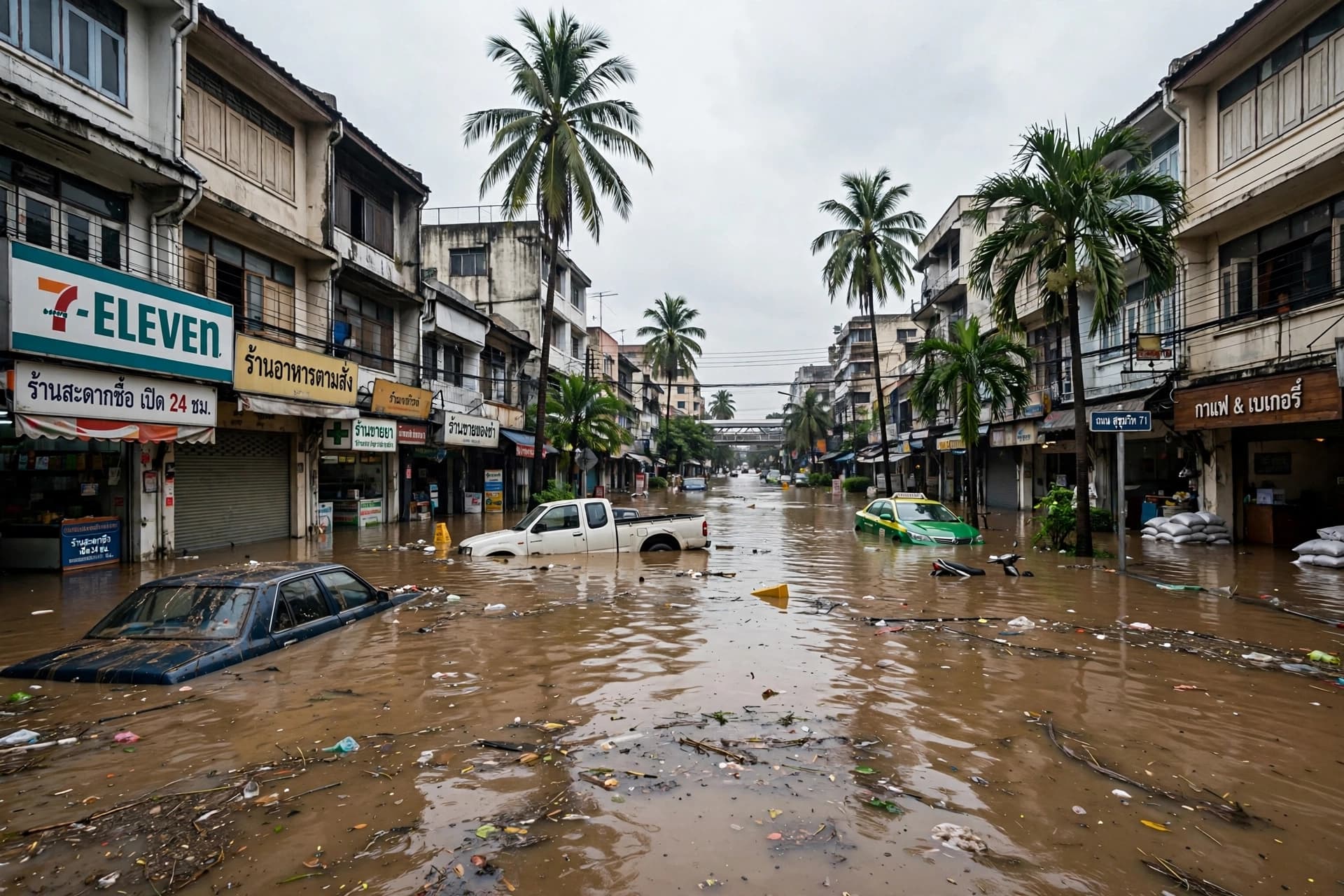
Bangkok, a city accustomed to seasonal inundation but rarely at this scale, is slowly finding its footing. Governor Chadchart Sittipunt expressed cautious optimism that traffic on most main roads would return to normal within two days, though low-lying neighborhoods might wait as long as a week for the ground to dry. The city’s eastern districts remain submerged, holding water like a sponge reluctant to release its burden .
The disruption has rippled outward in ways both visible and mundane. Suvarnabhumi Airport, Thailand’s main international gateway, struggled with a significant backlog of baggage, a snarl that Thai Airways attributed partly to staff shortages caused by the flooding. Flight cancellations and delays left passengers stranded and luggage stranded, a reminder that even in an age of digital efficiency, mud and water still find ways to interrupt the choreography of modern travel .
Beyond the capital, the picture remains uneven. Residents in 29 of Thailand’s 76 provinces were still affected as of Tuesday. The flooding caused an estimated 22 million baht in business damage nationwide, a modest figure that nonetheless represents disrupted livelihoods and shuttered storefronts for countless small enterprises. While Bangkok was expected to stay dry, heavy rain was forecast elsewhere, a meteorological reprieve that came with an asterisk .
Relief efforts have drawn on a broad coalition: disaster prevention officials, local authorities, military personnel, police, volunteers, and community organizations have worked to evacuate residents, raise belongings to higher ground, manage traffic, and establish temporary shelters . In a country where communal resilience is both cultural inheritance and practical necessity, the response reflects a familiar pattern of neighbors helping neighbors when institutions alone cannot reach everyone in time.
The Thai cabinet designated Monday and Tuesday as public holidays for Bangkok and three adjacent provinces, a small concession to the reality that flooded streets and closed schools make ordinary routines impossible . As the rains taper and the water recedes, the deeper work continues: not only rebuilding what was damaged but understanding what this season of unusually heavy rain may signal about the years ahead.
---
AI Image Disclaimer: The images accompanying this article were generated by artificial intelligence and are for illustrative purposes only.
Sources: The Associated Press, The Independent, ReliefWeb (ASEAN Weekly Disaster Update), CCTV+
Published by Banx Network. This article is part of the Banx decentralized media programme, powered by the BXE token on the XRP Ledger.