There is a particular kind of silence that follows a moment of profound fear—the breath held, the body frozen, the voice reduced to pleading. On a platform high above the Sulak River in Russia’s Dagestan region, a woman stood in a harness, tears streaming, begging not to be released into the canyon below. The staff around her did not wait. What followed was captured on video, and what it revealed has prompted an official investigation and a broader conversation about the line between thrill and violation.
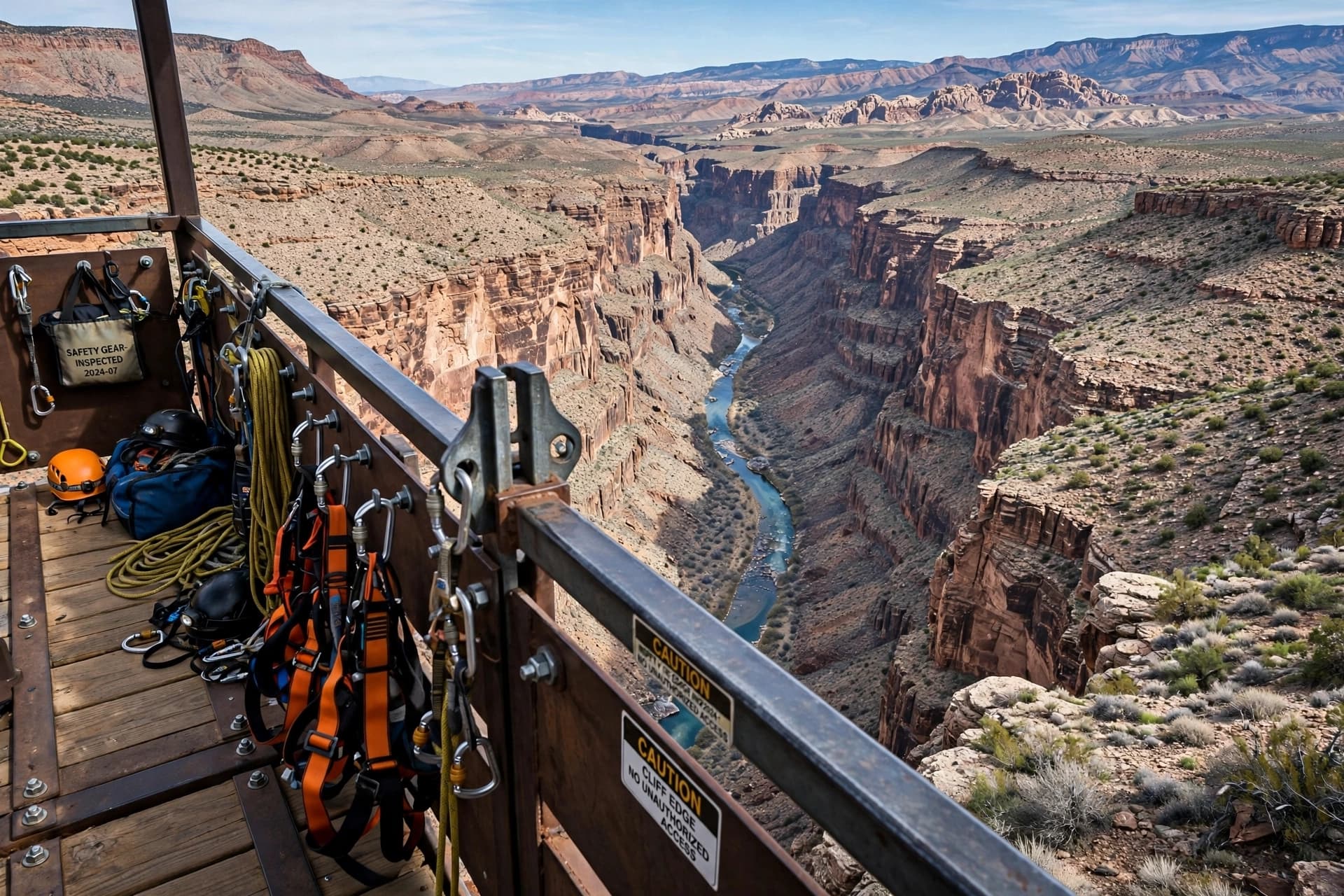
The incident occurred at the Noh’o tourist attraction, a destination known for its pendulum jump—a seated harness swing that propels participants out over a 260-foot drop . The woman had reportedly agreed to the jump initially but changed her mind once harnessed and positioned at the edge . In the footage, she pleads with the instructors and with her husband, who appears to be filming and laughing . “Please don’t throw me like that! Let me go!” she cries, according to reports .
When she refused to sit at the edge, one instructor kicked the back of her knees to force her legs to give way, allowing staff to position her for the drop . She was then swung out over the canyon. The woman survived the jump, but when she was brought back to the platform, she was visibly distraught. A staff member reportedly asked if she wanted to go again. “No, no, no! I said ‘no’!” she responded .
Russia’s Investigative Committee has opened a probe into the incident and others like it . The case has drawn attention to previous complaints about the attraction. One woman from Moscow, identified as Anastasia, reported being forced to jump against her will and was later diagnosed with a spinal cord contusion . Another, named Sonya, sustained a sprain after a rope wrapped around her leg and claimed instructors had not properly briefed her beforehand . These accounts suggest a pattern that goes beyond a single moment of poor judgment.
The video itself has circulated widely, drawing reactions that range from shock to anger. The woman’s husband has been criticized for filming and laughing during her distress, though he has not publicly commented . The attraction’s operators have not issued a statement, and it remains unclear whether the staff members involved have been suspended or face charges. Local reports indicate the site had passed previous safety inspections .
For many observers, the incident raises uncomfortable questions about consent in extreme tourism. Adventure activities rely on a delicate balance between the participant’s desire for thrill and the operator’s duty to ensure safety and respect boundaries. When that balance tips toward coercion—when “no” is treated as a hurdle to overcome rather than a boundary to honor—the experience ceases to be an adventure and becomes something else entirely.
The woman walked away from the platform after the jump, according to reports, declining further interaction . Whether the investigation leads to accountability or merely fades into the noise of viral content remains to be seen. But the footage preserves a moment that raises a question worth sitting with: what does it mean to force someone into fear, and what do we owe those who say they cannot go through with it?
AI-generated visuals accompany this article.
Sources: New York Post, Daily Mail, Beijing News, Correio 24 Horas, 20 Minuten
Published by Banx Network. This article is part of the Banx decentralized media programme, powered by the BXE token on the XRP Ledger.