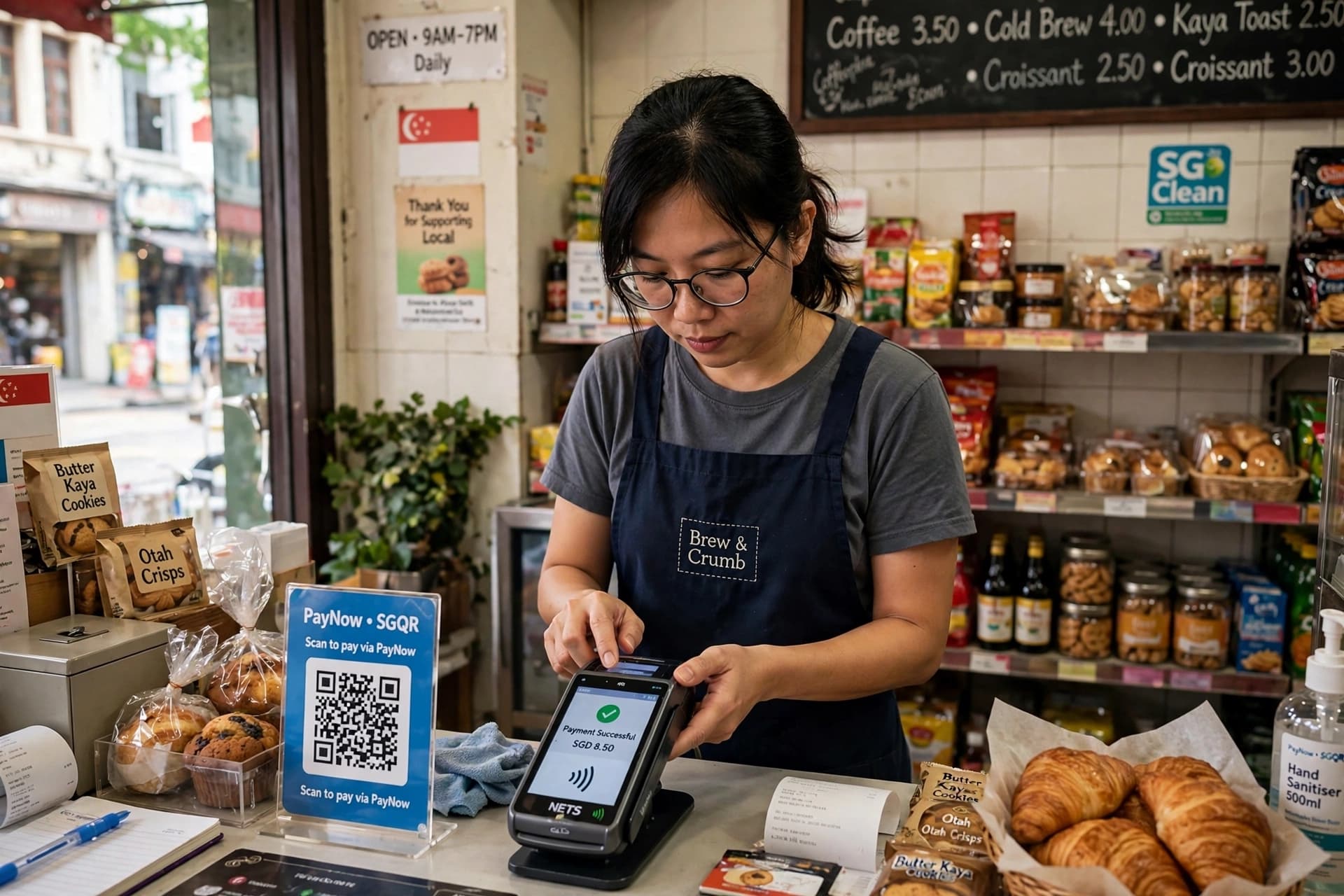
Much of Singapore's economic activity now takes place through systems that are difficult to see from the street. Payments move through digital networks, businesses sell products through online platforms, and employees rely on cloud-based tools to coordinate work across offices and borders.
According to figures reported by The Business Times, Singapore's digital economy reached approximately S$144 billion in 2025, equivalent to around 20% of gross domestic product. The figures highlight the growing importance of technology across the city-state's economy.
The digital economy includes more than technology companies themselves. It also encompasses businesses in traditional sectors that use digital tools to improve operations, reach customers or develop new services.
For retailers, online platforms can expand access to customers beyond a physical storefront. For manufacturers, connected systems can help monitor equipment and organize production. Financial institutions use digital services to process transactions and deliver products with greater speed and convenience.
Small and medium-sized businesses are an important part of this transformation. Digital payment systems, online marketplaces and cloud software can give smaller companies access to tools that once required larger budgets and dedicated technical teams.
However, adoption alone does not guarantee productivity gains. Businesses need employees who can use new systems effectively, reliable infrastructure and sound approaches to cybersecurity. Poorly implemented technology can add complexity instead of reducing it.
Artificial intelligence is introducing another phase of change. Companies are testing AI tools for customer service, document processing, data analysis and software development. Their long-term economic value will depend on whether these applications improve output, reduce costs or create services that customers are willing to pay for.
The expansion also brings questions about trust. Digital transactions and online services rely on the protection of personal information, secure networks and systems that remain available when people need them.
Singapore's position as a regional business and financial centre supports the growth of its digital economy. International companies use the city-state as a base for regional operations, while local businesses benefit from connectivity, technical talent and access to global markets.
Yet the benefits of digital growth may not be distributed evenly. Workers need opportunities to develop new skills, and smaller businesses may require support to adopt technologies that are increasingly important for remaining competitive.
The S$144 billion figure therefore represents more than the growth of an industry. It reflects how deeply digital tools have become woven into ordinary economic activity, from payments and logistics to business administration and consumer services.
As Singapore continues investing in technology, the next challenge will be turning digital adoption into lasting productivity improvements. The strength of the digital economy will depend not only on its size, but also on how effectively businesses and workers use the tools available to them.
AI Image Disclaimer
This AI-generated illustration represents Singapore's digital economy in general and does not depict actual company data or a specific transaction.
Sources
The Business Times Infocomm Media Development Authority Ministry of Digital Development and Information Department of Statistics Singapore
Published by Banx Network. This article is part of the Banx decentralized media programme, powered by the BXE token on the XRP Ledger.