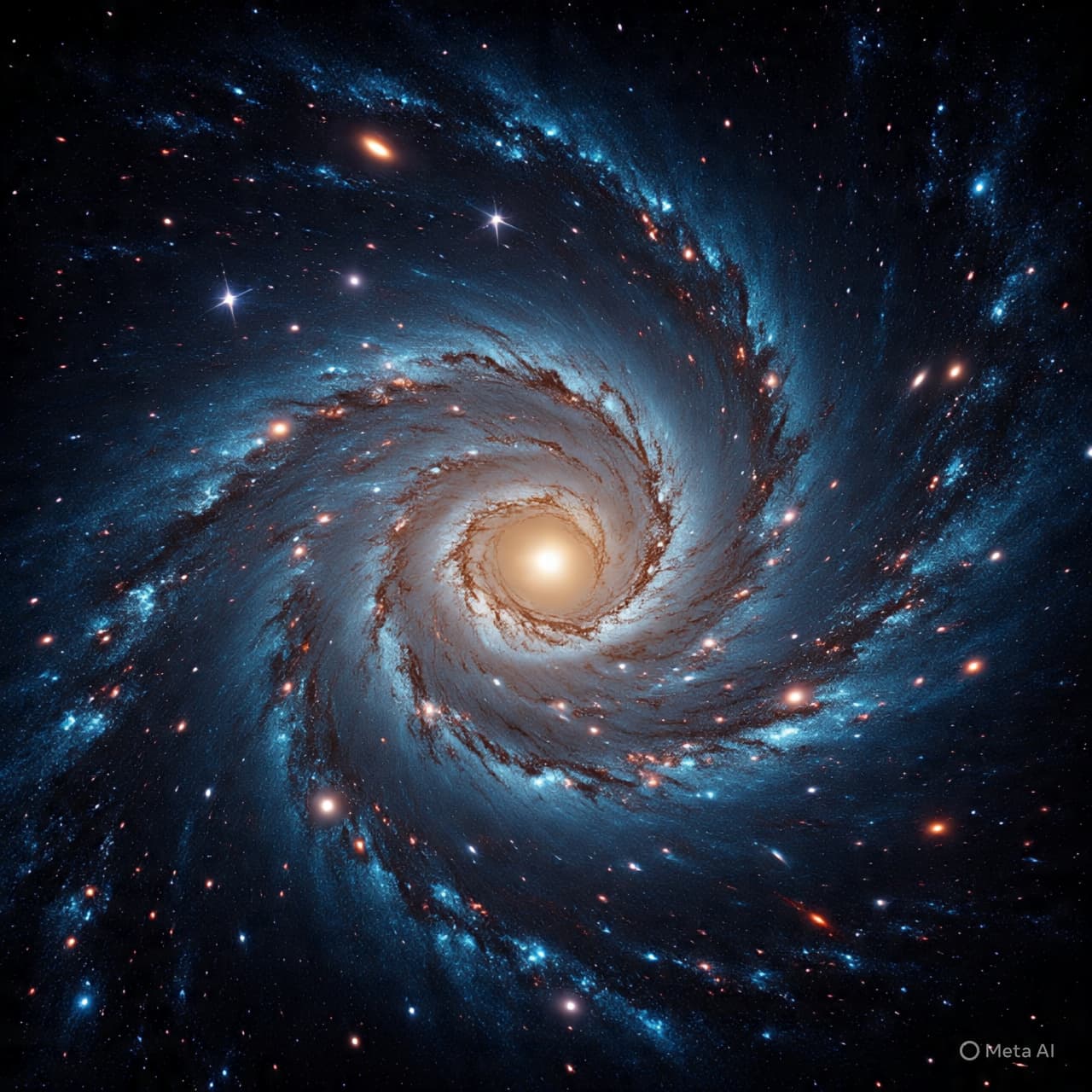
In the Faint Light of Ancient Skies: A Star That Has Been Waiting Since the Beginning
DECam captured one of the universe’s oldest stars, whose low heavy-element content offers a rare glimpse into early cosmic history.

DECam captured one of the universe’s oldest stars, whose low heavy-element content offers a rare glimpse into early cosmic history.

Scientists discovered deep-sea skate egg cases at 6,200 meters, possibly using geothermal heat to support embryo development.

Mosquitoes track carbon dioxide, heat, and body scent to find humans, with individual differences explaining why some people attract more bites.

Single-cell sequencing reveals vast, previously hidden diversity among protists, reshaping understanding of microbial life and ecosystems.

Deep-sea amphipods can travel across wide depths and distances, suggesting stronger connections between ocean ecosystems than previously understood.

Scientists are developing methods to convert carbon dioxide into useful chemicals, using catalysts and renewable energy to turn emissions into valuable resources.

Researchers found genes linked to impulse control may influence addiction risk, highlighting how biology and environment together shape behavior.When Urge Meets Understanding: Rethinking Addiction Through Genetics

Scientists discovered that bacterial DNA can split using accordion-like folds, revealing a new structural mechanism that helps organize and separate genetic material efficiently.

Two new fungi species were identified in an Australian herbarium using DNA sequencing, showing how modern science can uncover hidden biodiversity in long-preserved collections.

Scientists discovered a unique modification in RuBisCO that could improve carbon fixation, potentially boosting crop efficiency and agricultural productivity.

Long-lived active regions on the Sun produce repeated solar flares, but scientists still don’t fully understand why some persist while others fade.

Adding red dragon fruit peel to bread boosts antioxidants and slows starch digestion, offering potential health benefits while reducing food waste.

A redesigned mass spectrometer can analyze up to a billion molecules simultaneously, greatly increasing speed and scale for chemical and biological research.

Mosquito flight patterns show they use carbon dioxide, heat, and scent in layered ways to track humans, adjusting their movement as they get closer to a target.

ALICE at CERN detected plasma-like behavior in proton collisions, suggesting quark-gluon plasma may form in smaller systems than previously thought.

Physicists have clarified how static electricity works, showing that charge transfer depends on surface imperfections and tiny material exchanges, solving a decades-old mystery.

NASA scientists explained Bennu’s particle ejections as effects of thermal stress and micrometeoroid impacts, resolving a mystery observed during the OSIRIS-REx mission.

Flowers have evolved survival strategies during megadroughts, including delayed germination, rapid life cycles, and drought-resistant traits, helping them persist in extreme dry conditions.

Quantum research is moving underground to reduce interference, offering scientists more stable environments for precise experiments and advanced discoveries.

Scientists are using underwater sound recordings to assess coral reef health, offering a non-invasive way to monitor ecosystem vitality and change.

Scientists are exploring the use of high-resolution satellites to monitor whales and dolphins, offering a non-invasive and wide-scale method for marine research.

Research suggests Andean populations have evolved unique genetic adaptations to low oxygen levels, offering insights into human resilience and biology.

Europe’s Proba-3 satellite has re-established contact after a month of silence, allowing its solar observation mission to continue.

Scientists developed an ultra-efficient vacuum UV laser, enabling clearer nanoscale imaging and advancing research in materials, semiconductors, and molecular science.