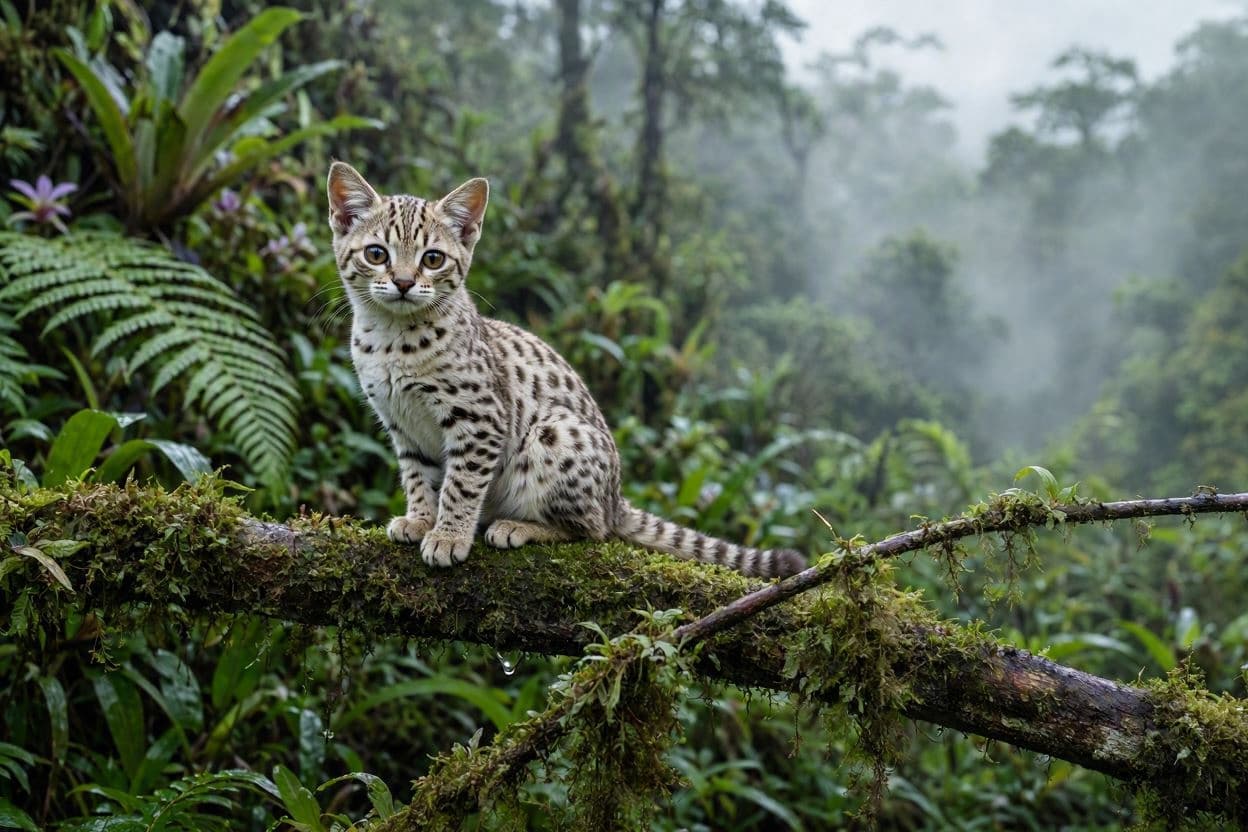
In the dense, mist-shrouded cloud forests of Bolivia, a secret has long prowled unseen. Small, elusive, and adorned with rosettes like a miniature leopard, this creature has now stepped into the light of scientific recognition. Named Leopardus tilcayo, or the Tilcayo cat, it is the first new wild cat species to be described in over a hundred years. This discovery is a testament to the hidden biodiversity that still awaits us, reminding us that even in the modern age, the natural world holds surprises for those willing to look closely.
The Tilcayo cat is smaller than the average domestic housecat, weighing around three pounds and measuring about 18 inches in length. Its coat is a light brown, patterned with dark rosettes that provide excellent camouflage in the dappled light of the Yungas forest. Despite its small size, it is a fierce predator, playing a crucial role in the ecosystem by controlling populations of small rodents and birds. Its existence was hinted at by local indigenous knowledge, but scientific confirmation required rigorous genetic analysis.
Researchers used DNA sequencing to distinguish the Tilcayo from other similar species in the Leopardus genus, such as the oncilla and the tigrillo. The genetic differences were significant enough to classify it as a distinct species, a rare occurrence in mammalogy today. Most large mammals have already been cataloged, so finding a new cat species is akin to discovering a new planet in our own solar system. It highlights the importance of preserving habitats where such unique life forms can thrive.
The Bolivian Yungas, where the Tilcayo resides, is one of the least-studied regions in the Neotropical realm. This biodiverse hotspot is home to countless endemic species, many of which remain unknown to science. The discovery of the Tilcayo underscores the urgent need for conservation efforts in this area. Deforestation and climate change pose significant threats to these fragile ecosystems, putting undiscovered species at risk before they are even known.
Local communities have long known of the "tilcayo," integrating it into their folklore and daily observations. This collaboration between indigenous knowledge and modern science is a powerful model for discovery. It respects traditional wisdom while providing the empirical evidence needed for global recognition. Such partnerships are essential for effective conservation, as local people are often the best stewards of their natural heritage.
The announcement of this new species has sparked excitement among biologists and cat enthusiasts worldwide. It serves as a reminder that exploration is not just about distant lands but also about deepening our understanding of the familiar. Every new species discovered adds a piece to the puzzle of evolution, helping us understand how life adapts and diversifies over time. The Tilcayo is a living link to the past and a beacon for future research.
Conservationists are now calling for protected status for the Tilcayo’s habitat. Given its small population and limited range, it is likely vulnerable to extinction. Efforts to preserve the Yungas forest will not only save the Tilcayo but also benefit countless other species that share its home. This discovery provides a compelling reason to invest in environmental protection, showing that there is still much to lose if we fail to act.
The identification of Leopardus tilcayo marks a historic moment in zoology, ending a century-long drought in new wild cat discoveries. It highlights the rich biodiversity of Bolivia’s cloud forests and the importance of continued scientific exploration. As we celebrate this new addition to the family of wild cats, we are reminded of our responsibility to protect the delicate ecosystems that harbor such wonders.
AI Image Disclaimer: Please be aware that images included in this article are AI-generated visualizations created for illustrative purposes and do not depict actual events on the ISS.
Sources: National Geographic PBS NewsHour Reuters Discover Wildlife
Published by Banx Network. This article is part of the Banx decentralized media programme, powered by the BXE token on the XRP Ledger.