In the labyrinthine hush of the Sahara, where dunes roll like ancient echoes and the wind brushes bone‑white sand against a sunlit sky, traces of life from nearly 100 million years ago have emerged as if from a dream. A fossil unlike any before — tall, blade‑crested, and rugged — now offers a quiet reminder that the deep past often holds surprises that reshape our understanding of the living world.
This remarkable discovery comes from a remote region of what is now Niger, where a team of paleontologists unearthed the remains of a giant predatory dinosaur that bore both familiarity and strangeness in equal measure. The creature has been named Spinosaurus mirabilis — the “astonishing spine lizard” — in tribute to its striking blade‑like crest and formidable presence along ancient riverbanks. Its form, preserved across the shifting sands of time, suggests a way of life far removed from the image long painted by fossils that inspired blockbuster tales of roaring, aquatic hunters.
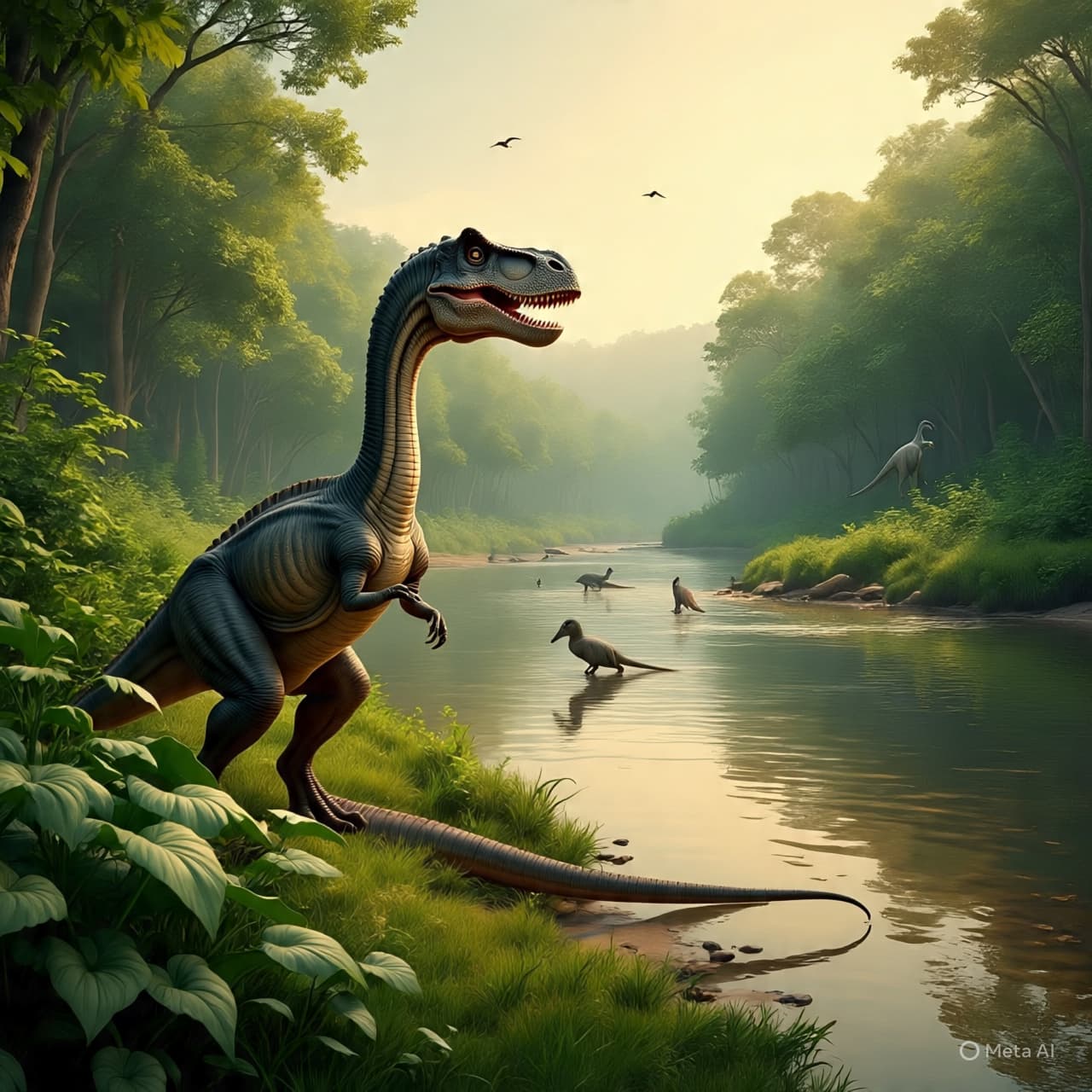
In the soft, reflective telling of this new chapter, it is tempting to imagine S. mirabilis wading through shallow water, its sturdy legs moving with deliberation as it stalked for fish and other prey among the reeds and slow currents. Like a heron cast in stone and sinew, its towering crest may once have caught the light of a Cretaceous sun, its hues vivid and purposeful in the dance of display or recognition. This vision, rooted in science yet whispering of poetic motion, evokes an ancient world where dinosaurs were not merely symbols of might but participants in the subtler rhythms of habitats now lost to time.
What makes this discovery especially resonant is how it challenges a narrative that has held sway in paleontology for decades. Previous fossil evidence of spinosaurids — the family that includes Spinosaurus — was largely drawn from coastal deposits linked to ancient seas, leading many to conclude that these giants might have been almost entirely aquatic. Yet here, far inland, hundreds of kilometers from any ancient shoreline, the bones of S. mirabilis tell a different tale: one of rivers and forested corridors, of shallow pursuits and evolutionary divergence. Its long, crocodile‑like snout and interlocking teeth — a design shared with other fish‑catching predators — reflect a life etched in the interplay of land, water, and the creatures that swam through them.
Seen through our contemporary lens, this “hell heron” offers not just scientific insight but a quiet resonance — a reminder that life’s history is as mutable as the landscapes it once traversed. The soft contours of riverbanks become as significant in the story of evolution as the crash of ocean waves; the patient patience of stalk and wade holds as much meaning as the sudden rush of a hunt. In these revelations, the image of Spinosaurus shifts from that of a monster among waves to a nuanced participant in its own ancient ecosystem.
In clear terms, paleontologists have identified a new species of spinosaurid dinosaur, Spinosaurus mirabilis, from fossils unearthed in the Sahara desert of Niger. Dating to about 95 million years ago, the species possessed a large scimitar‑shaped crest, interdigitating teeth adapted for catching fish, and evidence suggests it lived in inland riverine habitats rather than solely along ancient coastlines. The find challenges previous interpretations of Spinosaurus as predominantly aquatic, suggesting instead that it was a shallow‑water wader and an adept predator in freshwater environments.
AI Image Disclaimer
Visuals are AI‑generated and serve as conceptual representations.
Sources (Media Names Only)
Reuters The Independent Popular Science University of Chicago News Yahoo News Singapore
Published by Banx Network. This article is part of the Banx decentralized media programme, powered by the BXE token on the XRP Ledger.