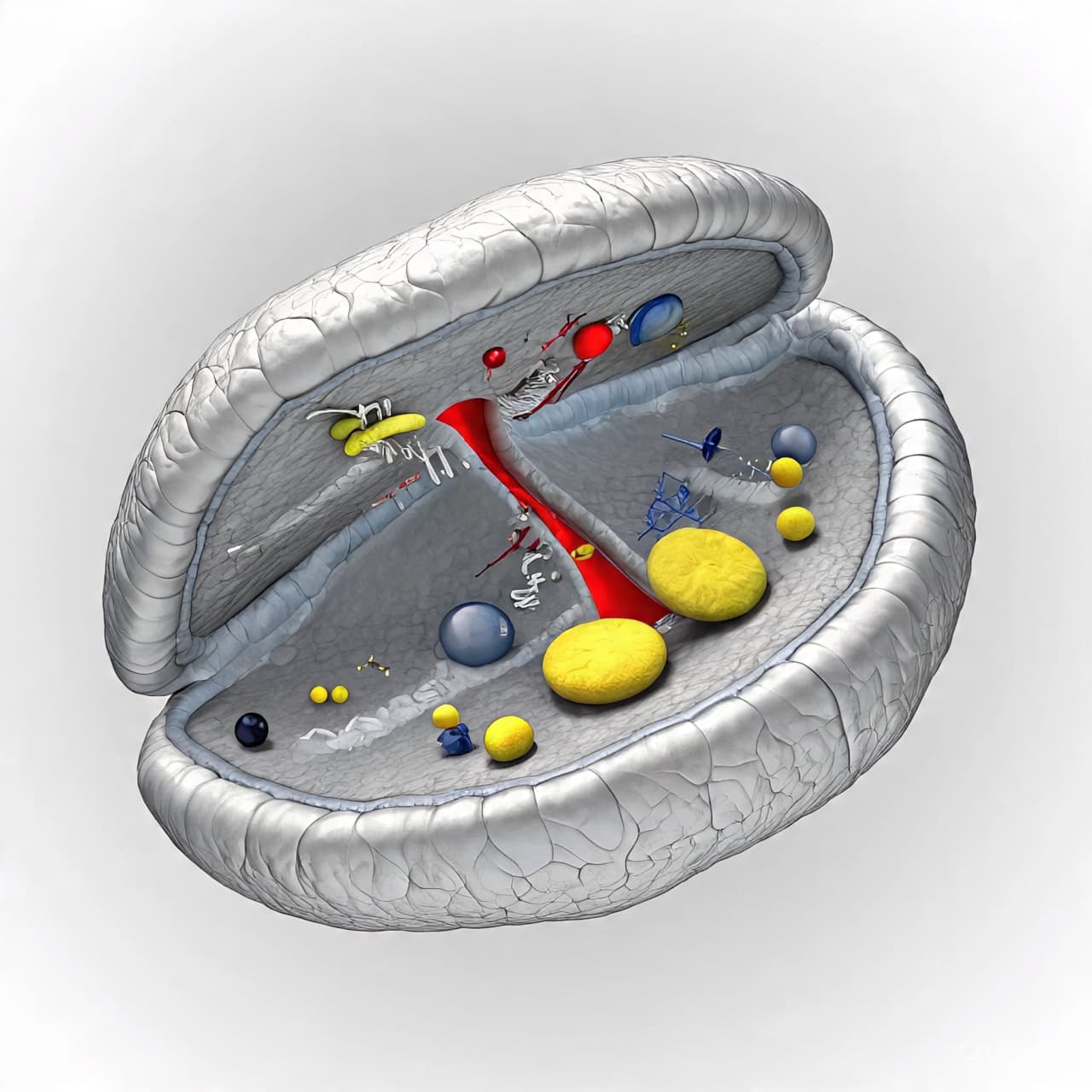
In laboratories where light falls softly across glass slides and humming instruments, the smallest dramas unfold without spectacle. Beneath the lens of a microscope, a bacterial cell prepares to divide, an act so ordinary it sustains ecosystems, industries, and human health alike. Yet within that apparent simplicity lies a choreography of molecular signals, precise and exacting, that scientists continue to unravel.
A research team led by David Reverter at the Universitat Autònoma de Barcelona (UAB) has now described in detail a molecular mechanism that regulates bacterial cell division. Their findings, published in Nature Communications, focus on the interaction between a protein known as MraZ and a region of genetic material called the dcw gene cluster—an assembly of genes essential for cell division and cell wall synthesis.
Bacterial cell division depends on tight regulation. Too early, and structural integrity falters; too late, and growth is stalled. The dcw gene cluster contains instructions central to building the division machinery and maintaining the cell wall, a structure that gives bacteria both shape and resilience. According to the research team, the MraZ protein binds directly to this gene cluster, acting as a regulatory element that modulates its activity. Through this binding, MraZ influences the expression of genes that coordinate when and how a bacterial cell divides.
The discovery clarifies a long-standing question about how bacteria synchronize growth with replication. While the dcw cluster has been recognized as essential for decades, the precise molecular control mechanisms governing its activity were not fully understood. By describing how MraZ interacts structurally and functionally with this cluster, the researchers have mapped a more detailed framework of regulation.
Such insights resonate beyond the laboratory bench. Bacterial cell division is a foundational biological process, and understanding its regulation may inform future research into antimicrobial strategies. Many antibiotics target cell wall synthesis or division pathways; therefore, a clearer picture of regulatory mechanisms could guide new lines of inquiry. The study itself remains focused on the molecular description—how binding occurs, how gene expression is influenced, and how this interaction shapes cellular timing.
At its core, the discovery reflects a broader scientific pursuit: to render visible the logic embedded in microscopic systems. Proteins such as MraZ do not announce their influence. They bind, detach, and regulate in scales measured in nanometers, orchestrating processes that ripple outward into visible growth.
Published in Nature Communications, the research situates itself within a global effort to decode the fundamentals of bacterial physiology. It adds specificity where there was once approximation, and structure where there was once inference. The mechanism, described in molecular detail, offers a clearer narrative of how bacteria maintain balance between expansion and stability.
In the quiet interior of a single cell, division begins not with noise, but with binding. A protein attaches to a cluster of genes, expression shifts, and replication proceeds. The discovery does not alter the visible world overnight. Instead, it refines our understanding of the hidden systems that sustain it—an incremental, careful illumination of life at its smallest scale.
Published by Banx Network. This article is part of the Banx decentralized media programme, powered by the BXE token on the XRP Ledger.