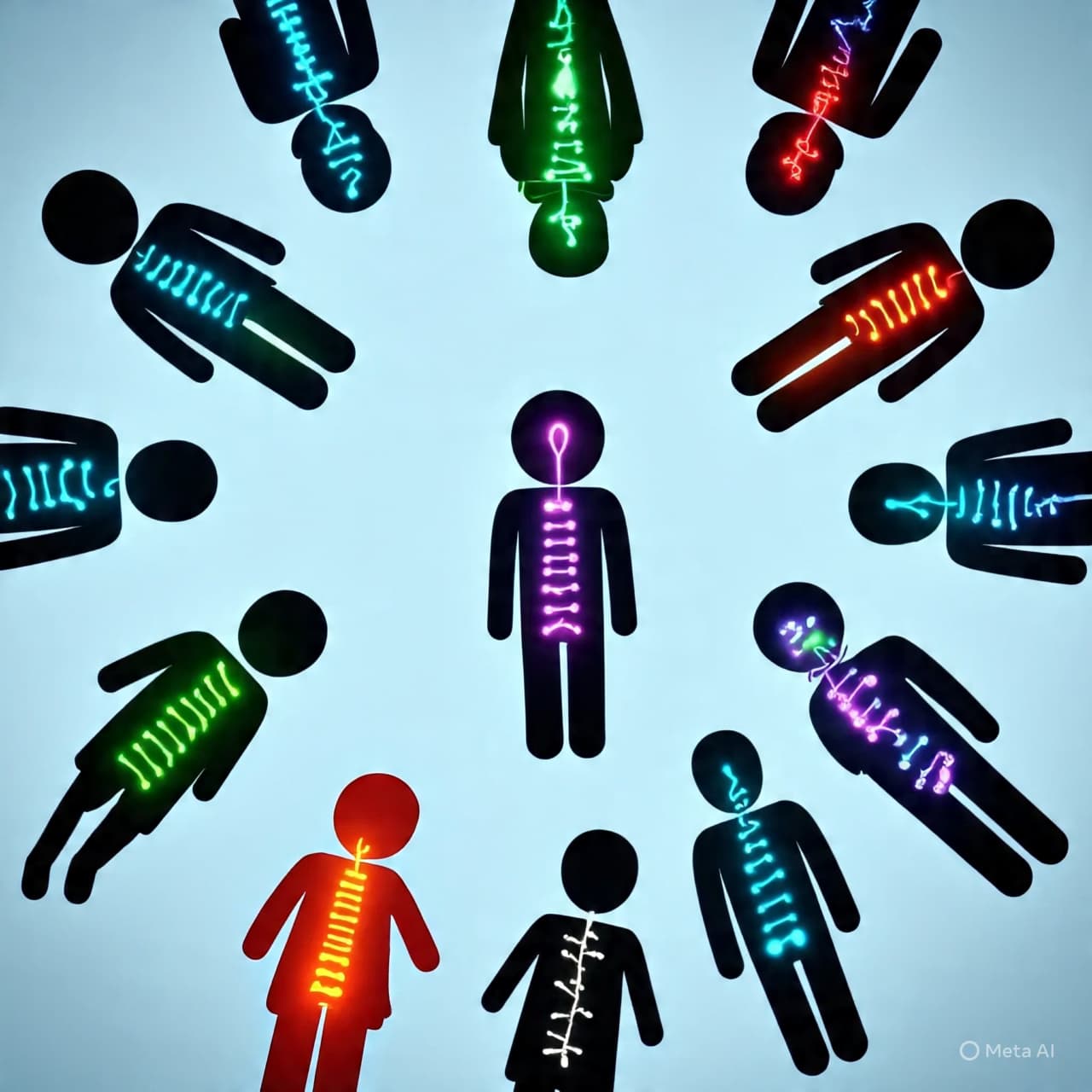
In the long corridors of scientific tradition, where Gregor Mendel’s simple garden of peas once illuminated the path of inheritance, there has always been a sense of order — a comforting rhythm of dominant and recessive traits, neatly passed from generation to generation. Yet in recent months, as scientists peer into genetic data gathered from hundreds of thousands of people, that rhythm has taken on a more complex, more whispered melody. What we once believed about inherited diseases — that a single genetic variant inevitably leads to a disease — is now giving way to a view that is more intricate and more reflective of life’s subtle interplay between genes and circumstance.
For decades, the pursuit of genetic causes for disease led researchers to study families with inherited conditions, seeking the gene variant that seemed to explain a medical mystery. If the mutation appeared in every affected family member and was absent in healthy relatives, it was celebrated as the genetic culprit, the switch that flipped the condition on and off. In monogenic diseases, such as certain inherited retinal conditions once thought to follow simple rules, genetic variants seemed closely tied to disease in clinical samples. Yet when those same variants are sought in the broader population, a strikingly different image emerges: many people carry the supposedly pathogenic variants yet show no sign of disease at all.
It is a gentle reminder that genes are not solitary actors in a script they wrote alone. Instead, they perform within a cast of thousands — other DNA segments, regulatory networks, and environmental influences that together shape whether a particular genetic variant actually yields illness. In modern biobanks and population studies, some variants once thought almost certain to lead to blindness, for example, only result in disease in a minority of carriers, suggesting that the genomic background and life circumstances of the individual matter deeply.
In this light, the traditional dichotomy between “dominant” and “recessive” — the tidy categories taught in classrooms and textbooks — feels less like definitive law and more like a starting sketch. A variant that was once thought sufficient to cause disease might, in fact, be neither necessary nor invariably decisive. It may raise the likelihood of a condition, like a gust of wind nudging a leaf this way or that, but whether it truly alters the tree’s course depends on the broader landscape. This blurred picture has profound implications for genetic counseling, where doctors and families once spoke in terms of near certainty, and for emerging treatments that seek to correct single genes while other influences remain unknown.
Reflecting on these findings invites us into a more nuanced relationship with our own biology. Inherited diseases are no longer strictly deterministic messages passed down unchanged from ancestor to descendant; they are delicate conversations between genes and the contexts in which they operate. As genetic sequencing becomes ever more widespread and population databases continue to expand, the stories written in our DNA are being read with greater sensitivity, revealing the tacit roles of modifiers, protective factors, and the environment. In moving beyond the simplistic view of single‑gene causation, science opens the door to richer models of risk and resilience, where inheritance is measured in probability rather than certainty.
In factual terms, recent research indicates that many diseases once considered monogenic — caused by a single gene mutation that guarantees disease — actually exhibit much lower penetrance in the general population than previously thought. Large genetic databases now reveal that individuals carrying such variants often do not develop the condition, suggesting a role for other genetic and non‑genetic factors in determining health outcomes. This evolving understanding may change how genetic counseling, disease prediction, and therapeutic strategies are approached.
AI Image Disclaimer
Illustrations were created using AI tools and serve as conceptual representations.
Sources (Media Names Only)
Live Science INKL News The American Journal of Human Genetics
Published by Banx Network. This article is part of the Banx decentralized media programme, powered by the BXE token on the XRP Ledger.