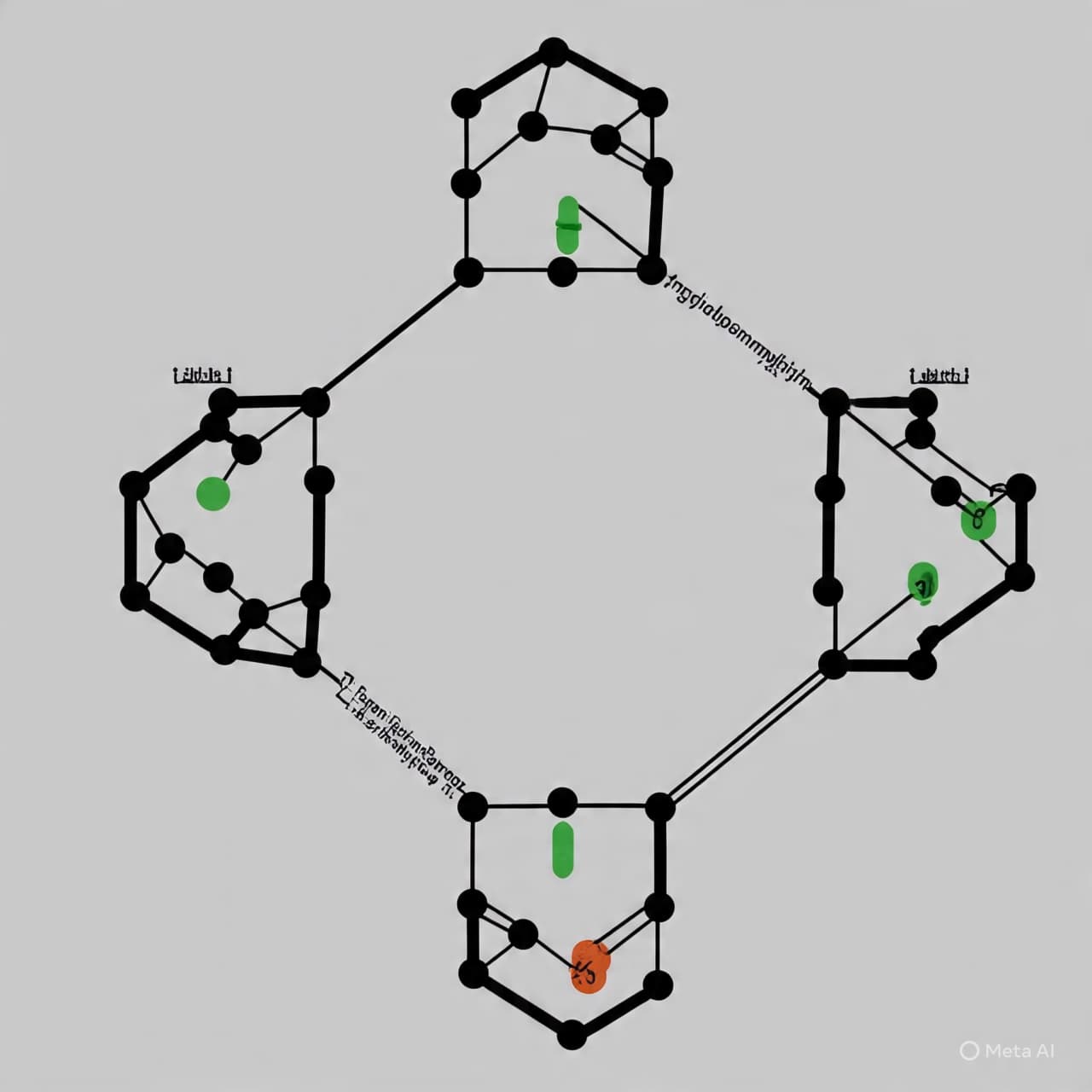
In the hushed corridors of a chemistry laboratory, where glassware and spectrometers sit in quiet readiness, a different kind of light plays upon a new structure — not for illumination alone, but for gentle persuasion. There, scientists have crafted a porous material that responds to the softer colors of the visible spectrum, and in the interplay of green and blue light, it reveals a way to breathe carbon dioxide in and out as though the material itself has learned a kind of rhythm. It is a quiet marvel, where molecules respond to light with motion so subtle that a spectrum of wavelengths — and not heat or harsh conditions — now guides the flow of greenhouse gas.
Traditionally, carbon capture — the act of trapping carbon dioxide from air or industrial streams — has been a story of temperature and pressure, of heat‑soaked chambers and energy‑hungry cycling. Heat is applied, gas is bound, and then heat is applied again to release the gas, rendering the material ready for another cycle. Yet this new approach leans into light itself. Researchers built a three‑dimensional scaffold known as a porous aromatic framework (PAF), a lattice of strong carbon bonds that resists breakdown and offers a lattice of microscopic cavities for gas molecules to dwell. Within that scaffold, they tucked tiny molecular switches that change shape when struck by particular colors of light — like dancers shifting posture at the cue of a different song.
When green light, around 530 nanometers in wavelength, bathes the material, those microscopic switches bend and occupy more space within the framework. In doing so, they nudge out some of the trapped carbon dioxide, effectively encouraging the gas to depart its microscopic resting places. Conversely, when blue light, at about 420 nanometers, washes over the pores, the switches straighten again, opening interstices within the scaffold and inviting the gas back in. The entire structure, porous and receptive, changes its affinity for carbon dioxide in response to the color of light it receives — a cycle of capture and release that feels almost like breathing.
What makes this response particularly promising is that visible light can reach into the depths of the porous architecture. In many other materials, ultraviolet light was needed to flip switches or trigger changes, but that high‑energy light tends to alter or degrade the material itself and only impacts surface regions. The new porous framework is both stable and penetrable, allowing light to reach far more of its inner volume so that the whole structure works in concert rather than just its exposed skin. In laboratory trials, repeated cycles of green‑light induced release and blue‑light prompted capture happened without measurable loss of strength or performance, raising the prospect of many cycles of gas handling without the material wearing out.
Behind these experiments lies a broader aspiration: to find ways of managing carbon dioxide that are gentler on energy and materials than the traditional heat‑driven approaches. If light — even modest, visible light — can serve as the cue for releasing and reabsorbing greenhouse gas, then in principle systems could be designed to harness solar energy or specially tuned LEDs rather than relying on fossil‑fuel‑fired heat. This notion does not yet imply a finished machine ready to sit within factory exhausts, but it sketches a direction for future technologies that could bridge the realms of chemistry, light, and climate.
In straightforward scientific terms, researchers at the University of Groningen have developed a porous aromatic framework material that can capture and release carbon dioxide in response to visible light. The material contains switchable molecules that change conformation under green and blue light, altering the internal free volume of the porous structure and thereby the amount of CO₂ it holds. Laboratory tests have shown repeated CO₂ uptake and release cycles without loss of performance, offering a potential low‑energy approach to carbon capture technologies.
All Illustrations were created using AI tools and are not real photographs.
Sources (Media Names Only)
Phys.org
Published by Banx Network. This article is part of the Banx decentralized media programme, powered by the BXE token on the XRP Ledger.