There is a rhythm to Kilauea that those who live beside it have learned to read—not as a threat, but as a kind of conversation. The volcano speaks in fountains and flows, in plumes and pauses, and then it falls silent again, leaving the crater floor to cool and the sky to clear. On a Saturday morning in October, that conversation unfolded once more, brief and bright, before the mountain returned to its rest.
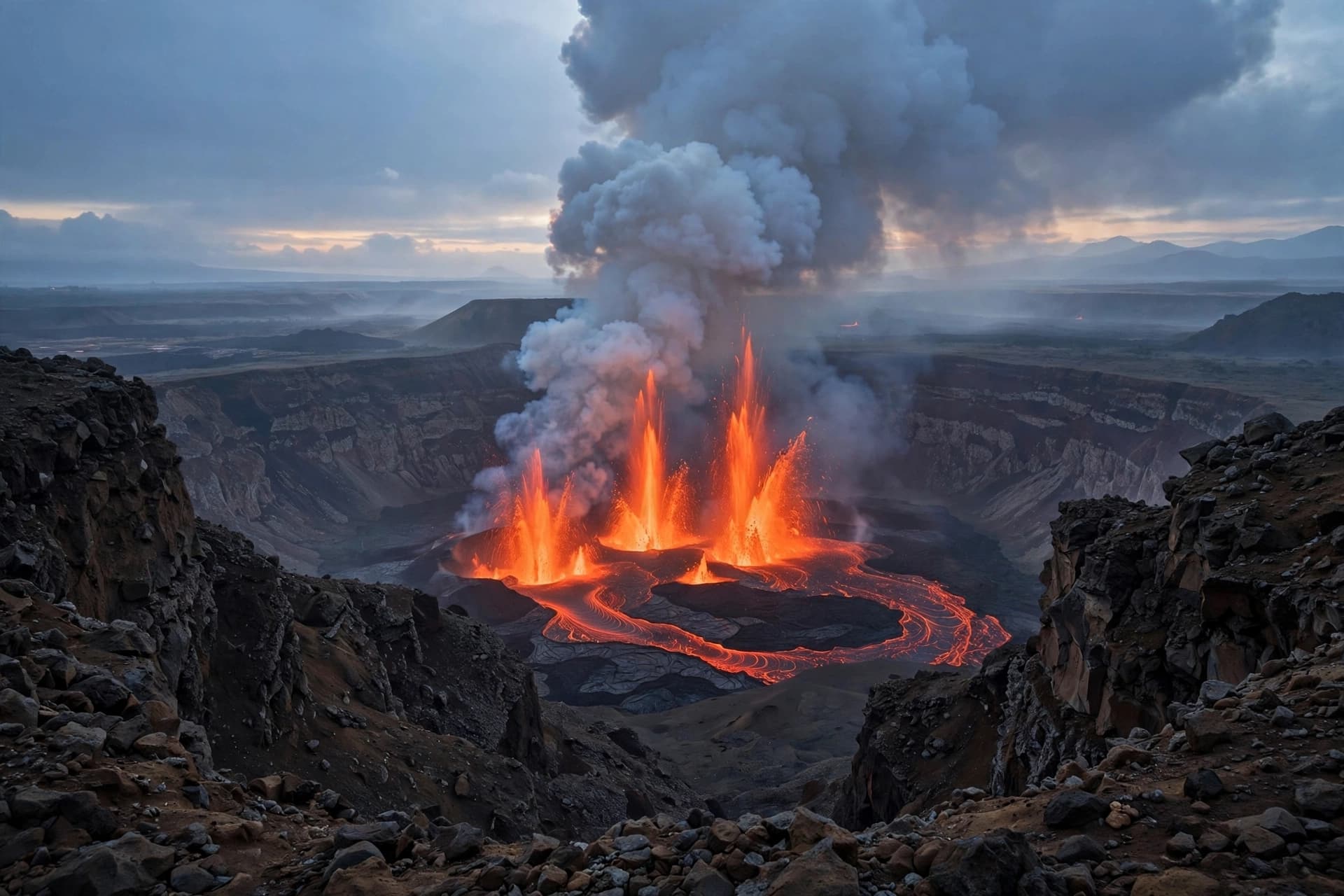
Episode 55 of the ongoing Halemaumau eruption began at 3:19 a.m. HST on October 17, when lava fountains from the north vent began to rise rapidly within the summit crater . By roughly 5 a.m., the fountains had reached a maximum height of about 720 feet, and the eruption plume had climbed to approximately 25,000 feet above sea level . The episode ended abruptly at 9:03 a.m., after nearly six hours of continuous fountaining .
All eruptive vents and lava flows remained confined to Halemaumau crater within Hawaii Volcanoes National Park, as they have throughout the eruption that began on December 23, 2024 . Tephra from volcanic ash clouds fell mostly within three miles of the vents, though lighter ash and Pele's hair may have remained suspended and drifted farther downwind . The USGS Hawaiian Volcano Observatory noted that winds were blowing from the north-northeast, suggesting that volcanic gas emissions and material might be distributed to the south-southwest .
The episode was preceded by a repose period that HVO described as the longest and most complex since the eruption began. Initial precursory flows erupted on September 7, preceding the fountaining by 39 days—far longer than the next longest period of precursory activity, which was six days . In mid-September, several new vents opened along the northwest wall of Halemaumau crater, generating small lava flows on the crater floor but no high fountaining . The vigorous overflows from the south vent in the days before Episode 55, joined by the north and west vents late the previous night, appeared to have purged the system of older degassed magma and allowed more water-rich magma into the conduit to trigger the fountaining .
The volcano alert level was dropped from WATCH to ADVISORY, and the aviation color code from ORANGE to YELLOW, following the end of the episode . HVO noted that lava on the crater floor remains hot and may continue to move slowly in the coming days, and that volcanic gases can create vog, which may cause breathing problems for some people . Fountaining is unlikely to return to the crater for the next several weeks .
For those who study Kilauea, the episode is another entry in a long record of activity that has become almost routine since the current eruption began. For those who live in its shadow, it is a reminder that the mountain beneath their feet is not a static feature of the landscape but a living system, capable of brief and spectacular speech. The fountains rose, the plume climbed, and then both fell away, leaving the crater to cool and the park to reopen.
The next episode will come when the magma decides it is ready. Until then, the volcano rests, and the island continues its ordinary life beside an extraordinary neighbor.
AI Image Disclaimer: The images in this report were produced using artificial intelligence and are illustrative in nature only.
Sources: USGS Hawaiian Volcano Observatory, The Garden Island, Big Island Video News, KHON2
Published by Banx Network. This article is part of the Banx decentralized media programme, powered by the BXE token on the XRP Ledger.