The Sun is rarely still, but its most violent moments often arrive without warning. One moment, its surface appears restless yet familiar—a textured sea of light and magnetism. The next, energy releases in a sudden brilliance that can ripple outward across the solar system. For decades, scientists have studied these eruptions after they unfold. Only now are they beginning to see how they begin.
For the first time, astronomers have captured a detailed view of the birth of a solar flare, observing the subtle rearrangements that precede its explosive release. Using next-generation solar instruments capable of resolving fine magnetic structures, researchers watched as energy gathered, folded, and finally broke free on the Sun’s surface. The flare did not ignite abruptly. It emerged from a slow, almost hesitant prelude.
Solar flares are driven by magnetic tension. The Sun’s surface is threaded with invisible lines of force that twist, tangle, and store enormous energy. When these magnetic fields reconnect—snapping into a lower-energy configuration—they release heat, radiation, and charged particles. Until now, this reconnection was largely inferred from aftermath: bright arcs, sudden X-ray spikes, and expanding plasma.
The new observations shift the focus earlier. Scientists identified faint brightenings and minute changes in magnetic alignment minutes before the flare fully ignited. These precursor signals suggest that flares are not spontaneous flashes, but the culmination of a buildup that can, under the right conditions, be detected in advance. Energy concentrates along narrow boundaries, forming structures that act like fault lines in the solar atmosphere.
What makes the discovery significant is its scale. The details unfold across regions smaller than Earth, yet they dictate events capable of disrupting satellites, radio communication, and power grids millions of kilometers away. Seeing the flare’s origin at such resolution brings solar physics closer to understanding not just what happens, but why it happens when it does.
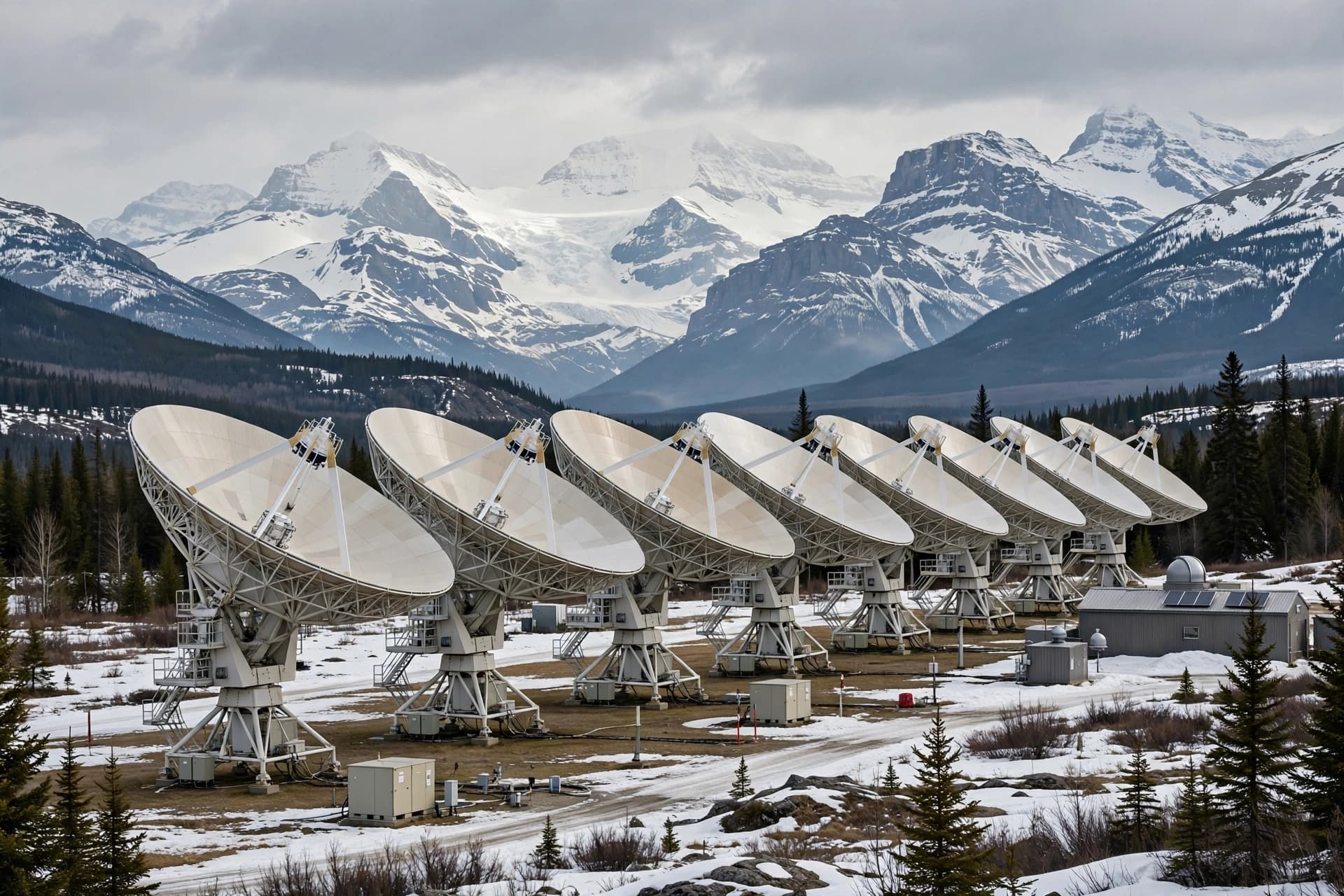
The observations were made possible by instruments designed to peer through the Sun’s glare with unprecedented clarity, separating layers of light and motion that once blurred together. By tracking how magnetic fields evolve second by second, researchers can now follow the choreography of energy before it escapes confinement.
This does not mean solar storms are about to become predictable in a daily sense. The Sun remains complex, its behavior shaped by countless interacting forces. But identifying the earliest stages of flare formation offers a quieter form of progress—one that improves models, refines forecasts, and deepens understanding rather than promising certainty.
There is also something humbling in the timing. Humanity has watched the Sun for as long as it has existed, yet only now can we glimpse the instant when one of its most dramatic events takes shape. The flare’s birth is not a single spark, but a gathering—a gradual tightening of invisible threads until release becomes inevitable.
The Sun will continue to erupt, indifferent to observation. But with this new view, its violence feels slightly less abrupt, its power slightly more comprehensible. In the space between calm and eruption, science has found a moment to look, and for the first time, to see a solar flare before it becomes fire.
AI Image Disclaimer Illustrations were created using AI tools and are not real photographs.
Sources NASA National Solar Observatory European Space Agency Astrophysical Journal Solar Physics
Published by Banx Network. This article is part of the Banx decentralized media programme, powered by the BXE token on the XRP Ledger.