There is a particular rhythm to a factory when the machines begin moving with a little more confidence. Beneath the familiar sound of production lines, Germany’s industrial sector entered the final days of September with signs of an upturn that has now lasted several months. The movement is not dramatic, but it is visible in the numbers: production and new orders continued to rise as the country’s manufacturers navigated a more expensive energy environment.
The latest S&P Global final Purchasing Managers’ Index for German manufacturing stood at 53.9 in September, easing slightly from 54.3 in August but remaining above the 50-point threshold that separates expansion from contraction. The figure was also marginally higher than the preliminary reading of 53.8.
Behind that number lies a longer stretch of movement. Production increased for the ninth consecutive month, although the pace was slightly slower than in August, when output recorded its strongest expansion in more than four and a half years. The sequence suggests that the recovery has not been confined to a single burst of activity, but has continued through much of the year.
New orders provided another important thread. They rose for a fourth consecutive month, while export sales increased again as demand from Asia, Europe, and the United States supported German manufacturers. In an economy deeply connected to international supply chains, those external markets remain an important part of the industrial landscape.
Yet the path forward is not without friction. Renewed inflationary pressures linked to global energy markets have added another layer of uncertainty for companies. For factories that rely heavily on electricity, fuel, transportation, and imported materials, movements in energy prices can travel quietly through the entire production chain before eventually reaching customers.
The contrast is therefore striking. On one side, orders are returning and production continues to expand. On the other, the costs surrounding that activity remain sensitive to developments far beyond the factory gates. The German industrial recovery is taking place in a world where energy markets can change quickly, carrying consequences from distant events into workshops and warehouses at home.
The September figures also arrive after a stronger August. At that time, Germany’s manufacturing PMI climbed to 54.3, with new orders helping drive the strongest production growth since January 2022. Companies had cited demand connected to areas including data-center construction as well as other investment and stockpiling activity.
For exporters, the continued rise in overseas demand provides another measure of resilience. Asian, European, and American customers all contributed to the latest increase in export sales, giving German factories a broader base from which to maintain production as domestic economic conditions remain mixed.
As September gives way to October, the picture is consequently one of cautious continuation rather than sudden transformation. German manufacturing is expanding, orders are moving higher, and production has now grown for nine months in succession. At the same time, energy costs and wider economic pressures remain part of the landscape that companies must navigate.
AI Image Disclaimer
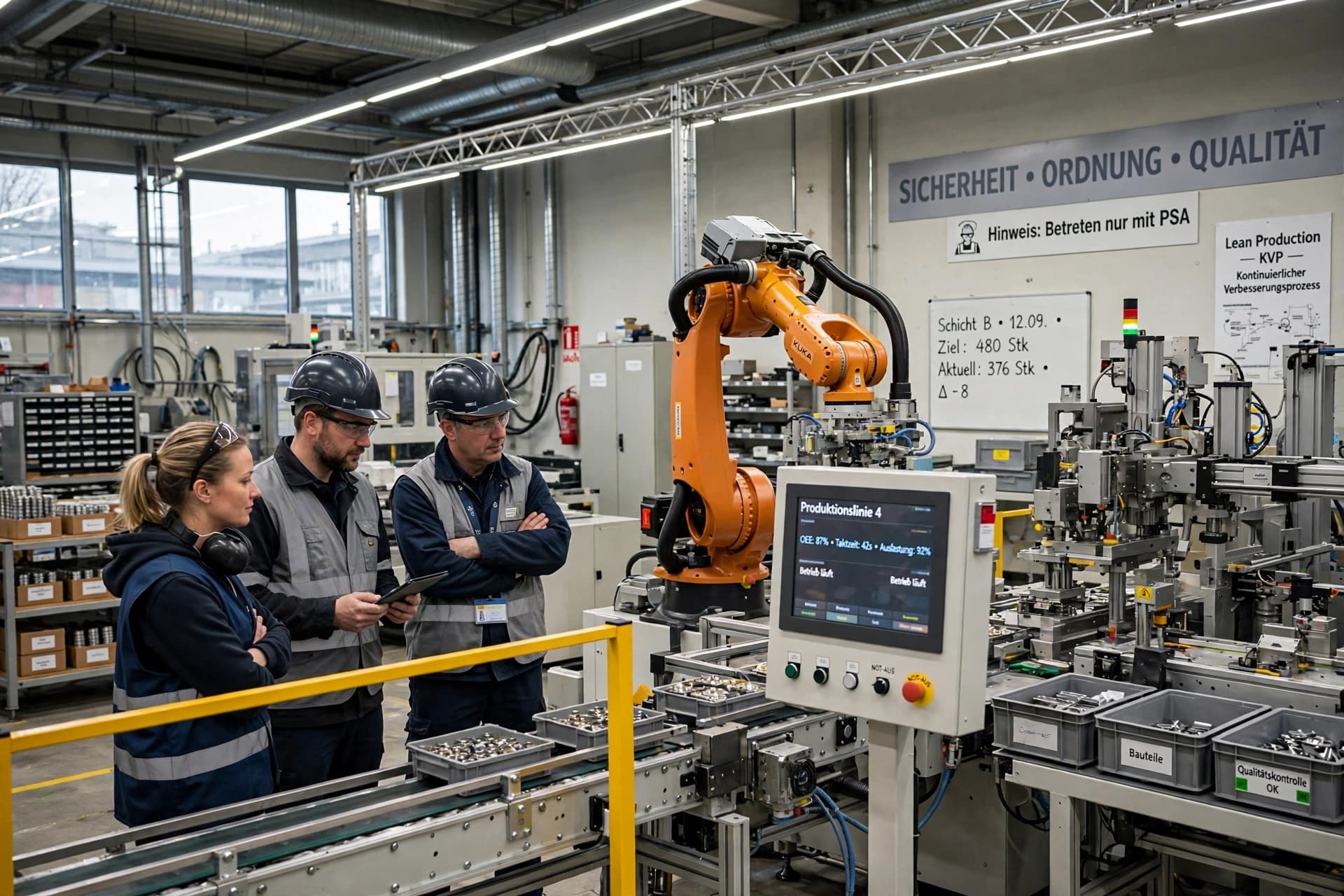
Visuals are AI-generated and serve as conceptual representations of the reported industrial setting.
Sources
Reuters
Published by Banx Network. This article is part of the Banx decentralized media programme, powered by the BXE token on the XRP Ledger.