Key Highlights
- Event:United Launch Alliance's Vulcan rocket failed shortly after launch.
- Date:The incident occurred on November 15, 2026.
- Impact:40 Amazon Leo internet satellites were lost, affecting broadband plans.
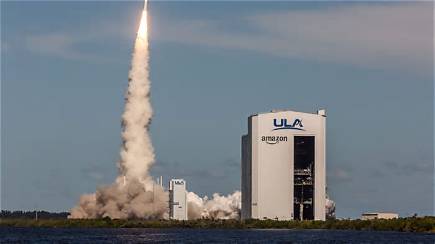
On November 15, 2026, the United Launch Alliance (ULA) experienced a significant setback when its Vulcan rocket failed approximately 10 minutes after liftoff from Cape Canaveral, Florida. The rocket was carrying 40 satellites for Amazon's Low Earth Orbit (LEO) broadband network, which aims to compete with existing services like SpaceX's Starlink. This incident marks the first total mission loss in ULA's history, raising concerns about the reliability of the launch system and the future of Amazon's ambitious satellite project.
The failure occurred during a critical phase of the launch, and ULA has stated that the cause of the anomaly is currently under investigation. The company, a joint venture between aerospace giants Boeing and Lockheed Martin, has committed to conducting a thorough review before proceeding with future launches. This review could potentially delay subsequent missions, further complicating Amazon's timeline for deploying its satellite network.
Amazon's satellite initiative, known as Project Kuiper, aims to provide high-speed internet access to underserved areas around the globe. The loss of these 40 satellites represents a significant blow to the project, which has already faced numerous challenges in its development. With the increasing demand for broadband services, particularly in rural and remote regions, the successful deployment of these satellites is crucial for Amazon's competitive positioning in the market.
In light of this failure, industry experts are closely monitoring ULA's response and the implications for Amazon's satellite strategy. The incident not only affects Amazon's plans but also raises questions about the overall reliability of commercial space launches. As the space industry continues to evolve, the stakes for companies like ULA and Amazon are higher than ever, with billions of dollars invested in satellite technology and infrastructure.
ULA's Vulcan rocket was designed to be a next-generation launch vehicle, promising improved performance and cost-effectiveness compared to its predecessors. However, this failure could lead to increased scrutiny of the rocket's design and operational procedures. Stakeholders in the aerospace sector will be looking for ULA to provide updates on the investigation and any corrective measures that will be implemented to prevent future failures.
As the investigation unfolds, the broader implications for the satellite broadband market will also be assessed. With competitors like SpaceX already operational, Amazon's ability to recover from this setback will be critical in determining its future in the rapidly evolving landscape of satellite internet services.
Published by Banx Network. This article is part of the Banx decentralized media programme, powered by the BXE token on the XRP Ledger.