For decades, cosmology has been guided by a remarkably simple idea: that the universe, on its largest scales, behaves in ways we can describe with elegant equations and patient observation. It is a discipline built not on immediacy, but on accumulation — of light gathered across time, of patterns traced slowly against the dark. After six years of observation, that quiet faith has largely been rewarded.
A massive international study mapping the universe has found that the standard model of cosmology continues to hold. The distribution of galaxies, the imprint of dark matter, and the expansion of space itself align closely with long-standing predictions. For researchers who have spent careers testing these assumptions, the result feels almost surreal. One scientist described it simply as a dream realized: the model works.
The study drew on years of precise measurements, charting millions of galaxies and subtle distortions in light caused by gravity. These weak lensing signals and large-scale structures act as a cosmic fingerprint, revealing how matter clumps and how the universe has evolved over billions of years. Within the margins of error, the universe appears to behave exactly as expected.
And yet, the story does not close so neatly. The data also reinforces a persistent tension that cosmologists have been circling for years. Measurements of how fast the universe is expanding still do not agree, depending on whether they are inferred from the early universe or measured in the present one. The disagreement is small, but stubborn — a crack that refuses to seal.
This caveat matters because it hints at something incomplete. Either subtle errors remain hidden in the measurements, or the standard model, for all its success, is missing a piece. New physics, if it exists, is not announcing itself loudly. It is whispering, barely audible beneath a structure that otherwise stands firm.
For now, the prevailing model survives its most comprehensive test yet. That survival is not a failure of imagination, but a testament to how much the universe is willing to reveal when observed carefully and over time. The dream has come true — but like all good scientific dreams, it ends not with certainty, but with a question still glowing faintly at the edge of the map.
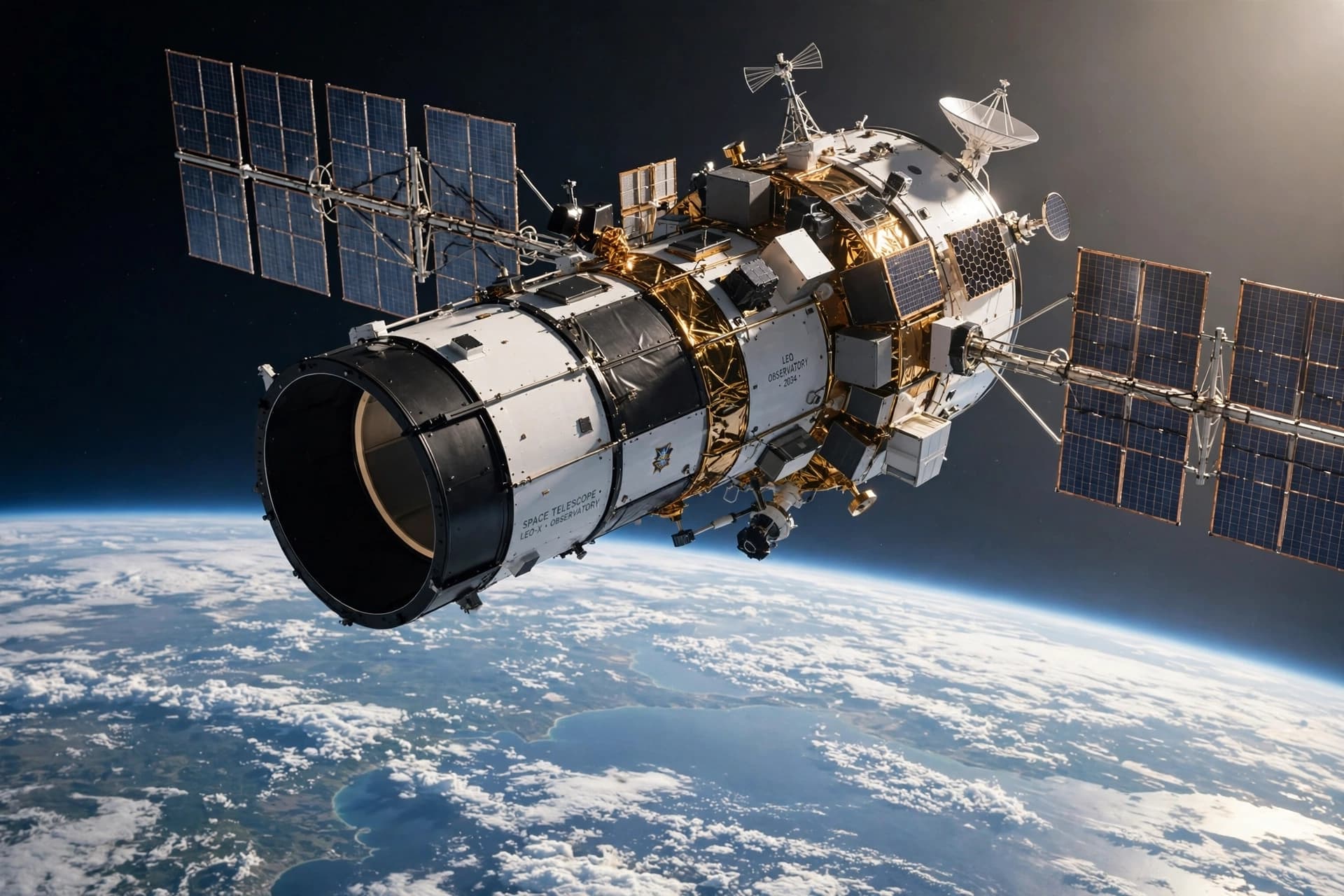
AI Image Disclaimer Illustrations were created using AI tools and are not real photographs.
Sources Nature Physical Review Letters European Southern Observatory NASA
Published by Banx Network. This article is part of the Banx decentralized media programme, powered by the BXE token on the XRP Ledger.