In the cool hush of early morning in Kyiv, light unfurls across quiet streets and rooftops, touching spires and roadways with soft calm. On such mornings, it is easy to forget how close the cadence of distant artillery can feel, how swiftly rumor can carry across borders and into the consciences of those who listen. Yet beneath the stillness of everyday life runs an undercurrent of watchfulness, shaped by years of strain and steadfastness, where each dawn carries both the promise of a new day and the memory of long, difficult nights.
This tension between peace and anticipation finds its voice in the recent reactions to reports that Russia may be preparing a new, large‑scale offensive against Ukraine in the coming spring and summer. In foreign media and analysis circles, some have suggested that significant Russian forces are gathering along Ukraine’s eastern and southern borders, and that plans for renewed offensive operations may be underway. The very thought of such movements stirs in the mind an image of lines on a map and columns of forces shifting in distant fields, a projection of motion that feels both immediate and intangible.
Amid these reports, Ukraine’s own defenders have not been idle. The Center for Countering Disinformation, a body formed under the National Security and Defense Council to guard against misleading narratives and propaganda, offered a measured response to the speculation. Its head has reminded observers that the idea of a forthcoming attack is neither new nor uniquely reported abroad; Ukrainian authorities have been discussing the potential buildup of enemy reserves since the winter months, and that the plans — to the extent they exist — are neither hidden nor surprising to Kyiv’s security leadership. In his words, the plans of the adversary are “known, understood,” and the nation’s defense forces are working ceaselessly to disrupt them wherever and whenever they can.
There is an almost poetic quality to this dance between rumor and response. Rumor, like wind across a field of grain, can bend the stalks and whisper of change in distant weather — yet it is neither storm nor certainty in itself. What matters most is the work done away from public view: the hours of preparation in trenches and command posts, the steady drill of logistics and reconnaissance, the unending vigilance that characterizes life in a country at war. The daily routines of soldiers and civilians alike become threaded with purpose, a shared rhythm shaped by resilience rather than fear.
In the quiet of briefing rooms and the hum of operations centers, policies are drafted, assessments are analyzed, and strategies evolve. Supplies are stockpiled, units are rotated, and alliances with partners are reaffirmed, all in the underlying conviction that preparedness is itself a form of peace. These actions may lack the drama of headlines, yet they form the bedrock of a nation’s capacity to meet its challenges head‑on, whether those challenges are visible in the lengthening shadow of dusk or whispered in far‑off capitals.
At the same time, the flow of information itself — its accuracy, its distortions, and the meanings audiences derive from it — has become part of the strategic landscape. Since the beginning of the full‑scale war, Ukraine’s Center for Countering Disinformation has stood as a bulwark against narratives that aim to mislead or unsettle, whether these arise from deliberate propaganda or misinterpretation. These efforts underscore a broader truth of modern conflict: that the interplay of facts and perceptions can shape morale and strategic choices as much as the movements of troops across terrain.
In straight news language, Ukrainian officials have responded to reporting in foreign media about the possibility of a large‑scale Russian offensive in spring and summer 2026 by stating that the plans attributed to Russia are already known to Ukraine’s military and that its defense forces are taking actions to counter them. The head of the Center for Countering Disinformation emphasized that though Western outlets may be discussing enemy buildup, Ukrainian authorities have been aware for some time of Russia’s preparations and are actively working to thwart any potential offensive.
AI Image Disclaimer
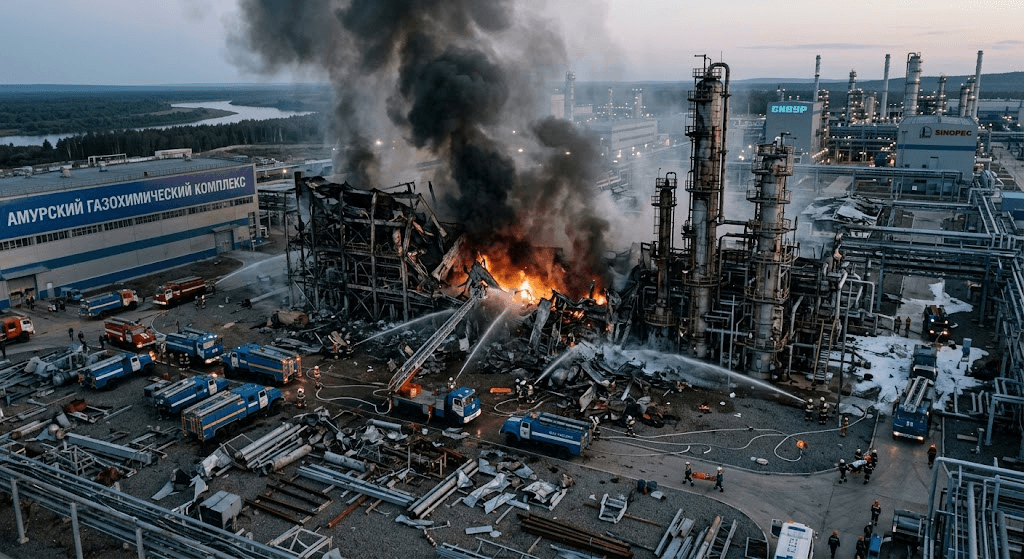
Visuals are AI‑generated and serve as conceptual representations.
Sources (Media Names Only)
UNN RBC‑Ukraine
Published by Banx Network. This article is part of the Banx decentralized media programme, powered by the BXE token on the XRP Ledger.